
Reviewed by PawVerse Veterinary Team
A common reason cat owners call a vet is a cat with one eye half-shut, watering, with a pink rim. It’s understandable why, as it’s uncomfortable to look at and clearly bothering your cat. The good news is that cat conjunctivitis is usually very treatable. What matters is to find out which of a number of possible causes is the one behind it , because the right treatment depends completely on getting that right .
This guide discusses what causes conjunctivitis in cats, how it’s actually treated, what you can safely do at home and importantly, an update on a piece of advice you may have heard before that current evidence no longer supports.
What Conjunctivitis Actually Is
Conjunctivitis is irritation and inflammation of the conjunctiva, the pink membrane that lines the eyelids and covers the white part of the eye. It looks like redness, swelling and discharge, and while it looks uncomfortable, it’s rarely an emergency in and of itself. It is more urgent if it is a symptom of something that is affecting the eye more deeply, also discussed further down.
The Most Common Cause: Feline Herpesvirus
Feline herpesvirus type 1 is by far the most common underlying cause of conjunctivitis in cats, and it's worth understanding because it behaves differently from a typical infection. The vast majority of cats are exposed to this virus at some point, often as kittens, and once infected, a cat carries the virus for life in a latent, dormant state, similar to how human cold sore viruses work. Stress, illness, or a change in environment can trigger the virus to reactivate, causing a flare-up of conjunctivitis, often alongside sneezing and nasal discharge, since the virus affects the upper respiratory tract as well as the eyes. This is especially common in kittens, multi-cat households, shelters, and community cat colonies, where exposure happens early and often.
Other Causes
Another common cause is Chlamydophila felis, a type of bacterial infection that classically begins in one eye and sometimes spreads to the other. Mycoplasma felis and other secondary bacterial infections can cause or worsen conjunctivitis, sometimes taking hold after an initial viral irritation has already weakened the eye’s normal defences. They’re less common, but allergies, environmental irritants like dust or smoke, and physical irritants like an eyelash growing the wrong way or a foreign object caught under the eyelid are all legitimate causes. Even injury to the eye itself can cause inflammation that looks similar at first glance.
Symptoms to Watch For
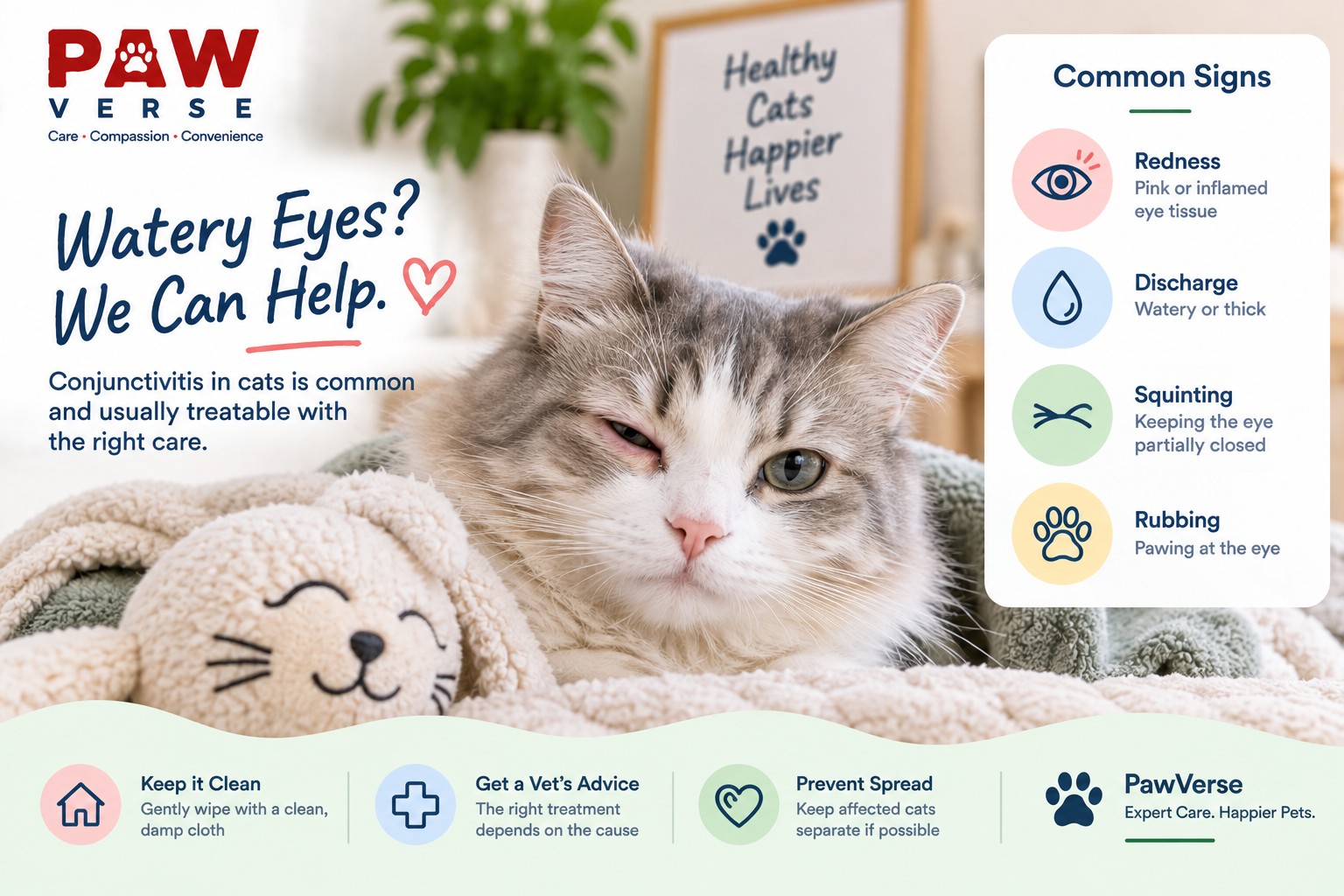
The most common signs include redness and swelling of the pink tissue around the eye, a discharge that can vary from clear and watery to thick and coloured, squinting or holding the eye partially closed, pawing or rubbing at the affected eye, and the third eyelid becoming more visible than normal. Herpesvirus conjunctivitis tends to start in one eye but can be bilateral and is often associated with sneezing or nasal congestion. Chlamydophila classically starts in one eye only. This pattern isn't reliable enough for self-diagnosis but it's useful stuff to share with a vet.
Is Conjunctivitis Contagious to Other Cats?
Often, yes, which matters a great deal in multi-cat households and community cat settings common across Indian cities. Both feline herpesvirus and chlamydophila spread between cats through direct contact, shared food and water bowls, and mutual grooming. If you have multiple cats and one develops conjunctivitis, it's worth isolating the affected cat where practical, washing your hands between handling different cats, and not sharing bowls or bedding until the affected cat has been evaluated and treatment has started.
Diagnosis: Why a Vet Visit Matters More Than It Seems
This is genuinely one of those conditions where guessing the cause and treating it yourself doesn't work well, because the right treatment differs by cause. Herpesvirus needs antiviral treatment, bacterial causes like chlamydophila need specific antibiotics, and using the wrong treatment, or a generic one, often doesn't resolve the underlying issue even if it temporarily eases the discomfort. A vet can examine the eye directly, and in some cases run testing to confirm the specific cause, which meaningfully changes what treatment actually works.
Because conjunctivitis is highly visual, this is a strong candidate for a video consultation rather than chat, our guide on choosing between chat, video, and voice consultation covers why format matters for exactly this kind of symptom, a vet can often assess a lot from a clear video of the eye before deciding whether an in-person exam is needed.
Treatment
Treatment is aimed at the confirmed or suspected cause. Herpesvirus-related conjunctivitis is often treated with antiviral eye drops or ointment and, if the condition is severe or keeps coming back, the vet may recommend oral antiviral medication. If it is bacterial (chlamydophila) it is treated with a specific antibiotic eye medication, sometimes with an oral antibiotic for more systemic involvement. Completing the full course of whatever is prescribed matters as even if the eye looks visibly better after a few days stopping early is a common reason for recurrence or incomplete resolution.
An Important Update on Lysine
If you've read older advice about giving cats the amino acid L-lysine to manage herpesvirus-related conjunctivitis, this is worth revisiting. Lysine was widely recommended for years, and it's still commonly suggested informally, but current evidence does not support it. A comprehensive systematic review of the available research found no proven benefit for preventing or treating feline herpesvirus infection, and updated veterinary guidelines from feline health organizations no longer recommend it for this purpose. Some research has even suggested it may not be well tolerated by cats who find the administration process stressful, which can worsen symptoms given how closely stress is tied to herpesvirus flare-ups. If you've been giving your cat lysine based on older advice, it's a reasonable thing to bring up with your vet rather than continuing on the assumption that it's helping.
Home Care
Gently clean discharge from around the eye using a clean, soft cotton pad dampened with warm water, wiping outward away from the eye rather than toward it, and using a fresh pad for each eye if both are affected to avoid cross-contamination. Wash your hands before and after handling an affected cat, particularly in a multi-cat household. Never use human eye drops or any leftover medication from a different pet or a previous illness, since the wrong medication can worsen certain eye conditions significantly. And keep an eye out for the warning signs below that mean this has moved beyond routine conjunctivitis.
When This Becomes an Emergency
Conjunctivitis is usually uncomfortable but not urgent. That changes a few signs. If the surface of the eye itself (not just the tissue around it) looks cloudy, hazy or visibly damaged, it can be a sign of a corneal ulcer and this needs prompt in-person veterinary attention rather than home management or a video consultation alone. If the eye is swollen shut completely, or there is more than mild squinting, or if the eye itself (not just the area around it) is affected, then get medical attention in person as soon as possible. For the wider range of signs that indicate an urgent situation for cats in general, see our Cat Emergency Symptoms Guide.
Frequently Asked Questions
Q: Is it safe to just wait and see if my cat's conjunctivitis clears up on its own?
A: Mild cases can sometimes improve without treatment, particularly if herpesvirus-related, but it's generally worth a vet visit rather than waiting, since bacterial causes typically need specific treatment to resolve, and distinguishing the two reliably isn't possible just from looking at the eye at home.
Q: Should I give my cat lysine for herpesvirus-related conjunctivitis?
A: Current evidence does not support lysine as an effective treatment or preventive measure for feline herpesvirus, despite it being commonly recommended in the past. It's worth discussing with your vet rather than relying on it as a primary approach, especially since the administration process itself can be stressful for some cats.
Q: Can I use my other cat's leftover eye medication if they had similar symptoms before?
A: No, this is worth avoiding even if the symptoms look identical. Different causes need different medications, and using the wrong one can fail to treat the actual problem or, in some cases, make certain underlying conditions worse.
Q: How can I tell if my cat's eye issue is more serious than routine conjunctivitis?
A: Watch specifically for cloudiness or visible damage to the surface of the eye itself, severe swelling that closes the eye completely, or clear signs of significant pain. These suggest something beyond routine conjunctivitis, like a corneal ulcer, and need prompt in-person evaluation rather than home care or a video consultation alone.
Q: Will my cat's conjunctivitis come back after treatment?
A: If herpesvirus is the underlying cause, recurrence during future stress or illness is common, since the virus remains dormant in the body for life. Managing overall stress and supporting general health can help reduce flare-up frequency, though it generally can't be eliminated entirely once a cat is infected.
The Bottom Line
Conjunctivitis in cats is common, usually treatable, and rarely an emergency on its own, but getting the right treatment depends on identifying the actual cause rather than guessing or reaching for a generic remedy. Feline herpesvirus is the most common culprit and tends to recur during stress, while bacterial causes need their own specific treatment to clear properly. If you've been relying on lysine based on older advice, that's worth a conversation with your vet given what current research actually shows.
Talk to a PawVerse vet online now, a video consultation is often ideal for assessing an eye issue like this, or reach our emergency vet consultation if you notice cloudiness on the eye itself or severe swelling.
With love, Team PawVerse
Have a question about your pet?
Chat with Captain Scout and reach a verified vet, guaranteed within 30 minutes.
Admin
Part of the PawVerse team, on a mission to make trusted pet healthcare simple and reachable for every Indian pet parent.
Your pet's health does not have to wait
Talk to a verified PawVerse vet from home. No travel, no waiting rooms, real answers within 30 minutes.