
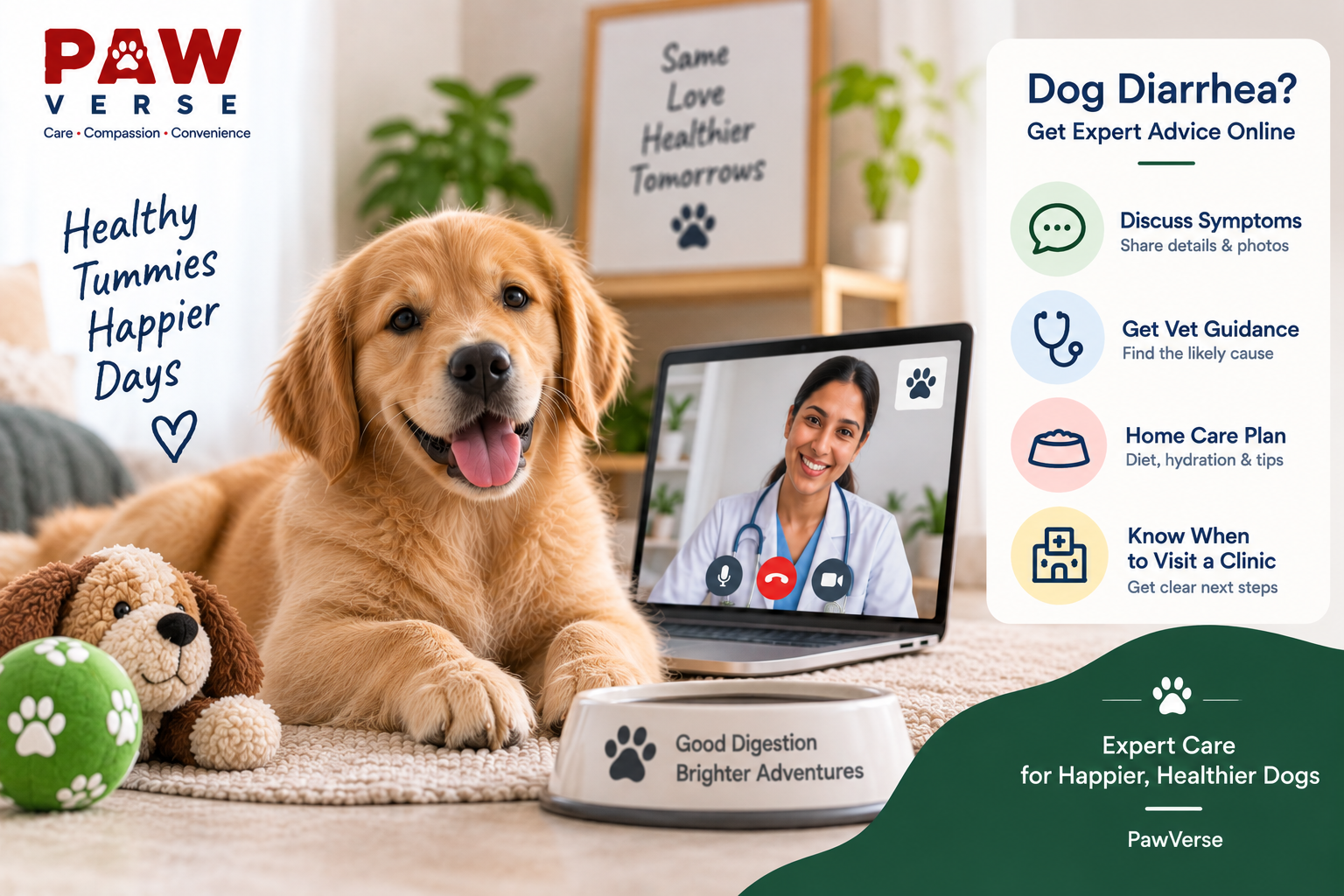
Reviewed by PawVerse Veterinary Team
You're on your third walk of the day dealing with the same problem, and you're trying to figure out if this is something your dog ate, a passing bug, or the start of something that needs an actual vet visit. Diarrhea is one of the most common reasons dog owners reach for an online consultation rather than book a clinic slot, and for good reason, in most cases it's exactly the kind of symptom a quick conversation with a vet can help you manage without leaving the house.
This guide covers what causes dog diarrhea, what your dog's stool can tell you, and specifically how to use an online vet consultation to handle it well, including when the answer is going to be "come in person" rather than a home care plan.
The Quick Answer
Mild to moderate diarrhea in an otherwise alert, eating, drinking dog is very often manageable starting with an online consultation, a vet can help you figure out the likely cause, recommend a home care plan, and tell you clearly if anything about the situation needs an in-person visit. What online consultation can't do is run a fecal test for parasites, take bloodwork to check hydration and organ function, or physically examine your dog, so any diarrhea case that turns out to need those things will still route to a clinic. The value of starting online is speed and triage, not replacing diagnostics that genuinely require them.
Common Causes of Dog Diarrhea
Dietary indiscretion, eating something outside the normal diet, garbage, a dead animal, table scraps, or spoiled food, is the single most common cause and usually resolves within a day or two. A sudden food switch, even to a higher-quality option, can upset digestion simply because the gut hasn't had time to adjust, which is why gradual transitions over seven to ten days are recommended for any diet change. Intestinal parasites, including worms and protozoal infections like giardia, are a genuine cause, especially in puppies or dogs with any outdoor exposure to contaminated soil or water. Bacterial or viral infections range from mild to serious, with parvovirus being a particularly dangerous cause in unvaccinated or partially vaccinated puppies. Stress colitis, diarrhea triggered by anxiety or a major change in routine, is common enough that vets see it regularly, often following boarding, travel, or a stressful event at home. Chronic conditions like inflammatory bowel disease or food sensitivities cause recurring diarrhea over weeks or months rather than a single episode. And toxin or foreign object ingestion can cause diarrhea alongside other symptoms, sometimes signaling something more serious than digestive upset alone.
Is a Single Episode of Diarrhea Normal?
A single loose stool in a dog that's otherwise eating, drinking, and behaving normally usually isn't cause for alarm, and often resolves on its own within a day. What changes the picture is repetition, diarrhea continuing beyond 24 to 48 hours, or any accompanying symptom like vomiting, lethargy, or loss of appetite. Puppies and senior dogs warrant a lower threshold for concern given how much faster they can become dehydrated relative to a healthy adult dog.
What Online Vet Consultation Can Actually Help With
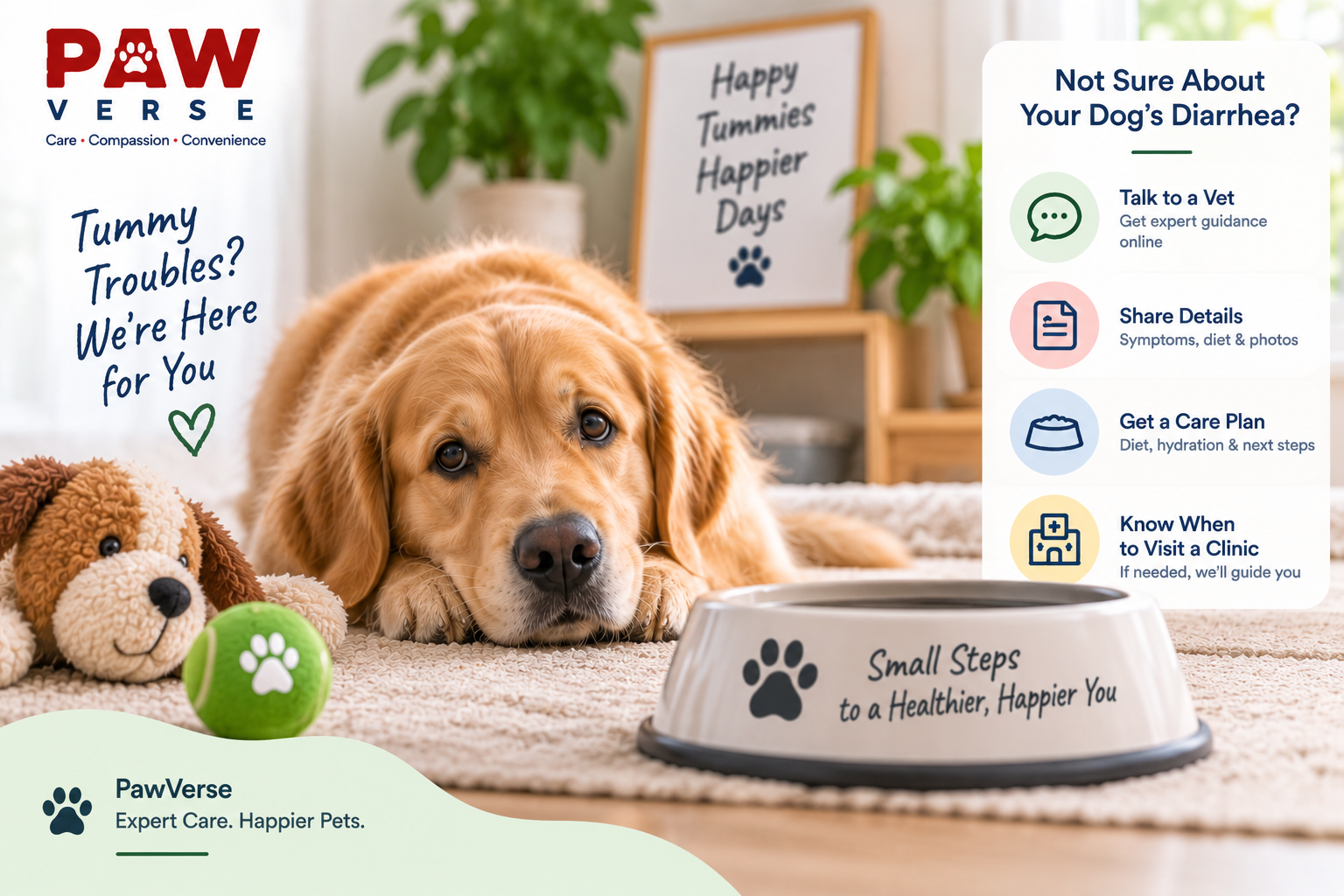
This is where online consultation earns its place for diarrhea specifically. A vet can assess the likely cause based on your description and photos of the stool, recommend a bland diet and hydration plan for mild cases, advise on whether an over-the-counter probiotic is appropriate, help you decide whether recent diet changes, stress, or a specific ingested item is the likely trigger, and importantly, tell you clearly and quickly if what you're describing needs an in-person visit rather than home management. For a dog with a known history of sensitive digestion, online consultation is also useful for quick check-ins to confirm a recurring pattern doesn't need escalation.
What Online Consultation Can't Do
Diarrhea that's persistent, severe, or paired with other concerning symptoms often needs diagnostics that only happen in person. A fecal test to check for parasites, bloodwork to assess dehydration and organ function, and a physical abdominal exam to rule out an obstruction or other structural issue all require a clinic visit. A good online vet will recognize when a case has moved past what a conversation and photos can responsibly manage and will tell you to come in rather than continuing to guess remotely. Our online vet vs veterinary clinic guide covers this distinction in more depth for symptoms generally.
What Your Dog's Stool Can Tell You
Appearance | What It May Suggest |
Soft but formed, brief episode | Often mild dietary upset, usually not urgent |
Watery, no blood, otherwise normal behavior | Common with diet change or mild stomach upset |
Black, tarry stool (melena) | Possible bleeding higher in the digestive tract, needs a vet |
Bright red blood in stool | Possible bleeding lower in the digestive tract, needs a vet |
Mucus-coated stool | Can indicate colitis or intestinal irritation |
Very foul-smelling, ongoing for days | Possible infection or parasites, needs evaluation |
Pale or grey stool | Possible liver or pancreatic issue, needs evaluation |
Photographing the stool before cleaning it up, unpleasant as that sounds, genuinely helps a vet assess severity faster during an online consultation than a verbal description alone.
How to Prepare for an Online Consultation About Diarrhea
A few things make this kind of consultation go faster and give the vet more to work with. Note how long the diarrhea has been going on and how many episodes so far. Think back over the last 24 to 48 hours for anything unusual eaten, garbage, a new treat, a walk somewhere your dog could have picked something up. Take a clear photo of the stool if you can, this is genuinely more useful than it sounds. Note any other symptoms, even minor ones, reduced appetite, a bit of lethargy, or vomiting. And have your dog's weight and age on hand, since this affects both dehydration risk and any medication guidance. For choosing between chat, video, or voice for this kind of consultation, our guide on online vet consultation formats covers how to match the format to the situation, chat and photos are often sufficient for diarrhea specifically, since there's rarely a need to show movement or behavior the way a limp or breathing issue would require.
Warning Signs That Mean Skip Online Consultation and Go to a Clinic
Sign | Why It's Urgent |
Diarrhea with blood, bright red or black and tarry | Possible internal bleeding, needs evaluation |
Diarrhea lasting more than 48 hours | Risk of dehydration, needs assessment |
Diarrhea combined with vomiting | Higher risk of rapid dehydration |
Lethargy or noticeable weakness | Possible more serious underlying cause |
Known toxin ingestion alongside diarrhea | Needs immediate care regardless of severity |
Puppy with diarrhea and any other symptom | Faster decline risk, especially if unvaccinated |
Visibly painful or bloated abdomen | Possible obstruction, needs urgent evaluation |
Our dog emergency symptoms guide covers the broader list of signs that mean immediate in-person care, several of which can appear alongside diarrhea specifically.
Home Care for Mild Cases
If your dog has had one or two loose stools, is otherwise acting normally, and shows no other symptoms, a few steps can help while you decide whether a consultation is needed at all. Withhold food for a few hours, but not water, then offer a bland diet of plain boiled chicken and rice in small portions. Keep water available, since diarrhea increases fluid loss even when a dog seems otherwise fine. Avoid giving any human anti-diarrheal medication without checking with a vet first, since dosing and safety differ significantly between humans and dogs. And watch for the next 24 hours for any of the warning signs above before assuming it's fully resolved.
When Should I Contact a Vet?
Reach out to a vet, online or in person, if diarrhea continues beyond 24 to 48 hours, if there's any blood or unusual color, if your dog is also vomiting, lethargic, or not eating, if your dog is a puppy or senior, or if you know they've eaten something they shouldn't have. Starting with an online consultation is a reasonable first step for most of these situations, since the vet can quickly tell you whether it's manageable at home or needs an in-person visit.
Through PawVerse, you can book an onlin e vet consultation to talk through what you're seeing, ideally with a photo of the stool ready to share. For diarrhea with blood, severe lethargy, or in a young puppy showing other symptoms, our emergency vet consultation is available around the clock.
Frequently Asked Questions
Q: Can an online vet actually help with dog diarrhea, or do I need to go to a clinic?
A: For mild to moderate cases in an otherwise alert dog, yes, an online vet can assess likely causes, recommend a home care plan, and tell you clearly if the situation needs an in-person visit. Severe, persistent, or symptom-heavy cases often do need a clinic for diagnostics like a fecal test or bloodwork.
Q: What should I photograph for an online consultation about diarrhea?
A: A clear, well-lit photo of the stool itself is the most useful single piece of information, since color, consistency, and the presence of blood or mucus all help a vet assess severity quickly. It's not the most pleasant part of the process, but it genuinely speeds up getting a useful answer.
Q: How long can I wait before seeking help for my dog's diarrhea?
A: If your dog is otherwise acting normally, 24 to 48 hours of monitoring with basic home care is generally reasonable. Beyond that window, or immediately if you see blood, vomiting, or lethargy, it's time to reach out to a vet rather than continuing to wait.
Q: Is chat or video better for a diarrhea consultation?
A: Chat is usually sufficient, since a description plus a stool photo typically gives a vet what they need without requiring live video. Video becomes more useful if there's an additional symptom, like visible abdominal discomfort, that's easier to show than describe.
Q: Can stress really cause diarrhea in dogs?
A: Yes, stress colitis is a recognized and fairly common cause, often triggered by boarding, travel, a new pet, or another major change in routine. If a stressor is identifiable and your dog shows no other symptoms, it often resolves within a few days as things settle.
The Bottom Line
Dog diarrhea is one of the more common reasons to reach for an online vet consultation, and for good reason, most cases are mild, manageable at home with guidance, and don't need the time or cost of a clinic visit to resolve. The key is knowing when the pattern crosses into something that does, blood, prolonged duration, or other symptoms, and using the consultation itself to make that call quickly rather than guessing on your own.
Talk to a PawVerse vet online now if your dog has diarrhea and you're not sure what to do next.
With love, Team PawVerse
Have a question about your pet?
Chat with Captain Scout and reach a verified vet, guaranteed within 30 minutes.
Admin
Part of the PawVerse team, on a mission to make trusted pet healthcare simple and reachable for every Indian pet parent.
Your pet's health does not have to wait
Talk to a verified PawVerse vet from home. No travel, no waiting rooms, real answers within 30 minutes.