
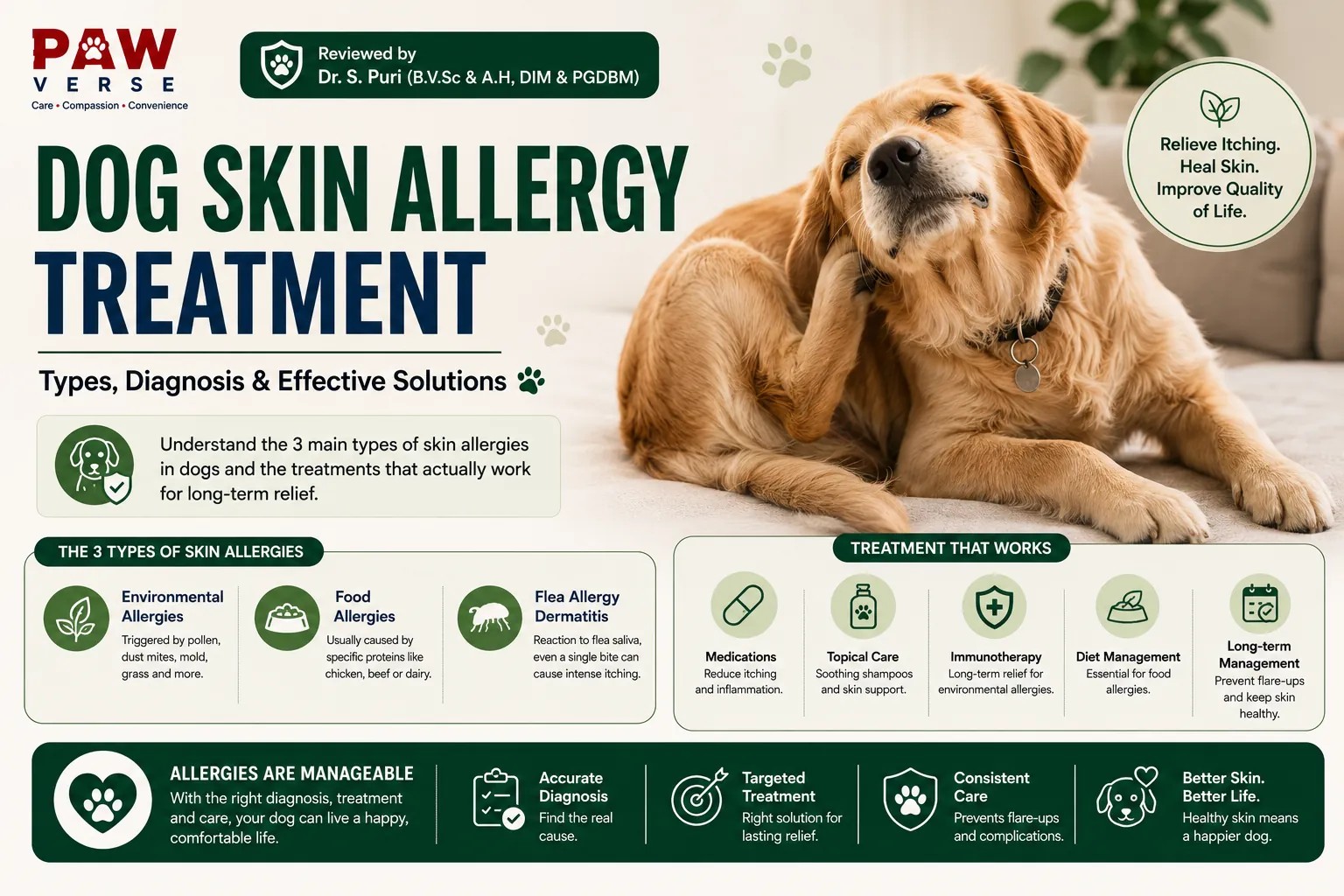
Reviewed by Dr. S. Puri (B.V.Sc & A.H, DIM & PGDBM)
If your dog has been dealing with itchy, irritated skin for weeks or months rather than days, you've probably already gone through the usual first steps, a flea check, maybe a shampoo switch, and you're still stuck. Skin allergies in dogs are rarely a quick fix, but they are manageable once you understand which type you're dealing with and what treatment actually targets it.
This guide focuses on the three main categories of canine skin allergy, how vets typically diagnose them, and the treatment options that actually work, from medication to long term management. If you're trying to figure out what's causing sudden itching right now, our guide on dog itching and skin allergies covers the broader list of causes and immediate steps. This article goes deeper into allergies specifically, and what treatment looks like once one is confirmed.
What Is a Skin Allergy in Dogs?
A skin allergy is an overreaction of the dog’s immune system to something that usually does not cause problems, such as something inhaled or absorbed through the skin, something eaten, or a flea bite. That overreaction releases inflammatory chemicals which cause itching, redness and swelling. Allergies are not a one off irritation. They tend to be recurring or persistent and often get worse over time without proper management.
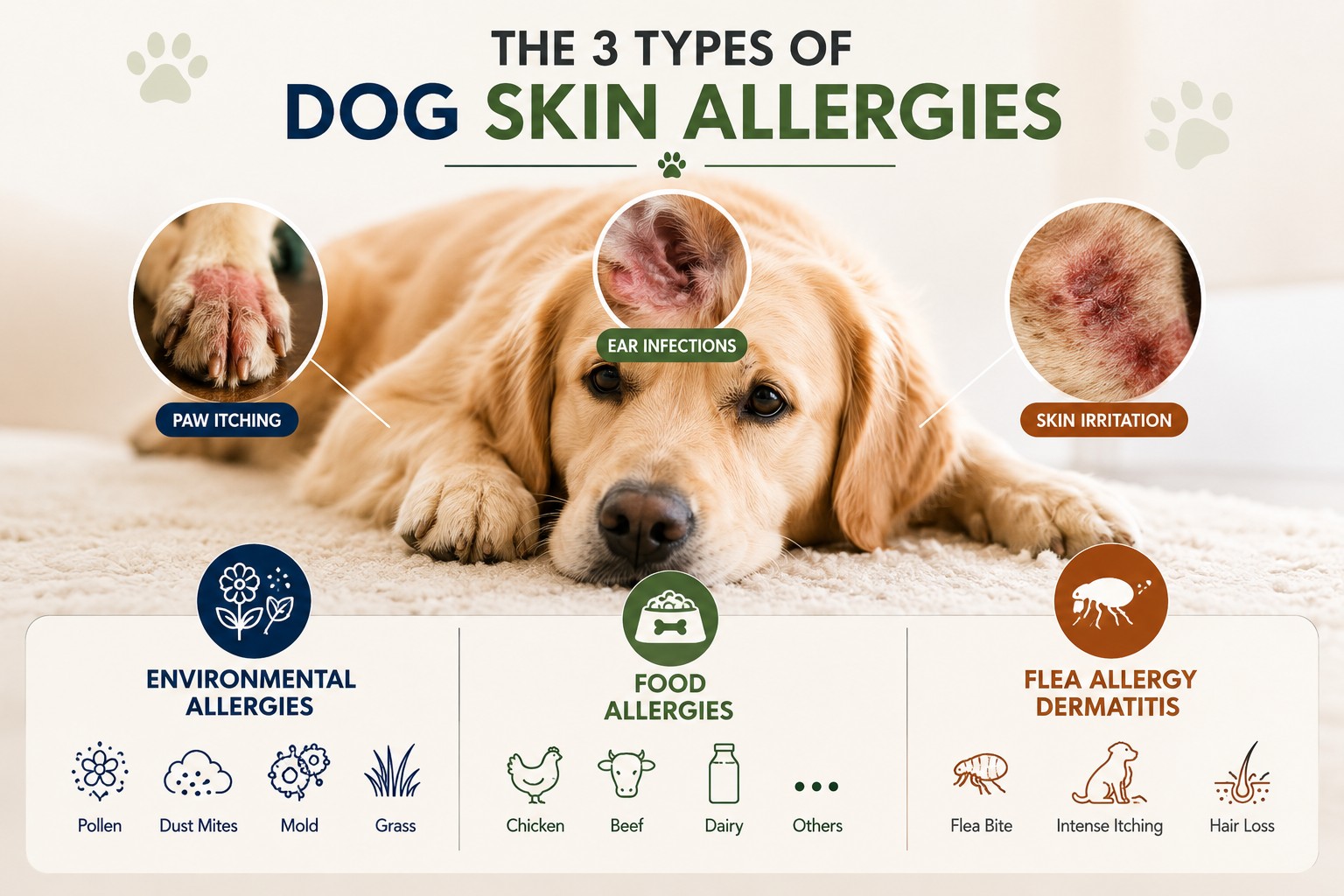
Veterinarians typically classify dog skin allergies into three basic types: environmental, food and flea related. A dog can have more than one type at the same time . Part of the reason allergies are notoriously tricky to fully resolve .
The Three Types of Dog Skin Allergies
Environmental Allergies (Atopic Dermatitis)
This is the most common type, triggered by airborne or contact allergens like pollen, dust mites, mold spores, and grass. It's often seasonal at first, worse in spring or fall depending on your region, before becoming a year round issue in many dogs as sensitivity builds over time.
Typical symptoms: Itching concentrated around the paws, face, ears, armpits, and belly. Dogs often lick or chew their paws repeatedly, sometimes turning the fur a rusty brown color from saliva staining. Recurrent ear infections are also common with this type.
Food Allergies
Less common than environmental allergies but still significant, food allergies are usually triggered by a specific protein, most often chicken, beef, or dairy, rather than grain, despite that being a common assumption. Unlike environmental allergies, food allergies aren't seasonal and can develop even after months or years of eating the same food without issue.
Typical symptoms: Itching that isn't tied to a season, often accompanied by digestive symptoms like soft stool, gas, or more frequent bowel movements. Ear infections and paw licking can also occur with food allergies, which is part of why they're sometimes mistaken for environmental allergies without testing.
Flea Allergy Dermatitis
This is an allergic reaction to proteins in flea saliva, and it's disproportionate to the actual flea population, a single bite can trigger intense itching in a sensitive dog even without a full infestation. This is one of the more straightforward allergies to address once identified, since the trigger is a known, treatable parasite.
Typical symptoms: Intense itching concentrated at the base of the tail, the lower back, and the back legs, often with hair loss and scabbing in those areas from constant scratching.
How Are Dog Skin Allergies Diagnosed?
Diagnosis is usually a process of elimination rather than a single test, and it typically starts with ruling out the simpler causes first.
Flea check and treatment trial: Since fleas are common and treatable, vets often start here, checking for flea dirt and starting or confirming a reliable flea prevention product, even if fleas aren't obviously visible.
Physical exam and history: A vet will look at where the itching is concentrated, when it started, whether it's seasonal, and whether there's a family history of allergies in the breed, since some breeds are more predisposed than others.
Elimination diet trial. If food allergy is suspected, this involves feeding your dog a single novel protein and carbohydrate source, one he has not previously eaten, for eight to twelve weeks, and then reintroducing the previous diet to see if symptoms return. This is the most reliable way to diagnose a food allergy at present, as blood and saliva allergy tests for food are not considered reliable by most veterinary dermatologists.
Intradermal or blood allergy tests: If your vet suspects you have environmental allergies, especially if you are a candidate for immunotherapy, your vet may refer you to a veterinary dermatologist for allergy testing. Allergy testing helps to identify specific environmental triggers, like specific pollens or moulds.
Treatment Options for Dog Skin Allergies
Medications
Several medications can help manage allergic itching and inflammation, and the right choice depends on the allergy type, severity, and how long term the management needs to be. Options include antihistamines for mild cases, though these work inconsistently across individual dogs, and more targeted prescription medications that specifically block the itch signal or calm the immune response, which tend to be more reliably effective for moderate to severe cases. Your vet will choose based on your dog's specific situation, since some medications aren't appropriate for long term daily use.
Medicated Shampoos and Topical Treatment
Shampoos containing ingredients that soothe inflamed skin and reduce bacterial or yeast overgrowth are often used alongside other treatments, particularly when a secondary skin infection has developed on top of the allergy. Regular bathing with the right product can meaningfully reduce allergen load on the skin and coat, especially for environmental allergies.
Dietary Management
For confirmed food allergies, long term management means sticking to a diet free of the identified trigger protein, often a prescription hydrolyzed or novel protein diet. Even for environmental allergies, some vets recommend a diet supplemented with essential fatty acids, which can support skin barrier function and reduce overall inflammation.
Flea Control
For flea allergy dermatitis, consistent, year round flea prevention is the core of treatment, not just during visibly warmer months. Since it only takes one bite to trigger a reaction, gaps in prevention are often what lead to flare ups even in dogs that seemed fine for months.
Immunotherapy
For dogs with confirmed environmental allergies through testing, allergen specific immunotherapy, given as regular injections or oral drops, gradually desensitizes the immune system to the specific triggers identified. This is a longer term commitment, often showing results over six months to a year, but it addresses the underlying allergy rather than just managing symptoms, and can reduce or eliminate the need for other medications over time.
Treating Secondary Infections
Persistent scratching often breaks the skin barrier, allowing bacteria or yeast to take hold on top of the original allergy. These secondary infections need their own treatment, usually oral or topical antimicrobial medication, and won't resolve just by treating the allergy alone.
Can Dog Skin Allergies Be Cured?
Generally, no, most skin allergies in dogs are managed rather than cured, similar to how human allergies are typically a lifelong management situation rather than a one time fix. The goal of treatment is to reduce symptoms to a comfortable, manageable level and to identify and avoid or reduce exposure to triggers where possible, rather than expecting complete elimination of the allergy itself.
The exception is flea allergy dermatitis, where consistent prevention can effectively eliminate flare ups entirely, since the trigger is a controllable parasite rather than an environmental or food factor that's harder to fully avoid.
Warning Signs That Need Prompt Attention
Sign | What It May Mean |
Open sores, raw or bleeding skin | Risk of infection, needs treatment |
Strong odor from skin, ears, or paws | Likely secondary infection |
Swelling of the face or throat | Possible severe allergic reaction, emergency |
Symptoms not improving after 2 to 3 weeks of treatment | Needs treatment plan reassessment |
Recurrent ear infections alongside itching | Common allergy pattern, worth a full workup |
Hair loss spreading to new areas | Needs veterinary evaluation |
When to Contact a Vet
Reach out to a vet if:
Itching has been going on for more than a couple of weeks without a clear cause
You've already ruled out fleas and the itching persists
You suspect a food allergy and want guidance on starting an elimination diet properly
Your dog has recurring ear infections along with skin symptoms
A prescribed treatment doesn't seem to be working after a few weeks
You notice facial swelling or breathing difficulty, this needs emergency care immediately
You don't need to visit a clinic in person for an initial conversation about symptoms and next steps. Through PawVerse, you can book an online vet consultation to talk through your dog's specific symptoms and figure out whether further testing or an in person visit is needed. For facial swelling or breathing difficulty, our emergency vet consultation is available around the clock.
Frequently Asked Questions
Q: How do I know if my dog has a food allergy or an environmental allergy?
A: Food allergies tend to cause itching year round rather than seasonally, and are often paired with digestive symptoms like soft stool. Environmental allergies are more likely to follow a seasonal pattern, at least initially, and concentrate around the paws, face, and ears. An elimination diet trial is the most reliable way to confirm or rule out a food allergy.
Q: Are some dog breeds more prone to skin allergies?
A: Yes. Breeds like French Bulldogs, Golden Retrievers, Labrador Retrievers, West Highland White Terriers, and Shih Tzus are commonly reported to have a higher predisposition to environmental allergies, though any breed or mixed breed dog can develop one.
Q: What is the fastest way to relieve my dog's allergy itching?
A: A vet prescribed anti itch medication typically provides the fastest relief for a flare up, alongside a soothing medicated bath if the skin is already inflamed. Long term relief, however, depends on identifying and managing the underlying trigger rather than relying on itch relief alone.
Q: Can I give my dog an over the counter antihistamine for allergies?
A: Some antihistamines are used by vets for mild allergic itching, but effectiveness varies significantly between dogs, and correct dosing depends on weight and health history. Check with a vet before giving any human antihistamine, since not all formulations are safe and dosing differs from human use.
Q: How long does an elimination diet trial take to show results?
A: Typically eight to twelve weeks on a strict novel protein diet with no other treats, table scraps, or flavored medications during that window, since even small amounts of the trigger ingredient can prevent symptoms from clearing. Consistency during the trial period matters more than almost anything else for getting a reliable result.
Q: Will my dog need allergy medication for life?
A: For many dogs with environmental or food allergies, yes, ongoing management is typically needed, though the exact approach, medication, diet, immunotherapy, or a combination, can often be adjusted over time to what works best long term. Flea allergy dermatitis is the exception, since consistent prevention can largely eliminate flare ups without ongoing medication.
The Bottom Line
Dog skin allergies fall into three main types, environmental, food, and flea related, and figuring out which one, or combination, your dog has is the key step toward effective treatment. Diagnosis usually takes some patience, particularly with elimination diet trials, but it pays off in a management plan that actually addresses the cause rather than just calming symptoms temporarily.
If your dog's itching has been going on for weeks without a clear answer, it's worth working with a vet to properly identify the type rather than continuing to guess and try different shampoos or foods on your own.
Talk to a PawVerse vet online now, or explore our Pet Health Blog for more guides on managing chronic skin conditions in dogs.
With love, Team PawVersea
Have a question about your pet?
Chat with Captain Scout and reach a verified vet, guaranteed within 30 minutes.
Admin
Part of the PawVerse team, on a mission to make trusted pet healthcare simple and reachable for every Indian pet parent.
Your pet's health does not have to wait
Talk to a verified PawVerse vet from home. No travel, no waiting rooms, real answers within 30 minutes.