
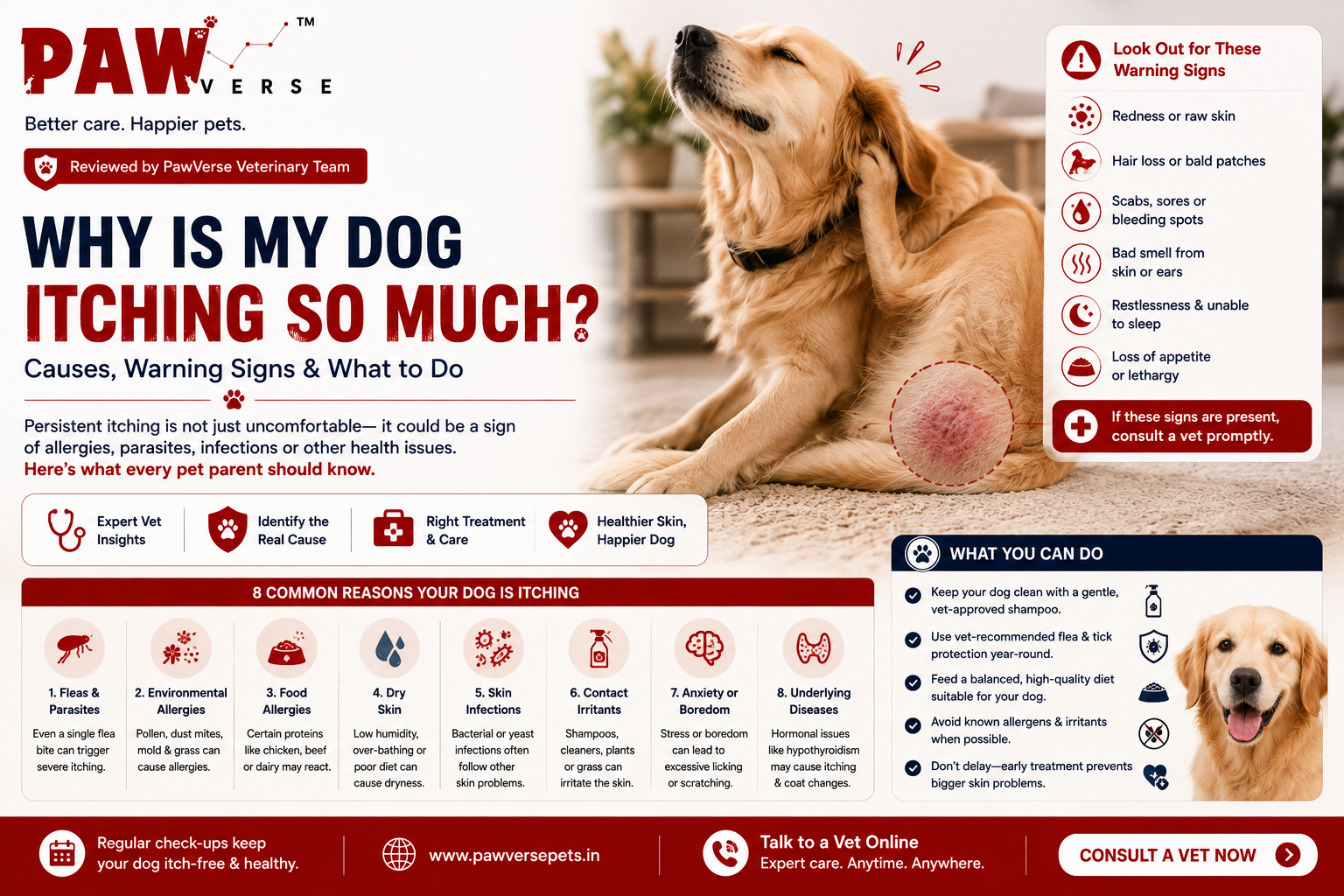
That constant scratching sound coming from across the room is what you first notice at nite. Then you see the raw skin on the belly or the hairless spot behind the ear. Other than eating, playing, and wagging, your dog appears to be doing well, but the itching won't go away.
It's common to occasionally scratch. It's what all dogs do. However, persistent, severe, or worsening itching-medically known as pruritus-is your dog's way of alerting you to a skin irritation, and it seldom goes away on its own. This guide explains the most prevalent reasons, how to distinguish between them, and when scratching becomes serious enough to need a visit to the veterinarian. Our Complete Pet Care Guide is a helpful companion resource for basic hygiene and general grooming.
How Much Scratching Is Normal for a Dog?
A healthy dog may scratch a few times during the course of an evening, but it won't cause any skin damage or hair loss. When you start to notice physical changes like redness, hair loss, scabs, or a change in skin tone, or when the scratching is concentrated on one particular place, it becomes an issue.
The pattern and the state of the skin are more important than the actual scratching because dogs are unable to discern whether an itch is a transient inconvenience or something painful.
8 Reasons Your Dog Is Itching
1. Fleas and Other Parasites
Even in dogs who don't spend much time outside, fleas are still the most frequent cause of itching in dogs. A sensitive dog may develop flea allergy dermatitis, a severe allergic reaction brought on by a single flea bite that causes irritation that is disproportionate to the amount of fleas present.
Look for flea dirt, which is basically digested blood, in the form of tiny dark spots in the coat, particularly around the base of the tail, that become reddish brown on a moist paper towel. Similar reactions can be caused by mites, ticks, and lice, which are frequently more difficult to identify without a veterinarian's assistance.
2. Environmental Allergies
Dogs may have allergies to grass, dust mites, mold spores, and pollen, much like people. This condition, known as atopic dermatitis, is typically seasonal at first, getting worse in the spring or fall, but as dogs get older, it often becomes a year-round problem.
The most common symptom of environmental allergies is itching in the belly, ears, face, and paws. Dogs frequently chew or lick their paws, which can develop saliva stains that turn the fur a rusty hue.
3. Food Allergies or Sensitivities
Contrary to popular opinion, food-related skin reactions are less frequent than environmental allergies. They are typically brought on by a particular protein source, such as dairy, beef, or chicken, rather than grain. Food allergies frequently result in non-seasonal itching along with digestive symptoms like gas or soft stools.
When a food allergy is discovered, a veterinarian-guided elimination diet is typically required. This involves providing a single new source of protein and carbohydrates for eight to twelve weeks while monitoring any improvement.
4. Dry Skin
Dry, flaky skin that itches can be caused by low humidity, repeated bathing with the incorrect shampoo, or a poor diet deficient in vital fatty acids. The coat may appear dull or feel rough to the touch, and the itch is more likely to be widespread than localized.
5. Skin Infections
Bacterial or yeast infections often develop secondary to another problem, such as allergies or a wound that got scratched open. Yeast infections in particular cause a distinct musty or sweet smell, along with greasy, thickened, or darkened skin, most commonly in skin folds, ears, and paws.
These infections need veterinary treatment, usually medicated shampoo or oral medication, since scratching alone won't resolve the underlying infection and can make it worse.
6. Contact Irritants
New shampoos, laundry detergent on bedding, cleaning products used on floors, or even certain types of grass and plants can cause a localized allergic or irritant reaction where the skin made contact. This usually shows up as redness and itching in a specific pattern, such as along the belly or paws, that lines up with what the dog was walking on or lying against.
7. Anxiety or Compulsive Behavior
Some dogs lick, chew, or scratch as a self soothing behavior during periods of stress or boredom, similar to nail biting in humans. This is more likely if the itching is focused on one accessible spot, like a front leg or flank, without visible skin irritation to explain it, and if it coincides with a stressful change in routine.
8. Underlying Hormonal or Systemic Disease
Less commonly, chronic itching and coat changes can be linked to hormonal conditions like hypothyroidism or Cushing's disease. These tend to come with additional signs beyond itching, such as weight gain, thinning coat overall rather than in patches, lethargy, or increased thirst and urination.
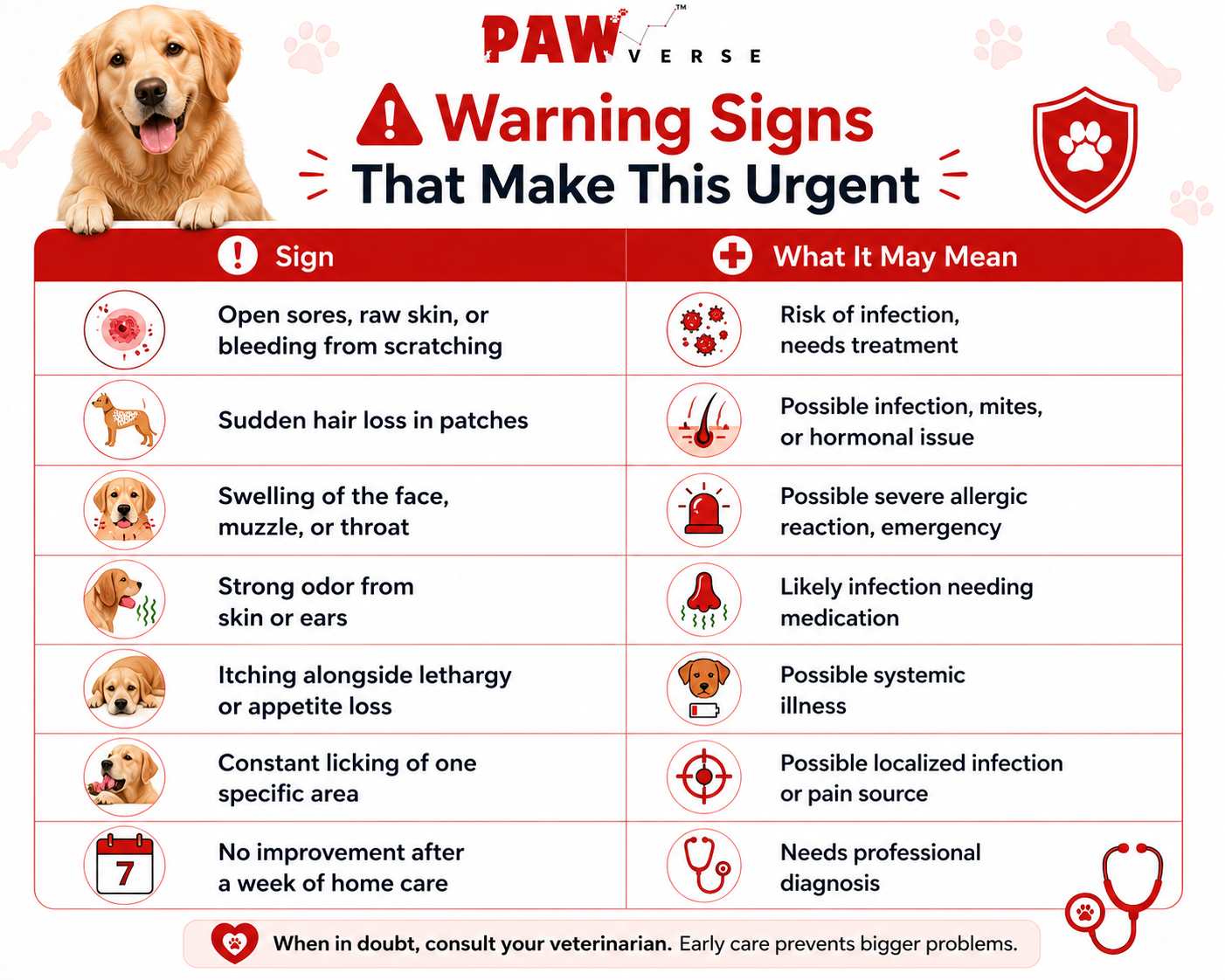
Warning Signs That Make This Urgent
What You Can Try at Home First
If the itching is mild and there's no broken skin, a few steps can help while you monitor the situation:
Check thoroughly for fleas, including at the base of the tail and around the ears, even in dogs on preventatives, since resistance and gaps in coverage do happen.
Rinse paws and belly after walks, especially during high pollen seasons, to remove allergens before they sit on the skin.
Avoid switching shampoos or foods repeatedly, since frequent changes make it harder to identify what's actually causing a reaction.
Use a cone or soft recovery collar if your dog is licking one area raw, to give the skin a chance to heal.
Keep bedding clean and washed in a fragrance free detergent if a contact irritant is suspected.
Since dog dose differs from human dosage and several common chemicals are dangerous, avoid feeding human antihistamines or other medications without first consulting a veterinarian about dosage and safety.
When to Contact a Vet
Reach out to a vet if:
Itching has lasted more than a week without improvement
You see broken skin, scabs, or an odor coming from the skin or ears
Hair loss is spreading or appearing in new areas
Your dog is also showing lethargy, appetite loss, or increased thirst
You suspect a food allergy and want guidance on an elimination diet
The itching is severe enough to disrupt sleep or normal activity
You notice facial swelling or difficulty breathing, this needs emergency care immediately
An initial assessment does not require you to physically visit a clinic. PawVerse allows you to schedule an online veterinary consultation from the comfort of your home and receive advice on what to do next, such as if a skin test or an in-person visit is required. Our emergency veterinary consultation is accessible 24/7 for anything concerning facial edema or breathing difficulties.
Frequently Asked Questions
Q: Why is my dog scratching but doesn't have fleas?
A: number of things can cause itching, fleas being just one of them. Infections, dietary sensitivities, dry skin, and environmental allergens can all lead to scratching even in the absence of fleas. The pattern of the itching—seasonal versus persistent, regional versus widespread—can assist identify the next most likely cause once fleas have been thoroughly ruled out.
Q: Why does my dog lick his paws so much?
A: One of the most typical symptoms of environmental allergies in dogs is paw licking. It may also be a sign of a minor injury, anxiousness, or a yeast infection between the toes. A veterinarian should be consulted if the paws become red, bloated, or discolored due to frequent licking.
Q: Can I give my dog Benadryl for itching?
A: Some veterinarians do suggest antihistamines for minor allergic irritation, but the right dosage depends on your dog's weight and medical history. Additionally, not all formulations are safe because some contain hazardous decongestants. Before administering any drug to humans, always consult a veterinarian.
Q: Is dog itching contagious to other pets?
A: The cause determines this. Fleas, mites, and other fungal illnesses, such as ringworm, can transmit from pets to humans on occasion. Allergies are not communicable, regardless of whether they are dietary, environmental, or contact-related. If more than one of your pets is itching, you should check for fungal infections or parasites first.
Q: Why is my dog itchy at night specifically?
A: Itching is frequently more evident at nite because there are fewer distractions and the place is quieter, not because the itch is stronger. However, some allergies can actually feel worse when you're sleeping due to dust mites in bedding and less activity at nite.
Q: How long can I wait before taking my itchy dog to the vet?
A week of basic treatment and home monitoring is usually reasonable if the skin is intact and the itching is modest. Don't wait to schedule a consultation if you see any signs of infection, odor, spreading hair loss, or damaged skin.
The Bottom Line
One of the most frequent reasons dogs are taken to the vet is for itching, and with good reason-it can indicate anything from a minor flea problem to a long-term allergy that requires treatment. After ruling out fleas and looking for any obvious contact irritants, observe how the pattern changes over the course of a few days.
Instead of waiting it out, get a professional opinion if the itching continues, spreads, or is accompanied by broken skin, odor, or other symptoms. Early intervention is beneficial since chronic skin conditions become more difficult to cure the longer they are left untreated.
For additional advice on maintaining the health of your dog's skin and coat throughout the year, see our Pet Health Blog or speak with a PawVerse veterinarian online right now.
Team PawVerse, with love
Have a question about your pet?
Chat with Captain Scout and reach a verified vet, guaranteed within 30 minutes.
PawVerse Editorial Team
Practical pet health guides from the PawVerse team, written to help Indian pet parents understand what they are seeing and when to talk to a vet.
Your pet's health does not have to wait
Talk to a verified PawVerse vet from home. No travel, no waiting rooms, real answers within 30 minutes.