
Reviewed by PawVerse Veterinary Team
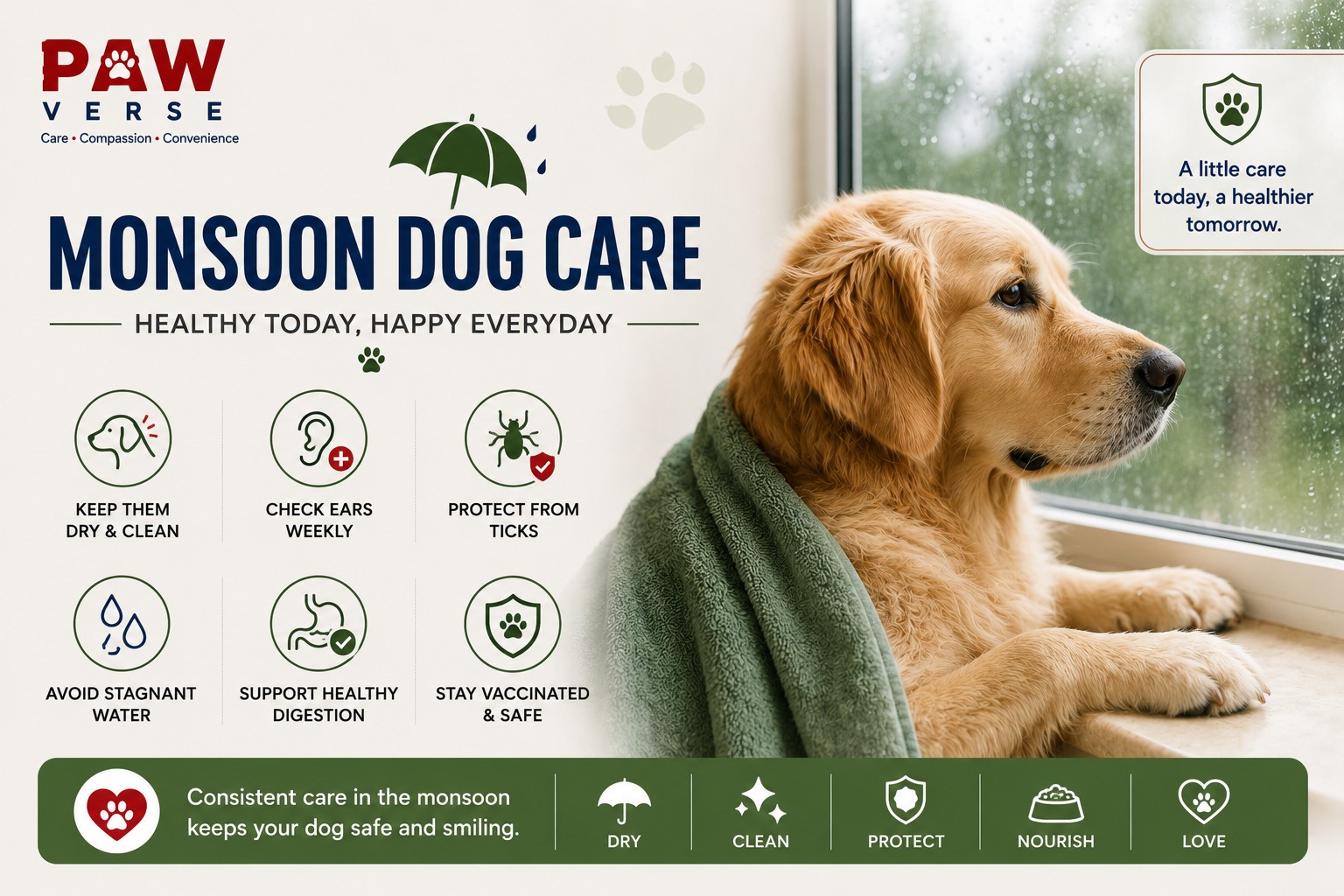
The rain finally breaks after weeks of heat, and for a lot of dogs, monsoon feels like the best season of the year, cooler air, puddles to splash in, mud to roll in if you let them. For their skin, ears, and gut, though, it's actually one of the toughest stretches of the year. Vet clinics across India see a real, consistent jump in skin infections, ear infections, tick related illness, and stomach upsets every year once the rains set in.
The good news is that most of this is preventable with a fairly simple routine, not a complicated one. This guide covers what actually causes monsoon health problems in dogs, how to spot them early, and a daily care routine that keeps most of them from happening in the first place. For general grooming and hygiene basics that apply year round, our Complete Pet Care Guide is a useful companion read.
Why Monsoon Is Hard on Dogs Specifically
Almost all of the monsoon health issues have one thing in common – trapped moisture. The water is held against the skin by a dog’s coat, especially if it’s a double coat, long after it looks dry on the outside. That warm, moist, dark environment is just the place for fungi, yeast and bacteria to establish themselves. With humidity above about 80%, not unusual for much of India in July and August, a coat hardly has time to dry out after a walk.
Add in stagnant puddle water with bacteria, tick populations that increase with wet weather, and dogs getting less exercise because they’re stuck inside more, and you’ve got a season when several risk factors all pile on top of each other at the same time.
6 Common Monsoon Health Problems in Dogs
1. Fungal and Yeast Skin Infections
It’s the most common monsoon complaint that we see in vets. It’s most commonly seen as an itchy, scaly, often smelly patch in places like the ears, paws, armpits and skin folds - anywhere moisture likes to sit against the skin without any airflow. This is especially true of double coated and skin folded breeds.
2. Hot Spots
Unlike a fungal patch, a hot spot is a sudden, red, oozing, painful area that a dog will obsessively lick or chew at, usually making it worse. In the right conditions, hot spots can develop in just a few hours when moisture gets trapped under a wet coat and there is irritation from scratching.
3. Ear Infections
Floppy eared breeds are particularly vulnerable during monsoon, since the ear flap traps moisture and reduces airflow to the ear canal. A weekly ear check and dry out is worth building into the routine specifically during this season, rather than waiting for a smell or head shaking to notice something's wrong.
4. Tick Borne Illness
Monsoon is the peak season for tick infestation as they prefer humid and wet conditions. In addition to the discomfort of bites, ticks can transmit serious diseases within hours of attachment. Ehrlichiosis is spread by the brown dog tick and attacks white blood cells, usually producing lethargy, loss of appetite and fever one to three weeks after a bite. Babesiosis is a direct attack on the red blood cells that causes anaemia, with pale or white gums, weakness and dark urine as the telltale signs. If you want to catch these early, daily tick checks during monsoon are not optional.
5. Leptospirosis
This bacterial infection is spread by contaminated water and soil. The risk is greatly increased by monsoon flooding and waterlogging, especially in dogs who walk through puddles or stagnant water. Symptoms include vomiting, lethargy and increased thirst. It can become serious if not treated. One of the reasons vets recommend checking leptospirosis vaccination status before the rains hit if it isn’t already in your dog’s standard schedule.
6. Digestive Upset
Monsoon digestion tends to be more sensitive, a combination of lower activity levels, humidity, and the risk of a dog drinking from a puddle or contaminated source during a walk. Stagnant water is one of the biggest sources of stomach infections during this season, and food left out also spoils faster in humid conditions.
Early Warning Signs Worth Catching Quickly
Monsoon related issues often start subtly and get dismissed as minor irritation before they're recognized as the beginning of something bigger. Watch for licking one paw obsessively, a musty or yeasty smell from the ears or skin folds, head shaking or scratching at the ears, redness between the toes, and any patch of skin that looks different from the day before.
Warning Signs That Need a Vet
Sign | What It May Mean |
Obsessive licking of one paw or spot | Early paw or hot spot issue, needs a look |
Yeasty smell from ears or skin folds | Likely fungal or yeast infection |
Pale or white gums | Possible tick borne anemia, needs urgent care |
Fever, lethargy, and appetite loss together | Possible tick borne illness or leptospirosis |
Vomiting and increased thirst | Possible leptospirosis, needs prompt evaluation |
Red, oozing, painful patch of skin | Likely hot spot, needs treatment |
More than one of the above at once | Vet assessment within 48 hours is appropriate |
The Daily Monsoon Care Routine
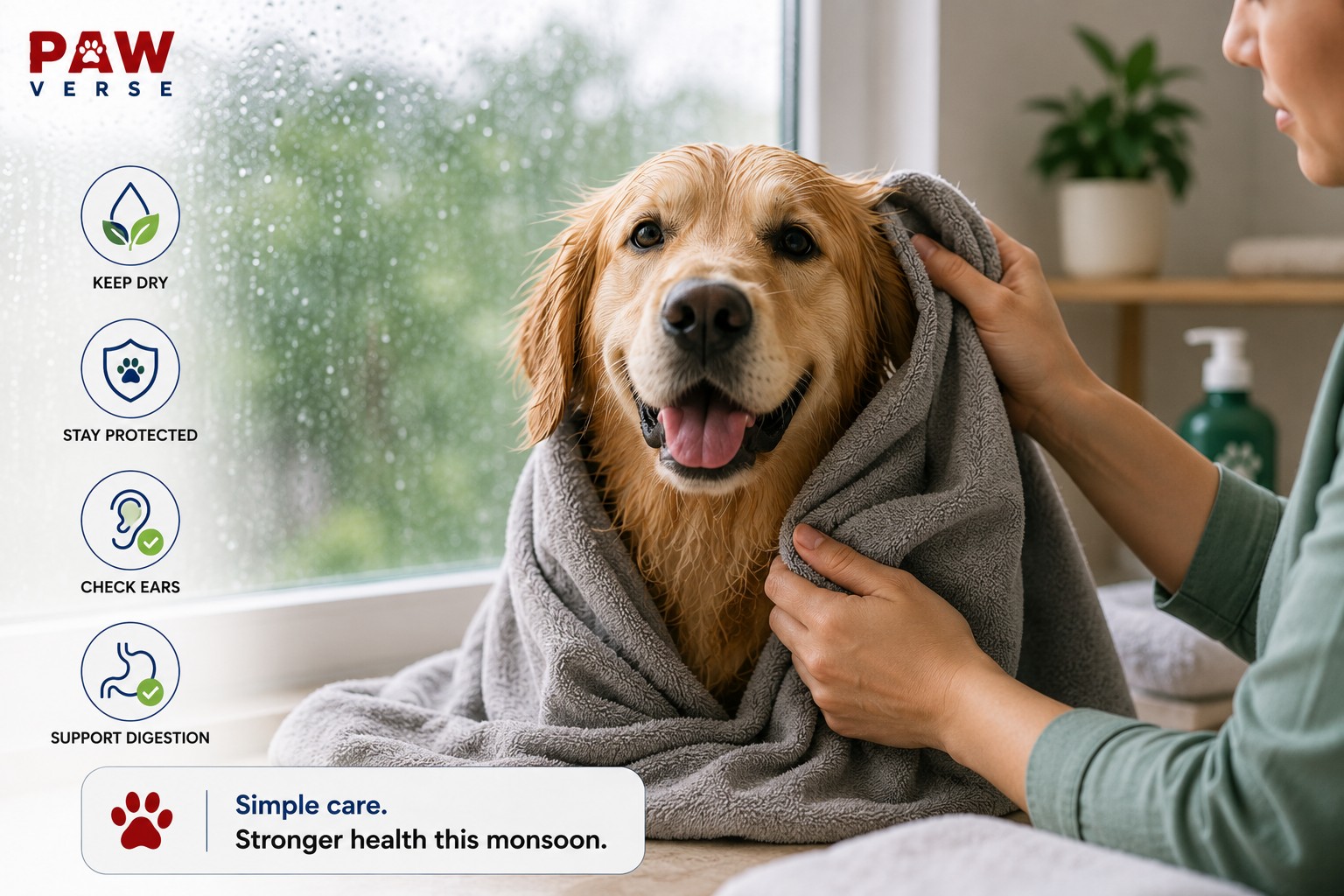
After every walk:
Towel dry thoroughly, paying extra attention to paws, belly, ears, neck, and any skin folds
Wipe or rinse paws, separating the toes to check the webbing for redness, thorns, or a yeasty smell
Check the whole body for ticks by hand, focusing on the ears, between the toes, the neck, and under the collar
Weekly:
Check and dry the ears, especially for floppy eared breeds, even without an obvious smell or symptom
Wash bedding and vacuum rugs or mats to reduce fungal buildup in the home
Trim fur between the paw pads if it's grown out, since less fur there means less water clings after a walk
Ongoing through the season:
Bathe once every two to three weeks with a regular shampoo, or a vet recommended antifungal shampoo if a skin issue has already been diagnosed. Over bathing strips natural protective oils and can make skin problems worse, not better.
Continue tick and flea prevention on schedule without gaps, since parasite pressure is highest right now.
Stick to filtered or boiled water for drinking, and don't let your dog drink from puddles or standing water on walks.
Keep food and water bowls clean and dry between uses, and don't leave wet food out for extended periods since it spoils faster in humidity.
Walking Your Dog Safely in the Rain
Dogs still need their walks in monsoon, and that's fine with a bit of preparation. Early morning, before heavier showers typically build later in the day, tends to be the calmest window. Keep walks shorter, around 15 to 20 minutes, during continuous rain rather than the full usual duration. A breathable waterproof raincoat and, for some dogs, booties or a paw balm can help reduce how much water and mud they're exposed to. Carry a small towel for a quick dry down as soon as you're back inside, and steer clear of waterlogged or stagnant areas, which carry the highest leptospirosis risk.
Diet Adjustments Worth Considering
Since monsoon puts extra load on digestion, some vets recommend leaning toward a diet that's easier on the gut during these months, generally higher quality protein and easily digestible ingredients. This isn't about switching foods entirely, gradual change is still the rule, but it's worth a conversation with your vet if your dog tends to have a sensitive stomach or if loose stool becomes a recurring issue during the season.
When to Contact a Vet
Reach out to a vet if:
You see a skin patch, hot spot, or ear issue that isn't improving with basic drying and cleaning
Your dog is licking or chewing at one area repeatedly
You notice pale gums, unusual lethargy, or fever
Vomiting, diarrhea, or increased thirst shows up, especially after walking through puddles or waterlogged areas
You find an embedded tick and aren't sure how to remove it safely
More than one warning sign from the table above shows up together
You don't need to visit a clinic in person for an initial assessment. Through PawVerse, you can book an online vet consultation from home to help figure out whether what you're seeing needs an in person visit. For pale gums, high fever, or a dog that seems seriously unwell, our emergency vet consultation is available around the clock.
Frequently Asked Questions
Q: How often should I bathe my dog during monsoon?
A: Once every two to three weeks is generally enough. Bathing more often than that strips the natural oils that protect the skin, which can actually make monsoon skin problems worse rather than better. If a fungal infection has already been diagnosed, your vet may recommend a specific medicated shampoo on a different schedule.
Q: How do I remove a tick safely from my dog?
A: Use a pair of tweezers, ideally with gloves, and grip the tick as close to the skin as possible, pulling it straight out steadily rather than twisting. Wash your hands and the area afterward, and keep an eye on your dog over the following weeks for any signs of lethargy, fever, or appetite loss, since tick borne illness can take one to three weeks to show symptoms.
Q: Can indoor dogs still get monsoon related infections?
A: Yes, though the risk is lower. Even dogs that go outside briefly for bathroom breaks can pick up ticks, moisture related skin issues, or leptospirosis exposure. Humidity indoors can also contribute to skin issues if a dog's coat doesn't get the chance to fully dry after even short outdoor trips.
Q: Is it safe to walk my dog in the rain?
A: Yes, with some precautions. Shorter walks during continuous rain, a waterproof raincoat, avoiding stagnant puddles, and a thorough towel dry immediately afterward make rain walks reasonably safe for most healthy dogs.
Q: What does a fungal skin infection look like on a dog?
A: It typically appears as an itchy, scaly patch that may have a noticeable smell, most often in the ears, paws, armpits, or skin folds. It's different from a hot spot, which tends to be more sudden, red, and oozing rather than scaly.
Q: Should I change my dog's food during monsoon?
A: A full food switch usually isn't necessary, but some vets suggest leaning toward easily digestible, higher quality protein sources during this season if your dog has a history of sensitive digestion, since monsoon conditions put extra strain on the gut. Any dietary change should still be gradual, over seven to ten days, to avoid causing digestive upset of its own.
The Bottom Line
Most monsoon health problems in dogs come down to trapped moisture, contaminated water, and a spike in tick activity, all of which are manageable with a fairly simple daily routine rather than anything complicated. Dry your dog thoroughly after every walk, check for ticks daily, keep drinking water clean, and don't skip parasite prevention during these months.
If something looks off, a patch that isn't healing, a smell that wasn't there before, unusual tiredness, don't wait it out through the season. Early attention during monsoon tends to prevent small issues from turning into bigger ones.
Talk to a PawVerse vet online now, or explore our Pet Health Blog for more India specific guides on keeping your dog healthy through every season.
With love, Team PawVerse
Have a question about your pet?
Chat with Captain Scout and reach a verified vet, guaranteed within 30 minutes.
Admin
Part of the PawVerse team, on a mission to make trusted pet healthcare simple and reachable for every Indian pet parent.
Your pet's health does not have to wait
Talk to a verified PawVerse vet from home. No travel, no waiting rooms, real answers within 30 minutes.