
Reviewed by Dr. R.T. Sharma
Bringing home a pet can be one of the most rewarding decisions you make but it is also a very responsible decision. It can be overwhelming with feeding schedules, grooming routines, vet visits and trying to figure out what is normal and what is a warning sign, especially in the first few months.
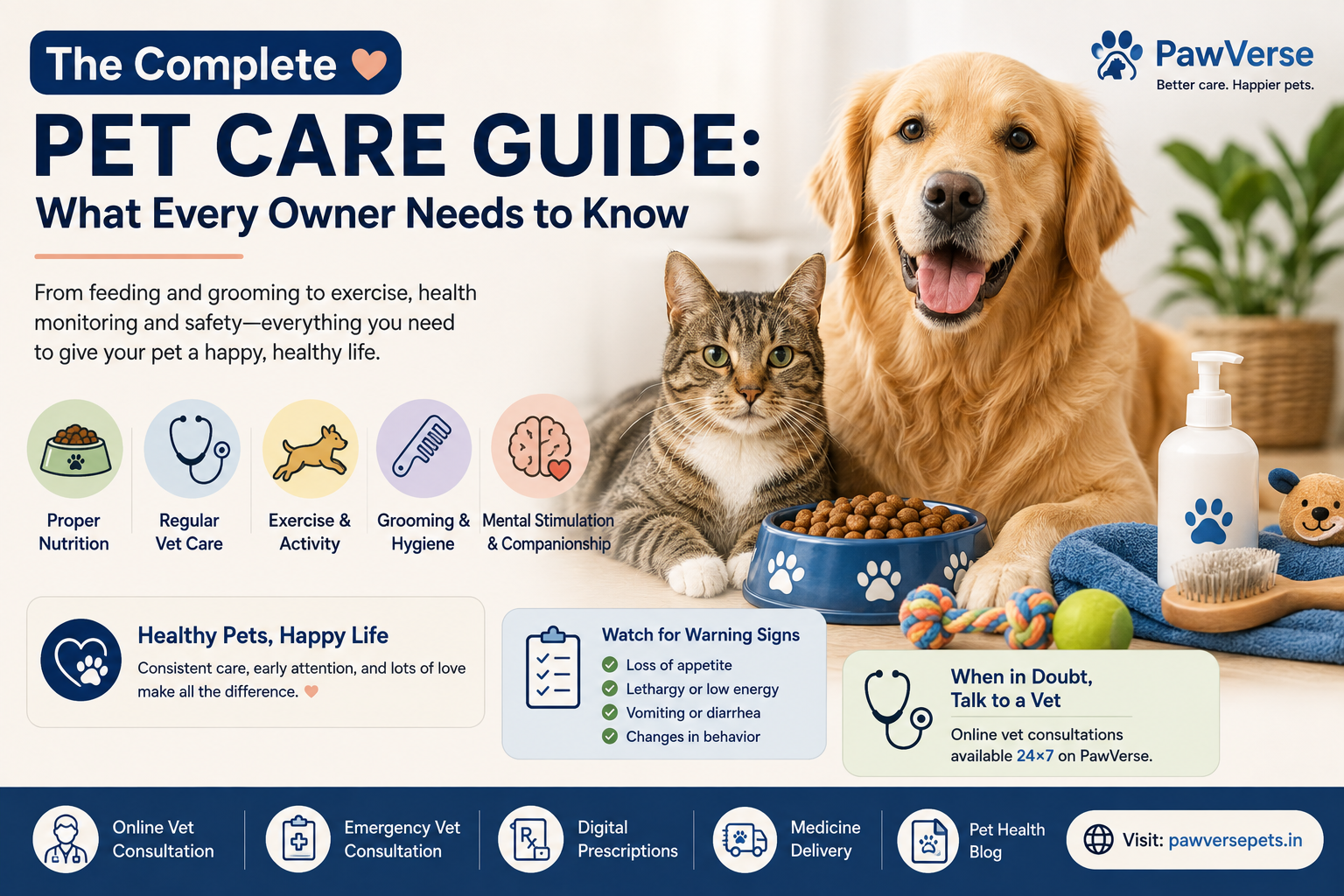
This guide tells you the basics of pet care: feeding, grooming, exercise, health monitoring and safety. Whether you have a puppy, a rescue cat or a pet you’ve had for years and want to care for better, this is a good place to start. Dog health guide Our Dog Health Guide is a handy companion read for breed specific and seasonal advice.
What Are the Basics of Pet Care?
Every pet, regardless of species or breed, needs five core things covered consistently:
Proper nutrition suited to their age, size, and health status
Regular veterinary care, including checkups and vaccinations
Physical exercise appropriate to their energy level
Grooming and hygiene to prevent skin, coat, and dental problems
Mental stimulation and companionship
Missing any one of these for an extended period tends to show up as a behavior change, weight change, or health issue. The sections below cover each one in detail.
How to Feed Pet the Right Way?
How much should I feed my pet?
Portion size will vary depending on weight, age, activity and if the animal is spayed or neutered. Most commercial pet food packaging will have a feeding guide based on weight, but this is a guideline, not a hard and fast rule. A dog running an hour a day will need more calories than a dog that naps on the couch all day.
A quick way to check if portions are correct is to be able to feel your pet’s ribs with light pressure but not see them clearly. If it is difficult to feel the ribs at all the pet may be over weight. If they are very visible, the pet may be underweight.
How often should dogs and cats eat?
Adult dogs usually do fine on two meals a day. Puppies under six months of age typically need three to four smaller meals. Most cats like to eat smaller meals more often. Many cats do well on two set meals per day with a little dry food available throughout the day. However, it is contingent upon the cat.
What foods are dangerous for pets?
Some common human foods that are toxic to dogs and cats include: chocolate, grapes and raisins, onions and garlic, xylitol (a sugar substitute found in sugar free gum and some peanut butter), and alcohol. If your pet eats any of these, call a vet immediately, don’t wait to see if symptoms appear.
Grooming and Hygiene
How often does my pet need grooming?
This depends heavily on coat type. Short haired breeds may only need brushing once a week, while long haired or double coated breeds often need brushing several times a week to prevent matting. Bathing is generally needed every four to six weeks for most dogs, and cats are usually self sufficient groomers who rarely need baths unless they get into something messy.
Do cats need their nails trimmed?
Yes. Even indoor cats with scratching posts often need a nail trim every three to four weeks. Overgrown nails can curl into the paw pad and cause pain or infection.
Why is dental care important for pets?
Dental disease is one of the most common and most overlooked health issues in pets. By age three, most dogs and cats show some signs of dental disease. Regular brushing, dental chews, and professional cleanings when recommended by a vet can prevent pain, tooth loss, and infections that can spread to other organs.
Exercise and Mental Stimulation
How much exercise does my dog need?
This varies widely by breed and age. High energy breeds like Border Collies or Huskies often need sixty to ninety minutes of activity a day, while smaller or lower energy breeds may be satisfied with twenty to thirty minutes. A dog that is destructive, restless, or barking excessively is often a dog that isn't getting enough physical or mental exercise.
Do cats need exercise too?
Yes, though it looks different. Interactive play with wand toys, puzzle feeders, and climbing structures like cat trees help prevent obesity and boredom related behavior problems such as scratching furniture or overgrooming.
Recognizing Health Problems Early
Pets have a natural talent for hiding pain and illness . It 's a trait inherited from their wild ancestors to survive . This means owners should look for subtle changes rather than waiting for obvious distress.
Here are some common warning signs to watch out for:
Loss of appetite for longer than 24 to 48 hours
Significant weight loss or gain
Changes in how much water you drink, either drinking way more or way less
Little energy or interest in doing things
Changes in bathroom habits, such as straining, diarrhoea, or blood
Excessive grooming, licking or hair loss
Bad breath that suddenly smells worse than usual
refusal to jump or climb stairs or limping
Either one of these may not seem urgent by itself, but if two or more occur at the same time or any of them persists for a couple of days, get a professional look.
When to visit a Vet: Routine vs Urgent
Situation | Recommended Action |
Annual checkup, vaccinations due | Schedule routine appointment |
Mild appetite loss, otherwise normal behavior | Monitor 24 to 48 hours |
Vomiting or diarrhea lasting more than a day | Contact a vet |
Known ingestion of a toxic food or substance | Contact a vet immediately |
Difficulty breathing, collapse, or seizures | Emergency care, do not wait |
Bloated or painful abdomen | Emergency care, do not wait |
Limping that doesn't improve after rest | Contact a vet within a few days |
Visible pale or white gums | Emergency care, do not wait |
You don't always need to leave the house for the first step. Through PawVerse, you can book an online vet consultation and get guidance on whether an in-person visit is needed. For anything listed as an emergency above, our emergency vet consultation is available around the clock.
Pet Proofing Your Home
New pet owners often forget how curious animals can be. Here are some common hazards to look out for:
Loose wires and cords that might be chewed on
Small items that can be swallowed like coins, rubber bands and children’s toys
Houseplants poisonous to pets including lilies for cats
Cleaning products and accessible medicines
Open garbage cans, especially for dogs that forage
Unsecured windows or balconies (especially cat
A simple way to notice hazards you might otherwise pass over is to get down to your pet's eye level for a few minutes.
Frequently Asked Questions
Q: How often should I take my pet to the vet?
A: Healthy adult pets generally need to see the vet once a year. Puppies and kittens require a series of vaccinations in the first few months, and most senior pets, usually seven years of age and older, benefit from checkups every six months because health can change more quickly at that age.
Q: What is the most common mistake new pet owners make?
A: Overfeeding is a very common problem, often due to treats and table scraps given in addition to regular meals. Most new owners don’t realise how important portion control is. Obesity in pets has been linked to joint problems, diabetes and a shorter lifespan.
Q: How do I know if my pet is in pain?
A: Pets usually don't vocalise pain like humans do. Signs to watch for include less activity, reluctance to be touched in a specific area, changes in posture, panting when not hot or exercising, and hiding more than usual. If you think your pet is in pain, the safest way to confirm your suspicions is to take your pet to the vet.
Q: Is it normal for pets to sleep most of the day?
A: Yes, to a degree. Adult dogs typically sleep twelve to fourteen hours a day, and cats often sleep sixteen hours or more. Puppies, kittens, and senior pets tend to sleep even more. A sudden increase in sleep combined with reduced appetite or activity is what should raise concern, not the total hours alone.
Q: How do I introduce a new pet to my household?
A: Slow, controlled introductions are best. If you are bringing a new pet into a household with existing animals, keep them apart at first and allow them to become familiar with each other's scent before introducing them face to face. One of the most frequent causes of permanent bad feelings between pets is to rush introductions.
Q: Can indoor pets skip vaccinations?
A: No. Even indoor pets can be exposed to airborne diseases, parasites brought in on shoes or clothing, and the risk of accidental escape. Core vaccines are recommended for both indoor and outdoor pets, but your vet can tell you which additional vaccines you need based on lifestyle.
The Bottom Line
Good pet care isn't complicated, but it does require consistency. Feed appropriate portions, keep up with grooming and dental care, make sure your pet gets enough movement and mental engagement, and pay attention to the small changes that often show up before a bigger problem does.
When something feels off, trust that instinct and do online vet consultation. Early attention to a small change almost always leads to a better outcome than waiting it out.
Talk to a PawVerse vet online now, or explore our Pet Health Blog for more guides on keeping your pet healthy year round.
With love, Team PawVerse
Have a question about your pet?
Chat with Captain Scout and reach a verified vet, guaranteed within 30 minutes.
PawVerse Editorial Team
Practical pet health guides from the PawVerse team, written to help Indian pet parents understand what they are seeing and when to talk to a vet.
Your pet's health does not have to wait
Talk to a verified PawVerse vet from home. No travel, no waiting rooms, real answers within 30 minutes.