
Reviewed by PawVerse Veterinary Team
There's normal shedding, the kind you sweep up and mostly forget about, and then there's the kind that leaves a visible layer of fur on every surface in the house, no matter how often you vacuum. If you've started finding dog hair in your coffee, your car, and places your dog has never even been, it's fair to wonder whether this is just how your dog is built, or a sign that something's off.
Shedding is a completely normal biological process for almost all dogs, but the amount, timing, and pattern can vary a lot, and sometimes excessive shedding does point to an underlying issue. This guide covers what's normal, what causes excess shedding, and when it's worth a vet visit. For general grooming basics, our Complete Pet Care Guide is a useful companion read.
Is My Dog's Shedding Normal?
Every dog gives off fur in some amount. A few breeds that shed very little or are hairless are the exceptions. The quantity and timing of shedding depend a lot on the breed the type of coat and the season.
Dogs that have coats, such as Huskies, German Shepherds and Golden Retrievers usually shed the most. They shed heavily during the coat change when they drop their undercoat in a short span normally in spring and fall. Dogs with coats shed more steadily but in smaller amounts all year long. If the pattern of your dog’s shedding stays close to what the breed and past experience show it is probably normal even if it seems excessive.
What you should watch for is a change. Notice if shedding becomes much heavier than usual if it happens outside the season or if it comes with skin problems such, as redness, bald spots or scabs.
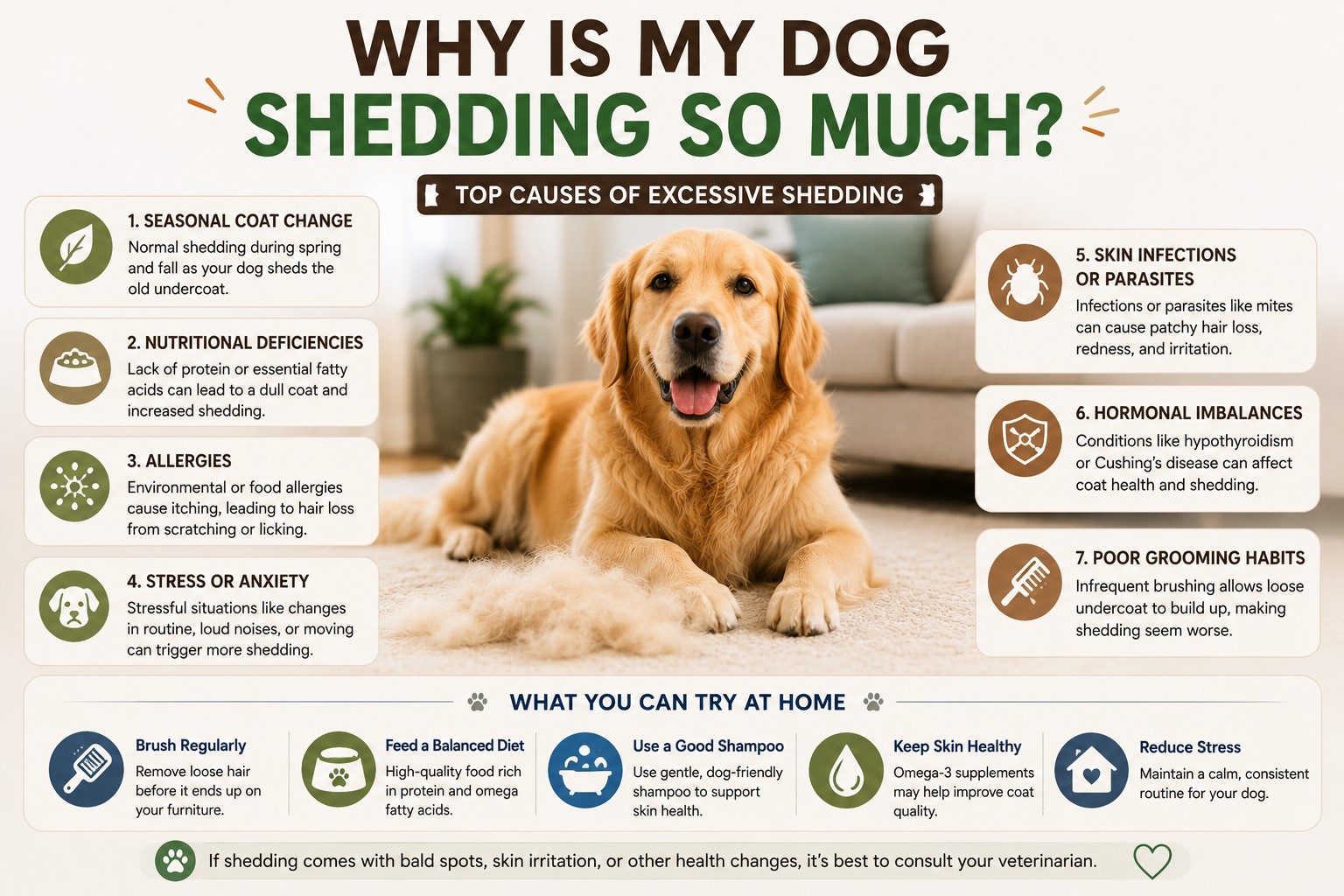
7 Reasons Your Dog Is Shedding More Than Usual
1. Seasonal Coat Change
This is the most common and most normal cause. As daylight hours change, dogs with double coats shed their undercoat to prepare for the coming season, dropping the old coat in spring to make way for a lighter summer coat, and again in fall to grow in a denser winter coat. This period, sometimes called blowing coat, can look alarming in volume but is entirely expected.
2. Nutritional Deficiencies
A diet lacking sufficient protein or essential fatty acids can lead to a dull, brittle coat that sheds more than it should. This is more common with low quality commercial foods or homemade diets that aren't properly balanced. A coat that looks dull alongside increased shedding is often a sign worth discussing with a vet, since diet is one of the more fixable causes.
3. Allergies
Environmental or food allergies that cause itching often lead to secondary hair loss, either from the irritation itself affecting the coat or from excessive scratching and licking pulling hair out. This tends to be more localized, around the paws, belly, or face, rather than an even, all over increase. For a deeper look at allergy related symptoms, our guide on dog itching and skin allergies covers this in detail.
4. Stress or Anxiety
Dogs can experience a temporary increase in shedding during periods of high stress, similar to how humans sometimes notice more hair loss during stressful periods. A stressful vet visit, a move, a loud event like fireworks, or a change in household routine can all trigger this kind of short term shedding spike.
5. Skin Infections or Parasites
Bacterial or fungal infections, along with parasites like mites, can cause patchy hair loss, sometimes with visible skin changes like redness, scabbing, or an odor. This is different from general increased shedding, since it's usually localized and comes with other skin symptoms.
6. Hormonal Imbalances
Conditions like hypothyroidism or Cushing's disease can cause changes in coat thickness and shedding patterns, often alongside other signs like weight gain, lethargy, or increased thirst and urination. This type of shedding tends to be gradual and progressive rather than a sudden spike.
7. Poor Grooming Habits
Infrequent brushing allows loose undercoats to build up rather than being removed regularly, which can make shedding seem worse than it actually is, since the loose hair accumulates and then sheds all at once, often in visible clumps, rather than being managed continuously.
Warning Signs That Make This Worth a Vet Visit
Sign | What It May Mean |
Bald patches or uneven hair loss | Possible infection, parasites, or hormonal issue |
Red, scabbed, or odorous skin | Likely infection needing treatment |
Shedding paired with weight gain or lethargy | Possible hormonal condition |
Shedding paired with itching or licking | Likely allergy related |
Dull, brittle coat alongside shedding | Possible nutritional deficiency |
Sudden shedding spike with no seasonal explanation | Worth a vet check to rule out underlying cause |
What You Can Try at Home First
If the shedding looks heavy but there are no skin changes or other symptoms, a few things can help manage it:
Brush regularly, several times a week during seasonal coat blow, using a tool suited to your dog's coat type, such as an undercoat rake for double coated breeds.
Check the food label for adequate protein content and named fatty acid sources, and consider asking your vet about a fatty acid supplement if the coat looks dull.
Bathe with a gentle, dog specific shampoo every four to six weeks, since over bathing can strip natural oils and actually worsen shedding.
Keep up with parasite prevention, since fleas and mites are a common, sometimes overlooked contributor to excess shedding.
Reduce stress where possible, keeping a consistent routine during known stressful periods like fireworks season or a household change.
When to Contact a Vet
Reach out to a vet if:
You notice bald patches or uneven hair loss rather than general shedding
The skin looks red, scabbed, or has an unusual odor
Shedding is accompanied by itching, licking, or chewing at the skin
Your dog is also showing weight gain, lethargy, or increased thirst
The coat looks dull or brittle in addition to shedding more
A shedding increase seems unrelated to the usual seasonal pattern for your dog's breed
You don't need to visit a clinic in person for an initial assessment. Through PawVerse, you can book an online vet consultation from home to help figure out whether the shedding is normal or worth further investigation. For any of the more serious symptoms listed above, our emergency vet consultation is available around the clock.
Frequently Asked Questions
Q: Why is my dog shedding so much all of a sudden?
A: A sudden increase is often tied to a seasonal coat change, especially in double coated breeds, but it can also be triggered by stress, a diet change, or an underlying health issue. If the shedding is accompanied by skin changes, itching, or other symptoms, it's worth a vet check rather than assuming it's purely seasonal.
Q: Do certain breeds shed more than others?
A: Yes, significantly. Double coated breeds like Huskies, Golden Retrievers, and German Shepherds tend to shed the most, particularly during seasonal coat blow, while breeds like Poodles and Bichon Frises shed comparatively little due to their coat type.
Q: Can diet really affect how much my dog sheds?
A: Yes. A diet lacking sufficient protein or essential fatty acids can lead to a duller coat and increased shedding. Switching to a higher quality food or adding a vet recommended fatty acid supplement often improves coat condition within a few weeks to months.
Q: Is it normal for a dog to shed more when stressed?
A: Yes, stress related shedding is a real and fairly common phenomenon in dogs, often triggered by short term stressful events like a vet visit or loud noises. This type of shedding is usually temporary and resolves once the stressor passes.
Q: How can I tell if shedding is from allergies rather than just seasonal?
A: Allergy related shedding tends to be localized, focused on the paws, belly, face, or ears, and is usually accompanied by itching, licking, or redness. Seasonal shedding tends to be more even across the body and isn't typically paired with skin irritation.
Q: Does bathing my dog more often help with shedding?
A: Not necessarily, and it can sometimes make things worse. Over bathing strips natural oils from the skin and coat, which can actually increase shedding and dryness. Regular brushing is generally more effective for managing shedding than frequent baths.
The Bottom Line
Most dog shedding is completely normal, especially around seasonal changes, and brushing, diet, and grooming habits are usually enough to keep it manageable. What's worth paying closer attention to is a change in pattern, bald patches, skin irritation, or shedding paired with other symptoms like lethargy or weight change.
If home care doesn't seem to be helping, or you notice any of the warning signs above, a vet visit can help identify whether something beyond the usual coat cycle is going on.
Talk to a PawVerse vet online now, or explore our Pet Health Blog for more guides on keeping your dog's coat and skin healthy year round.
With love, Team PawVerse
Have a question about your pet?
Chat with Captain Scout and reach a verified vet, guaranteed within 30 minutes.
Admin
Part of the PawVerse team, on a mission to make trusted pet healthcare simple and reachable for every Indian pet parent.
Your pet's health does not have to wait
Talk to a verified PawVerse vet from home. No travel, no waiting rooms, real answers within 30 minutes.