
Reviewed by PawVerse Veterinary Team
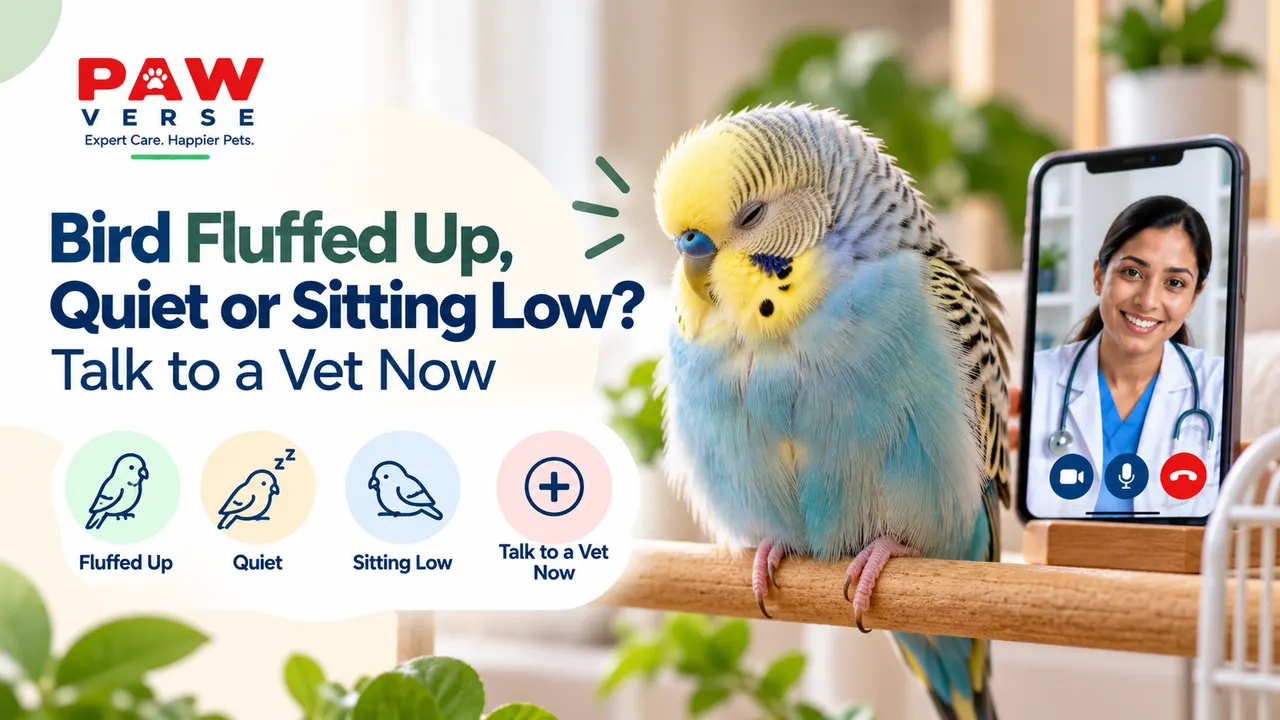
She normally chatters the moment the lights come on. This morning there's silence. Your budgie is puffed up like a little feather ball, eyes half shut, sitting low on the perch, or worse, on the floor of the cage. It looks like she's cold, or sleepy, or maybe just having an off day.
With birds, that guess can cost you. Birds hide illness until they physically can't, so a bird that looks unwell is usually already quite sick. The next few hours matter more than the next few days.
Bird fluffed up, quiet, or sitting low? Talk to a vet about her now → Name the species first, and have a photo of her droppings ready if you can.
VCI-registered vets · Say the species first: budgie, lovebird, cockatiel, parrot · Usually connected within ten minutes, always within thirty · Delhi NCR and the rest of India
The Sick Bird Look
Vets call it the "sick bird look": fluffed feathers that stay fluffed for hours, a sleepy bird with her eyes closed, sitting low on the perch or on the cage floor, sometimes with her tail bobbing in time with her breathing.
Birds are prey animals, and in the wild a visibly weak bird is a target. So they put on a show of being well for as long as they can. By the time you can see a problem, the illness may have been developing for days, and small birds in particular can go downhill within hours.
How Urgent Is It?
What you see | What it may mean | What to do |
|---|---|---|
Open-mouth breathing, or the tail bobbing with every breath | A lung or air sac problem, or real effort to breathe | Go now, and call ahead |
Sitting on the cage floor, unable to perch | A late sign of serious illness | Go now |
Collapse, a seizure, bleeding, or unresponsive | Emergency | Go now |
A female straining, with a swollen belly, on the floor | Possible egg binding | Go now, keeping her warm |
Fluffed up and sleepy for hours during the day | Illness, pain, or weakness | Talk to a vet now |
Not eating or drinking for a day, or less in a small bird | Illness, which needs a cause found | Talk to a vet now |
Droppings that have changed in colour, amount, or consistency | A digestive or other problem | Talk to a vet today |
Fluffed briefly in the cold, or while dozing, then back to normal | Often harmless | Watch, and keep her warm and out of drafts |
Not sure which row she's on? Treat it as the more serious one.
Not sure how serious it is? Let a vet help you decide →
Set Up a Hospital Cage in 10 Minutes
While you arrange care, a few simple steps can help her conserve energy and stay safer.
Move her to a small cage or a ventilated box lined with clean paper, so you can also see her droppings.
Keep her gently warm. A sick bird loses heat quickly. Aim for roughly 26 to 29°C, and sources vary a little. Place a warm water bottle wrapped in a towel under half the cage floor, so she can move away from it, and never put heat directly against her. In the Indian summer, when the room is already hot, don't add heat. Shade, quiet, and a draft-free spot are what she needs.
Lower the perches, or take them out, so she can't fall. Use a rolled towel for support if she's weak.
Put food and water on the floor, within easy reach. A sick bird may not climb to eat.
Keep it dim and quiet, away from the TV, children, other pets, and loud noise. Covering part of the cage helps her settle, as long as air can still get in.
Handle her as little as possible. Stress can be dangerous for a sick bird.
Keep the air clean. Fumes from overheated non-stick cookware, smoke, incense, and strong sprays can harm a bird's lungs, so move her to fresh air if she may have been exposed.
Getting Her to a Vet
Phone first. Not every clinic sees birds, and not every 24-hour clinic does. Ask whether they treat birds and whether someone is available now.
Use a secure carrier, covered with a light cloth, kept warm and dark for the journey.
Photograph the droppings on the paper, and bring a sample. They're one of the best clues a vet has.
Bring the details: her species and age, what she eats, how long she has been unwell, and a photo of her cage setup.
Keep her away from other birds until you know what's wrong.
Can't find a clinic that sees birds? The emergency line, +91 96255 21168, can help you look. Just tell them the species.
What Not to Do
Don't give human medicines, leftover antibiotics, or "respiratory drops" from a pet shop. Bird doses depend on species and weight, and the wrong drug can kill a bird faster than the illness. Our guide on pet medicine and prescriptions explains why.
Don't put medicine in her water. A sick bird may drink too little or too much, so the dose is unpredictable.
Don't use essential oils or home remedies.
Don't force-feed her.
Don't wait until morning if she's on the floor, bobbing her tail, or breathing with her mouth open.
What the Vet Does
A vet can judge urgency from her posture, breathing, and droppings on video, ask the questions that matter (diet, cage setup, other birds, fumes, an egg), and tell you whether to head out now or monitor her. In person, a vet can examine her, check her weight, and run tests.
What a screen can't do is hold her, listen to her chest, take an X-ray, or give oxygen. If she needs those, you'll hear it quickly.
Our guides on pet bird care and on the legality and health of pet birds in India cover what keeps a bird healthy over the long term, from diet to the cage environment.
How it works
Name the species, and describe the signs to Captain Scout, our AI intake assistant.
A VCI-registered vet looks at her on video, so you can show her posture, her breathing, and her droppings.
You leave with a decision, and a hospital-cage checklist.

Ready? Start now →
Questions Before You Book
My bird is fluffed up but still eating. Should I worry?
Birds fluff briefly when they're cold or dozing. A bird who stays fluffed for hours, or is also quiet and sleepy during the day, may be unwell. Talk to a vet.
Is a bird on the cage floor always an emergency?
It's a late sign of serious illness, and it needs same-day care. Treat it as an emergency.
How long can a sick bird wait?
Not long. Small birds can decline within hours, which is why waiting until morning is risky.
Should I cover the cage?
Partly, to keep her calm and dim, but leave enough open for fresh air.
Can I give her something I use for my other pet?
No. Many medicines that suit dogs and cats are unsafe for birds.
Could my other birds catch it?
Some bird illnesses spread, so keep a sick bird apart, and wash your hands between birds.
How long is the wait for a vet?
Most owners are connected in around ten minutes, and the promise is thirty. Start now →
If You'd Rather Phone
For open-mouth breathing, bleeding, a seizure, or collapse, call +91 96255 21168 and say it's a bird. For a question that can wait, WhatsApp +91 96255 21168 (8am to 10pm IST).
The Bottom Line
A fluffed, quiet bird is saying something is wrong, and she has probably been saying it for longer than you noticed. Check the signs, set up a warm, quiet hospital cage, keep her away from medicines and fumes, and get her seen. Most birds who are helped early do far better than those who are left to see.
Birds hide illness until they can't. Don't wait for her to run out of time. Ask a vet now →
With love, Team PawVerse
Have a question about your pet?
Chat with Captain Scout and reach a verified vet, guaranteed within 30 minutes.
PawVerse Editorial Team
Practical pet health guides from the PawVerse team, written to help Indian pet parents understand what they are seeing and when to talk to a vet.
Your pet's health does not have to wait
Talk to a verified PawVerse vet from home. No travel, no waiting rooms, real answers within 30 minutes.