
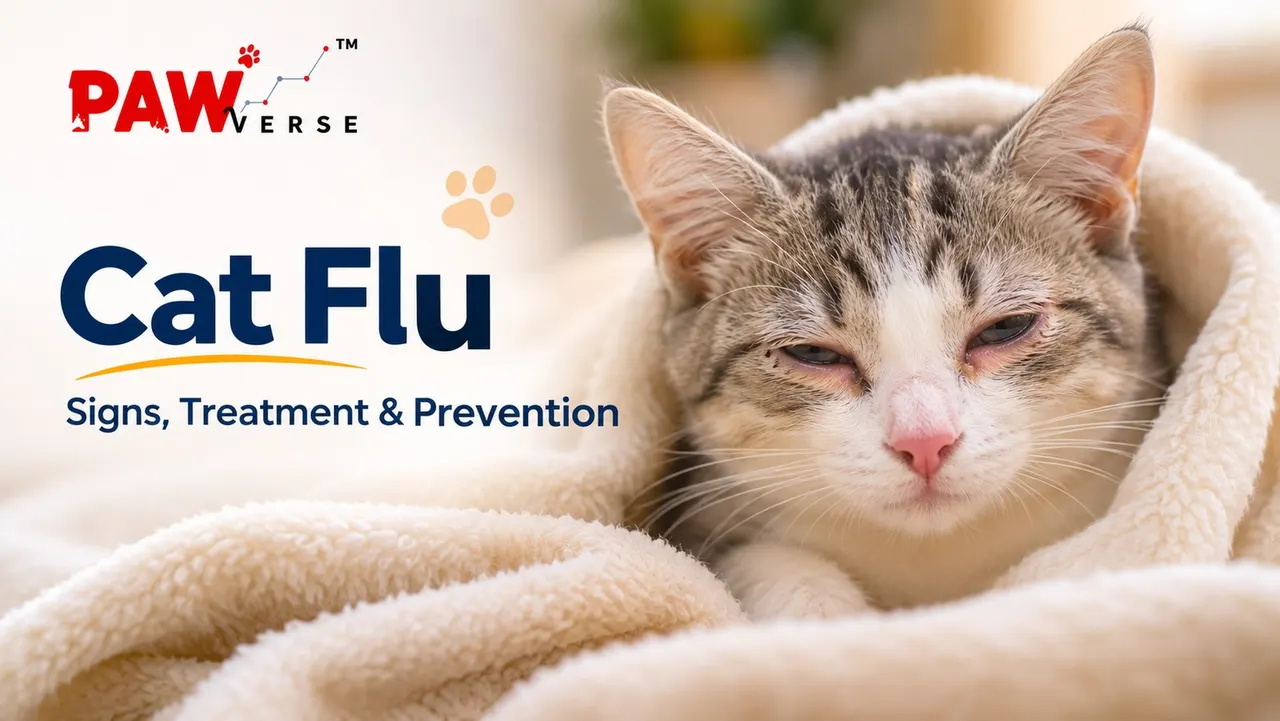
A sneeze or two is nothing in a cat. But when the sneezing comes in bursts, her eyes start watering, and she goes quiet and picky with her food, you're probably looking at what most people call cat flu. Vets call it feline upper respiratory infection, and it is one of the most common illnesses a cat will ever have.
Most cats get through it with good care. A few don't, and a few become lifelong carriers who flare up again in stressful times. This guide explains what causes it, how it spreads, what the signs mean, how it's treated, and how to lower the odds of it coming back.
Cat sneezing and not quite herself? Ask a PawVerse vet about her →
What Cat Flu Actually Is
"Cat flu" isn't a single disease. It's a group of infections of the nose, throat, and eyes, and two viruses cause most of it. The same few agents turn up again and again:
Cause | What it is | What it tends to do |
|---|---|---|
Feline herpesvirus (FHV-1) | A virus | Sneezing, eye discharge, and sometimes ulcers on the surface of the eye. Often severe in young kittens |
Feline calicivirus (FCV) | A virus | Sneezing and nasal discharge, and often ulcers in the mouth and on the tongue |
Chlamydia felis | A bacterium | Mostly a sore, red, watery eye |
Bordetella bronchiseptica | A bacterium | A less common cause. Can also infect dogs |
Together, the two viruses account for most cases. Bacteria often join in once the virus has damaged the lining of the nose, which is why the discharge can turn thick and yellow-green partway through.
How It Spreads
Cat flu spreads through close contact: sneezes, shared bowls and bedding, a litter tray used by several cats, and even your hands and clothes after touching a sick cat. It spreads fastest where many cats live together, such as shelters, boarding places, multi-cat homes, and groups of community cats.
The viruses that cause most cat flu are specific to cats. They aren't known to spread to people. Bordetella is the exception worth knowing about, because it is also seen in dogs.
A cat can pass it on before she looks ill, and some cats who have recovered keep shedding the virus, which is covered below.
Signs of Cat Flu
Signs usually appear around 5 to 10 days after exposure.
Sneezing, sometimes in bursts
A runny nose, clear at first and later thicker and yellow or green
Watery or sticky eyes, squinting, and red eyelids
A raspy or lost voice
A raised temperature, tiredness, and hiding
A reduced appetite, which is often the most important sign
Drooling and a sore mouth, which point towards calicivirus
Less often, a limp, since calicivirus can cause joint pain in some cats
You can't reliably tell the cause from the signs alone. Eye ulcers point towards herpesvirus, and mouth ulcers towards calicivirus, but both viruses can overlap. Our guide on conjunctivitis in cats covers the eye side in more depth.
How long does it last?
Mild cases usually improve within 7 to 10 days. An acute herpesvirus infection can take 10 to 14 days to settle, and eye signs can linger longer. A cat who isn't clearly improving by the end of the first week, or who gets worse, needs to be seen.
Is It Really Cat Flu?
Sneezing has other causes, so don't assume. Consider:
Dust, smoke, or sprays, which irritate the nose. Incense, mosquito coils, aerosols, and dusty litter are common triggers in Indian homes.
An allergy
Asthma, particularly if she coughs or wheezes
A dental problem, since the roots of some teeth sit close to the nose
Something stuck in the nose, or a growth, often with discharge from only one side
A fungal infection
If sneezing carries on for several weeks, comes from only one nostril, or comes with a bloody discharge, a vet should look for the cause.
How Vets Diagnose It
For most cats, the diagnosis is made from the signs and examination, since the usual cases treated with supportive care don't need extensive tests. For cats who are severely ill, who keep relapsing, or who are in an outbreak, a vet may take swabs from the nose, throat, or eyes for PCR testing. In cats with long-standing signs, vets often also check for FIV and FeLV, since these can lower her defences.
Treatment
Treatment depends on how ill she is.
Supportive care is the foundation. This means keeping her drinking and eating, keeping her nose and eyes clean, and keeping her warm, comfortable, and low in stress. Warm, strong-smelling food, steam, and gentle cleaning of the face help many cats at home. Our guide on cat sneezing, fever, and not eating covers the steps for tonight.
A vet may add:
Antibiotics, when a bacterial infection is suspected
Eye drops or ointment for sore or ulcerated eyes
Fluids, and medicines to settle nausea or encourage eating
Antiviral medicine in some severe herpesvirus cases
Hospital care for kittens, for a cat who isn't eating, or if there are signs of pneumonia
Please avoid:
Human cold and flu tablets, and painkillers such as paracetamol, which are dangerous for cats
Steroids, which can make an infection worse
Vapour rubs, menthol, and essential oils
Leftover antibiotics
What about L-lysine? It is often suggested, but the evidence doesn't support it. Two shelter studies found it didn't prevent respiratory infection, and the European guideline group for feline infectious diseases doesn't recommend it. Ask your vet before spending money on it.
Complications to Watch For
Dehydration, and not eating. A cat who goes more than a day without a meaningful meal can develop serious liver problems, so call a vet. Our guide on why cats stop eating explains it.
Pneumonia, particularly in kittens, with fast or laboured breathing
Corneal ulcers, with squinting and a cloudy eye
Chronic nose and sinus inflammation, sometimes called "snuffles," which can follow a bad infection
A rare, severe form of calicivirus that can cause fever, swelling of the face and limbs, jaundice, and bleeding. It is an emergency
If she is breathing with her mouth open, see our guide on cats breathing with an open mouth, and go to a clinic.
Carriers and Flare-Ups
Most cats who catch herpesvirus keep it for life. The virus goes dormant in the nerves, and it can wake up when she is stressed, ill, or on steroid medication, causing a few days of sneezing and watery eyes. Calicivirus works differently, but many recovered cats shed it for a while, and some for much longer.
Common triggers are a new pet in the house, moving, boarding, a long illness, and crowding. Keeping her routine calm and her stress low is one of the most useful things you can do. A cat with frequent flare-ups needs a proper plan with a vet.
Prevention
Vaccinate. The core vaccine covers both herpesvirus and calicivirus, as covered in our cat vaccination schedule for India. It's worth knowing that vaccination reduces how severe the illness is, but doesn't completely stop infection or carriage. Vaccinating the mother doesn't prevent her kittens catching it either.
Keep new cats apart for a couple of weeks, and wash your hands between cats.
Don't share bowls, bedding, or trays when one cat is sick.
Clean thoroughly. Calicivirus can survive in the environment for a long time, so use a disinfectant that is effective against it, and ask your vet which.
Cut stress, and keep the home well ventilated and free from smoke and spray irritants.
Cat Flu in Kittens and Older Cats
Kittens often get the most severe disease, and it can sweep through a whole litter. They dehydrate fast, can stop nursing or eating, and can develop pneumonia, so a sneezing kitten who is quiet or off her milk needs a vet quickly. Older cats, and cats with other illnesses, also have less reserve. Our fading kitten syndrome guide covers the dangers for very young kittens.
Not sure whether it's cat flu, or how serious it is? Show a vet on video →
Frequently Asked Questions
Is cat flu contagious to people or dogs?
The two main viruses are cat-specific, with no known risk to people or dogs. Bordetella, a less common bacterial cause, can also infect dogs.
How long does cat flu last?
Mild cases improve in about 7 to 10 days, and some herpesvirus infections take 10 to 14 days. See a vet if she isn't improving after a week.
Can cat flu go away on its own?
Mild cases often do, with good supportive care. But a cat who stops eating, has trouble breathing, or is a kitten shouldn't be left to manage alone.
Why does it keep coming back?
Most cats who catch herpesvirus carry it for life, and stress or illness can trigger a flare-up.
Is my vaccinated cat protected?
Vaccination makes illness milder, but doesn't completely prevent infection, so a vaccinated cat can still catch cat flu.
Should I isolate a sick cat?
Yes. Keep her apart from other cats, use separate bowls and bedding, and wash your hands between cats.
Should I give her lysine?
Evidence doesn't support it, so ask a vet first.
When should I worry?
If she stops eating for a day, breathes with her mouth open, has swollen or cloudy eyes, or is a kitten or a senior who is clearly unwell.
When a Vet Can Help
A PawVerse online consultation can help you judge how serious her illness is, plan her care, and decide whether she needs to be examined in person. A screen can't take swabs, run tests, or feed a cat who won't eat, and if she needs those, a vet will say so.
The Bottom Line
Cat flu is common, usually mild, and often sorts itself out with good supportive care. The real dangers are a cat who stops eating, a kitten who deteriorates, and breathing trouble. Look after her eating, keep her comfortable and away from other cats, skip the human medicines, and ask a vet early if she isn't improving.
Worried about your cat's sneezing? Talk to a vet now →
With love, Team PawVerse
Have a question about your pet?
Chat with Captain Scout and reach a verified vet, guaranteed within 30 minutes.
PawVerse Editorial Team
Practical pet health guides from the PawVerse team, written to help Indian pet parents understand what they are seeing and when to talk to a vet.
Your pet's health does not have to wait
Talk to a verified PawVerse vet from home. No travel, no waiting rooms, real answers within 30 minutes.