
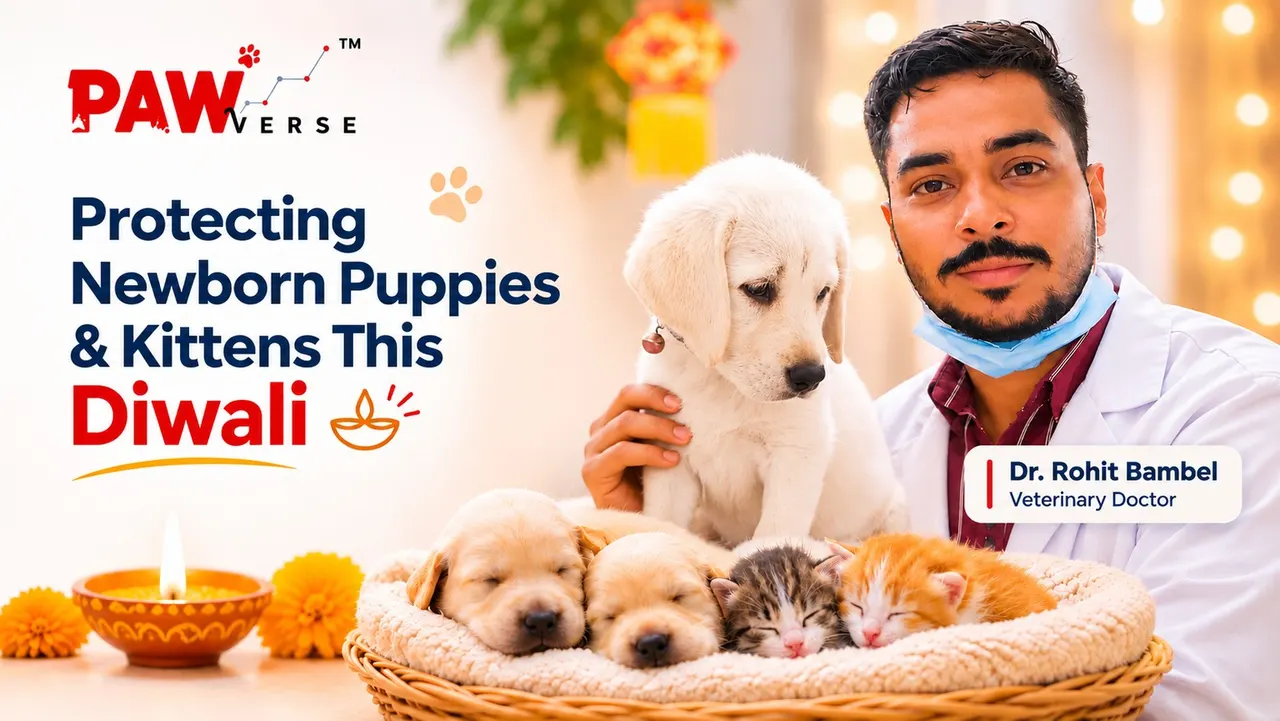
A veterinarian's guide to protecting newborn puppies and kittens
By Dr. Rohit Bambel | Veterinary Doctor
Diwali is a festival of happiness, lights, family and celebration. Our homes become brighter and the atmosphere fills with excitement. However, our four-legged family members may experience the festival very differently. Loud firecrackers, sudden flashes, smoke, air pollution and unfamiliar activity can make this period stressful and potentially unsafe for animals.
Newborn puppies and kittens need particular attention. During their first few weeks of life, they depend on their mother or caregiver for warmth, nutrition, protection and regular nursing. Their ability to regulate body temperature is limited, and they can become unwell quickly if feeding, warmth or hygiene is disrupted.
Newborn litter at home this Diwali? Ask a PawVerse vet about your litter → A vet can look at the nesting area on video and answer your questions before the fireworks start.
1. Why newborn puppies and kittens need extra protection
Newborns are more vulnerable than healthy adult animals because several body systems are still developing. They cannot regulate their temperature effectively, rely on frequent nursing and have immature immune defences. Smoke and airborne particles may irritate their respiratory tract, while excessive disturbance can interfere with rest and nursing.
The mother also needs a calm, secure environment. If she becomes frightened or repeatedly disturbed, her normal maternal behaviour may be affected. Keep the entire litter, not just individual newborns, in a quiet, protected area.
2. Firecracker noise and sudden flashes
Dogs and cats can hear sounds that people may barely notice. Sudden explosions and unpredictable noise can cause fear, startling and attempts to hide or escape. Newborns may startle or vocalise, and a frightened mother may become restless or reluctant to settle.
Keep the mother and litter indoors in a familiar, quiet room, away from balconies, windows and outdoor celebrations.
Close windows during periods of loud fireworks, while maintaining safe indoor ventilation.
Do not take newborns outside to watch fireworks or allow visitors to handle them during celebrations.
Avoid loud music or television used to cover the noise; keep the environment calm instead.
Never assume that a newborn is safe simply because it is too young to walk away. The mother, bedding or surrounding objects can be disturbed during a sudden fright.
3. Protect them from smoke and poor air quality
Firecracker smoke contains airborne particles and gases that may irritate the eyes and respiratory tract. Newborn animals should not be exposed to smoke, and the mother should also be protected.
Keep the nesting area away from outdoor smoke and direct airflow from open doors or windows.
Do not burn incense, dhoop or strong fragrances near the litter.
If outdoor air is visibly smoky, keep the room closed to outside air as much as practical, but do not compromise indoor ventilation or allow the room to become hot.
Seek veterinary attention promptly if you notice persistent coughing or sneezing, nasal discharge, unusual breathing effort, open-mouth breathing or reduced ability to nurse. Breathing difficulty is an emergency.
4. Keep the nesting area warm, dry and safe
Newborn puppies and kittens have limited temperature-control abilities, particularly during the first weeks of life. Cold bedding, drafts and sudden changes in room temperature can put them at risk. At the same time, excessive direct heat can cause overheating or burns.
Provide clean, dry, soft bedding in a quiet area away from doors, windows and direct air currents.
Maintain an age-appropriate environmental temperature; the ideal temperature changes as the litter grows.
If supplemental heat is needed, use a safe, controlled source under veterinary guidance and ensure the animals can move away from it.
Never place newborns directly on a heating pad or next to a heater, hot water bottle or open flame.
A simple rule: the nesting area should be comfortably warm, not hot, and the newborns should always have a safe way to move away from a heat source.
Not sure the nest is warm enough, or too warm? Show a vet the nesting area on video →

5. Diyas, candles, decorations and electrical hazards
Open flames, hot oil, wax, decorative materials and electrical wires can cause burns or injuries. The mother may accidentally knock over a diya while moving around the nest, and visitors or children may unintentionally disturb the litter.
Keep diyas, candles, lamps and hot oil well away from the nesting and feeding areas.
Secure decorative lights and electrical wires so the mother cannot become entangled.
Keep small decorative objects, ribbons and packaging away from animals.
Do not place the litter near busy entrances or areas where guests are gathering.
6. Nutrition: avoid festive food experiments
Sweets and festive snacks are not suitable for puppies or kittens. Chocolate can be toxic; grapes and raisins can cause serious illness in dogs; xylitol-containing sugar-free products can be dangerous, especially to dogs; and onion and garlic can damage red blood cells. Rich, fatty foods may also cause digestive upset.
For newborns, the priority is regular access to their mother's milk. Do not give cow's milk, sweets, biscuits or homemade milk mixtures. If the mother is absent, unwell or unable to feed the litter, ask a veterinarian about an appropriate commercial puppy or kitten milk replacer and a safe feeding plan.
Mother absent, unwell, or not feeding the litter? Ask a vet about a milk replacer and a feeding plan →
7. A practical Diwali checklist for pet parents
Keep handling minimal: Let newborns rest with their mother. Handle them only when necessary and with clean hands.
Check nursing: Make sure each newborn is latching and feeding. Repeated crying, failure to latch or unusual inactivity needs attention.
Monitor weight: Daily weight checks, using a suitable scale and consistent technique, can help identify poor growth early.
Care for the mother: Provide fresh water, appropriate food, clean bedding and a quiet place to nurse.
Avoid self-medication: Never give human sleeping pills, anti-anxiety medicines, painkillers or other drugs without veterinary direction.
Plan ahead: Keep your veterinarian's contact details and the route to an emergency veterinary facility accessible during the holiday.
Want a vet to go through your litter's weights and nursing? Talk to a PawVerse vet →
8. When should you contact a veterinarian urgently?
Newborn puppies and kittens can deteriorate quickly. Do not wait for signs to become severe. Seek urgent veterinary assessment if a newborn has:
Difficulty breathing, open-mouth breathing or blue, grey or very pale gums.
Marked weakness, collapse, seizures or inability to move normally.
A cold body, suspected hypothermia or persistent distress.
Failure to suckle, repeated inability to latch or persistent crying.
Repeated vomiting or diarrhoea, or signs of dehydration.
Burns, trauma or suspected ingestion of a toxic substance.
If breathing is difficult, the animal is collapsed or a seizure occurs, treat it as an emergency. Keep the animal warm and calm during transport, but do not force-feed or give medicines unless a veterinarian instructs you to do so.
Emergency during the festival? Call +91 96255 21168, where the team will quickly connect you with a vet. Save the number now, before you need it.
A veterinarian's message: celebrate with compassion
Diwali is a celebration of light, happiness and new beginnings. Its spirit can include kindness towards the animals who share our homes, neighbourhoods and lives. A firecracker may last only a few seconds, but the noise and smoke can have a much longer impact on animals. For a newborn puppy or kitten, even a small disruption to warmth, feeding or maternal care can matter.
This Diwali, celebrate responsibly. Keep the noise away, protect newborn animals, and give every mother and her litter a calm, safe place to rest.
Because the brightest Diwali is the one in which every living being feels safe.
Wishing you and your furry family members a very happy, healthy and compassionate Diwali!
Dr. Rohit Bambel Veterinary Doctor
Questions about your pet this Diwali? Talk to a PawVerse vet now → Questions that can wait are welcome on our phone line, +91 96255 21168 (8am to 10pm IST). Have an adult dog or cat who is frightened of the crackers? Our guide to firework anxiety in dogs and cats covers the calming plan.
Further reading
For additional veterinary information, consult the MSD Veterinary Manual's guidance on management of newborn puppies and kittens, and the RSPCA's advice on keeping pets safe during fireworks.
MSD Veterinary Manual: www.msdvetmanual.com RSPCA fireworks advice: www.rspca.org.uk/adviceandwelfare/fireworks/pets
This article is for general educational purposes and does not replace an examination or advice from a veterinarian. If an animal is unwell, seek individual veterinary care.
Have a question about your pet?
Chat with Captain Scout and reach a verified vet, guaranteed within 30 minutes.
PawVerse Editorial Team
Practical pet health guides from the PawVerse team, written to help Indian pet parents understand what they are seeing and when to talk to a vet.
Your pet's health does not have to wait
Talk to a verified PawVerse vet from home. No travel, no waiting rooms, real answers within 30 minutes.