
In a 2026 study, they examined senior cats that their owners truly believed were healthy. Physical examination showed at least one abnormality in each cat. Of cats tested for chronic kidney disease, 61 percent were diagnosed with it. Hypertension in 96% of those tested. Of the cats that were confirmed to have kidney disease, 75 percent had shown absolutely no change that their owner had noticed and only one cat’s owner had reported the classic textbook sign of increased thirst.
This gap, between what’s actually going on inside your cat and what you can see from the outside, is why this guide exists. This is not a list to worry you, it’s the specific information that turns “I think something might be wrong” into “I know what to ask my vet about,” and it’s the reason regular screening is as important as symptom-watching for cats, specifically.
Why Symptoms Alone Aren't Enough
Cats are exceptionally good at masking illness, a survival trait from being both predator and prey in the wild, and this shows up clearly in the research. Beyond the kidney disease study above, a separate senior cat cohort found dental disease in 100 percent of cats examined, orthopedic abnormalities in 78 percent, and previously unrecognized hyperthyroidism in nearly two-thirds of the cats tested for it, all in cats their owners considered healthy. This is exactly why the American Association of Feline Practitioners recommends regular bloodwork and physical exams for older cats regardless of how they seem day to day, not just a checkup when something looks wrong.
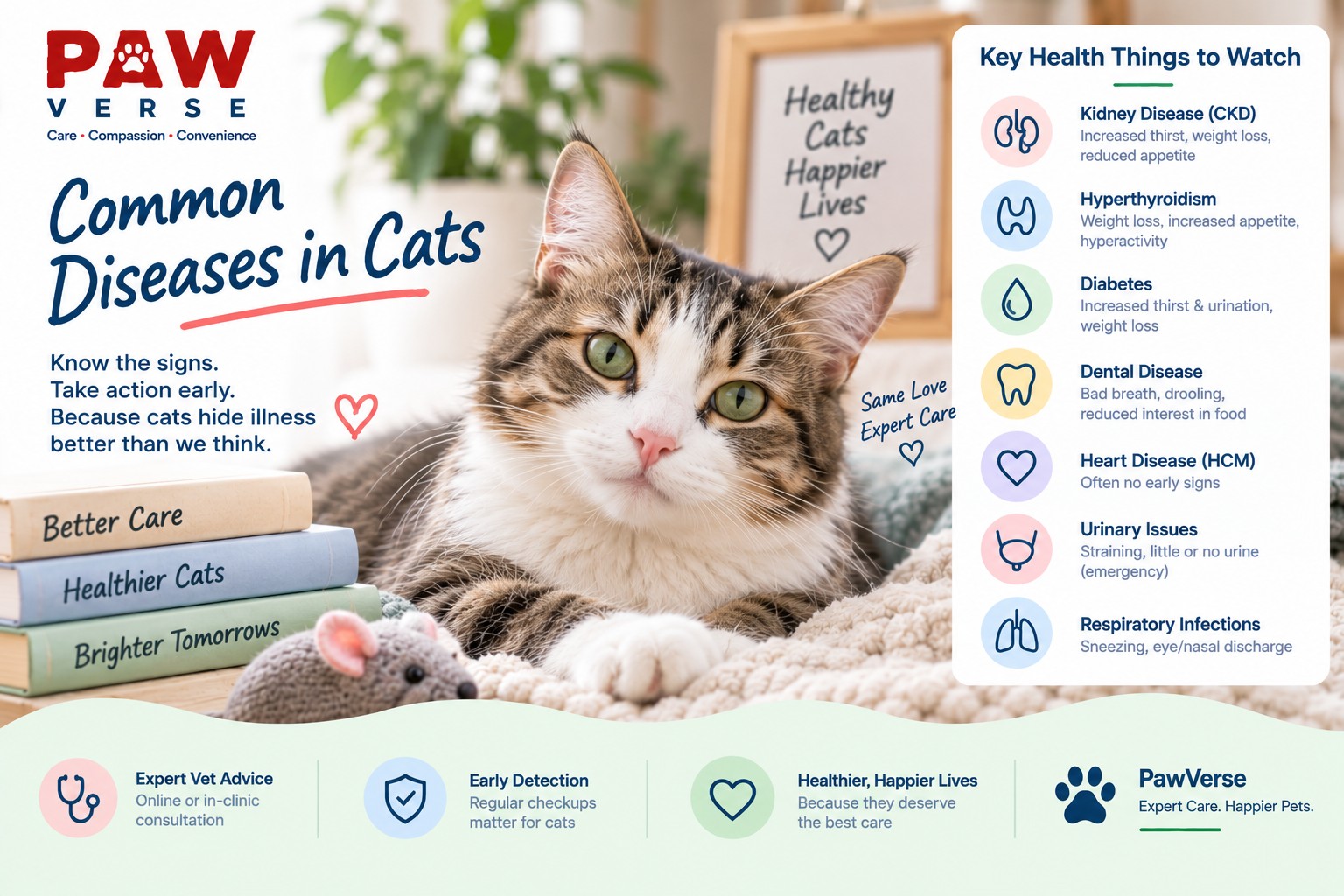
Chronic Kidney Disease (CKD)
CKD affects roughly 1 to 3 percent of cats generally, but that figure climbs to over 30 percent in geriatric cats, making it one of the most common conditions in aging cats overall. It's caused by a gradual, irreversible loss of functioning kidney tissue, and because the kidneys have significant reserve capacity, symptoms often don't appear until a meaningful portion of function is already lost. Watch for increased thirst and urination, weight loss, reduced appetite, and lethargy, though as the research above shows, don't assume the absence of these signs means the absence of the disease. Persian and Siamese cats appear to carry a genetic predisposition, worth knowing if you own one of these breeds, covered in more depth in our guide on popular cat breeds in India.
Hyperthyroidism
An overactive thyroid gland is common in middle-aged and senior cats, and classically causes weight loss despite a normal or even increased appetite, along with hyperactivity, vomiting, and increased thirst. It's very treatable once diagnosed, through medication, a therapeutic diet, or in some cases a more permanent procedure, but like CKD, early stages often produce subtle or no symptoms an owner would catch without bloodwork.
Diabetes Mellitus
Feline diabetes is closely linked to obesity, and its hallmark signs, increased thirst and urination alongside weight loss despite normal or increased eating, can look confusingly similar to both CKD and hyperthyroidism, which is exactly why a proper diagnosis rather than a guess matters. Left unmanaged, advanced diabetes can also cause a weakened, flat-footed hind leg stance from nerve damage. The encouraging news is that with consistent management, insulin therapy and dietary changes, many diabetic cats do very well long-term, and some even achieve remission.
Dental Disease
This deserves more attention than it usually gets, since it showed up in 100 percent of senior cats examined in one study and moderate-to-severe in over a third of another senior cohort. Watch for bad breath, drooling, reduced interest in food or dropping food while eating, and visible tartar or red, inflamed gums. Left untreated, dental disease is a source of chronic pain cats rarely show obviously, and it can contribute to broader health decline beyond the mouth itself.
Hypertrophic Cardiomyopathy (HCM)
The most common heart disease in cats, affecting as many as 1 in 7, and one that frequently produces no detectable symptoms until it progresses, sometimes not even an audible heart murmur. We've covered this in real depth, including a specific, genuinely useful at-home monitoring technique, in our guide on why cats breathe fast, worth reading given how often HCM hides until a real crisis develops.
Feline Lower Urinary Tract Disease and Urinary Blockage
A cat straining in the litter box with little or no urine produced, especially a male cat, is one of the clearest true emergencies in this entire list, covered in full in our dedicated guide on cat urinary blockage, including exactly why it becomes fatal so quickly and why there's no safe home remedy.
Upper Respiratory Infections
Extremely common, especially in kittens and multi-cat environments, most often caused by feline herpesvirus, which remains dormant for life and can flare during stress or illness. We've covered this, including an important, evidence-based update most sources still get wrong about lysine supplementation, in our guide on conjunctivitis in cats.
Inflammatory Bowel Disease
A cause of chronic, recurring vomiting or diarrhea that persists over weeks or months rather than resolving as a single episode, covered in more detail in our guide on why cats vomit, alongside the other patterns worth distinguishing from a one-off stomach upset.
Osteoarthritis
Joint pain in cats is under-recognized partly because cats don't limp the obvious way dogs do, they simply jump less, groom less thoroughly on hard-to-reach spots, or become more hesitant about stairs. One study found orthopedic abnormalities in nearly 78 percent of senior cats examined, most of which owners hadn't noticed at all. If your older cat seems to be doing less rather than showing an obvious limp, that's often exactly what feline joint pain looks like.
Feline Cognitive Dysfunction Syndrome
Increasingly recognized in senior cats, this condition resembles dementia and can cause disorientation, changes in the sleep-wake cycle, increased nighttime vocalization, and lapses in previously reliable litter box habits. One senior cat study found signs consistent with this condition in over 42 percent of cats assessed, making it far more common than most owners realize.
FeLV, FIV, and Cancer
Feline Leukemia Virus and Feline Immunodeficiency Virus are serious infectious diseases that compromise the immune system over time, which is why FeLV vaccination is a lifestyle-based decision worth discussing with your vet, covered in our cat vaccination schedule for India. Cancer, lymphoma in particular, becomes more common with age and can present with vague signs like weight loss, decreased appetite, or a palpable mass, underscoring again why regular physical exams matter even for a cat that seems fine.
Skin Conditions and Ringworm
Covered in detail in our guide on why cats scratch so much, including the specific patterns, overgrooming rather than visible scratching, that make feline skin issues easy to miss until a bald patch appears.
Age-Based Screening: What Vets Actually Recommend
Given how much of the disease burden in this list hides behind normal-seeming behavior, the American Association of Feline Practitioners recommends structured screening rather than relying on symptom-watching alone: physical exams and bloodwork at least annually for healthy adult cats, increasing to twice yearly for cats aged 10 to 15, and every four months for cats over 15. This isn't excessive caution, it directly reflects how often real disease was found in cats their own owners believed were perfectly healthy.
Warning Signs Worth Never Ignoring
Sign | Possible Disease |
Increased thirst or urination | CKD, hyperthyroidism, or diabetes |
Weight loss despite normal or increased appetite | Hyperthyroidism or diabetes |
Weight loss with reduced appetite | CKD, dental disease, or cancer |
Bad breath, drooling, dropping food | Dental disease |
Doing less, jumping less, without an obvious limp | Possible osteoarthritis |
Nighttime yowling, disorientation, litter box lapses | Possible cognitive dysfunction |
Straining in the litter box with little urine | Urinary blockage, true emergency |
A new lump, mass, or unexplained swelling | Needs prompt evaluation |
When to See a Vet
Given how much of what's covered here hides behind normal-looking behavior, don't wait for obvious symptoms before scheduling regular checkups, especially once your cat passes 7 to 10 years old. Reach out promptly for any of the warning signs above, and don't dismiss subtle changes as simple aging without at least a conversation with a vet first.
Through PawVerse, you can book an online vet consultation to talk through any changes you've noticed and get guidance on whether in-person testing is warranted.
Frequently Asked Questions
Q: My cat seems perfectly healthy, do I really need regular vet visits?
A: Genuinely, yes, especially past middle age. Recent research found significant, previously unrecognized disease in the large majority of senior cats their owners believed were healthy, including conditions like kidney disease and hyperthyroidism that often produce no obvious symptoms until they're fairly advanced.
Q: What's the most common serious disease in older cats?
A: Chronic kidney disease is among the most common, affecting over 30 percent of geriatric cats, though hyperthyroidism, dental disease, and osteoarthritis are all extremely common as well, and cats frequently have more than one of these conditions at the same time.
Q: How can diabetes, kidney disease, and hyperthyroidism be told apart if they cause similar symptoms?
A: This genuinely requires bloodwork and urinalysis, since increased thirst, urination, and weight changes overlap significantly across all three. This is exactly why a proper veterinary diagnosis matters more than guessing based on symptoms alone.
Q: How do I know if my cat has arthritis if they're not limping?
A: Cats rarely limp the way dogs do with joint pain. Watch instead for reduced jumping, hesitation on stairs, less thorough grooming in hard-to-reach spots, and general reduced activity, all of which are common, easy-to-miss signs of feline joint pain.
Q: Is it normal for old cats to yowl at night or seem confused?
A: It's common, but not something to simply accept as normal aging without mentioning to a vet. These can be signs of feline cognitive dysfunction syndrome, a real, increasingly recognized condition that affects a substantial share of senior cats.
The Bottom Line
The single most important thing to take from this guide is that a cat who seems fine is not the same as a cat who is fine, the research is remarkably consistent on this point. Chronic kidney disease, hyperthyroidism, dental disease, and joint pain are all common enough in aging cats that regular screening, not just watching for symptoms, is what actually catches them early enough to matter. If your cat is approaching or past middle age, a conversation with a vet about a proper screening schedule is one of the most valuable things you can do for them.
Talk to a PawVerse vet online now if you've noticed any changes in your cat, or explore our Pet Health Blog for more guides on keeping your cat healthy at every life stage.
With love, Team PawVerse
Have a question about your pet?
Chat with Captain Scout and reach a verified vet, guaranteed within 30 minutes.
PawVerse Editorial Team
Practical pet health guides from the PawVerse team, written to help Indian pet parents understand what they are seeing and when to talk to a vet.
Your pet's health does not have to wait
Talk to a verified PawVerse vet from home. No travel, no waiting rooms, real answers within 30 minutes.