
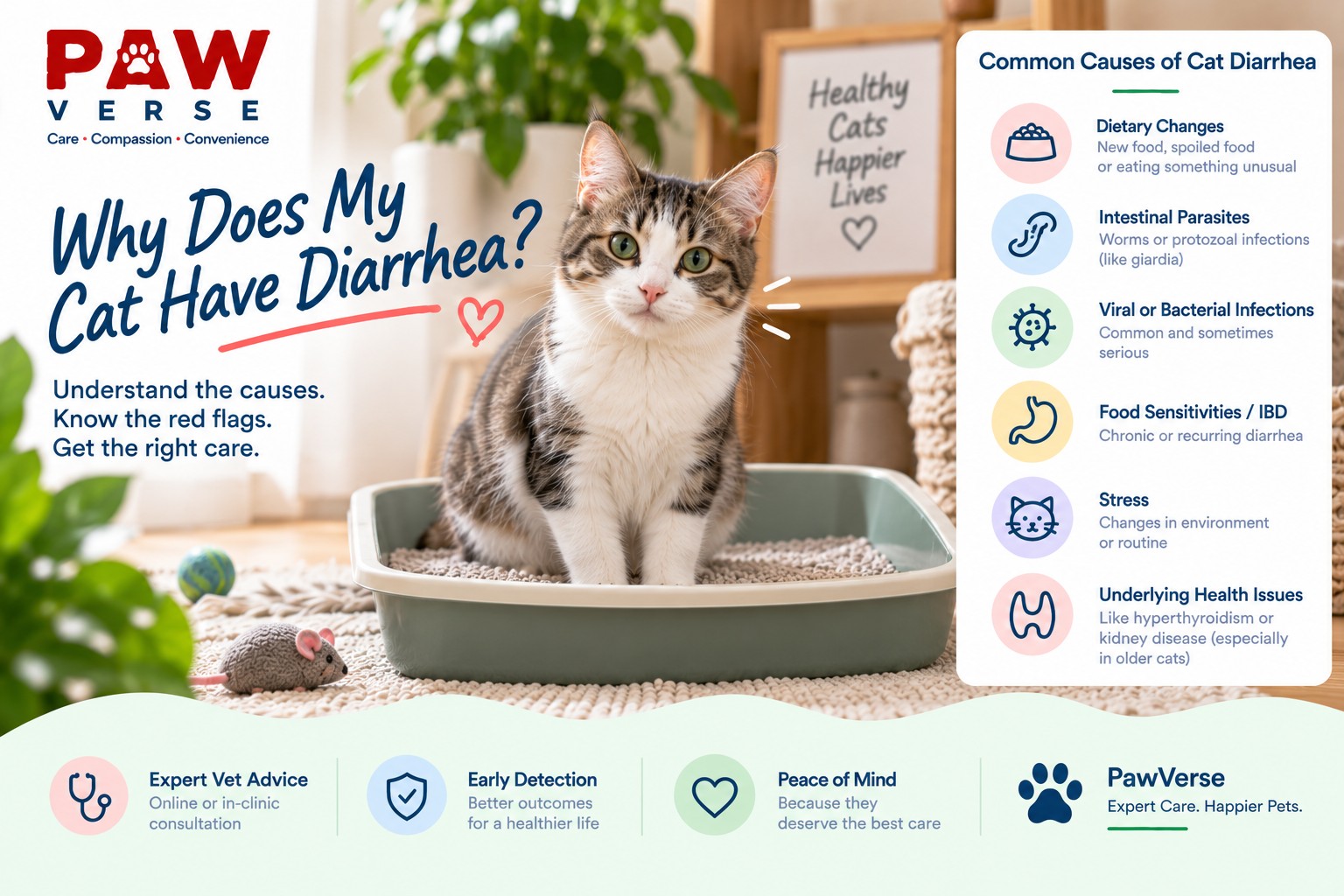
The litter box tells you something's wrong before your cat does, loose, watery, or oddly colored stool that wasn't there yesterday. Cats are private about almost everything, so the litter box is often the clearest window you get into their digestive health. This guide covers why cats get diarrhea, what the pattern and appearance can tell you, and when it's time to move from monitoring to a vet visit.
Why Does My Cat Have Diarrhea?
Cat diarrhea has a wide range of causes, and most trace back to one of a few common categories. Dietary indiscretion, eating something outside the normal diet, spoiled food, a houseplant, something scavenged, is common, especially in cats with any outdoor access. A sudden food change, even to a higher-quality option, can upset digestion since the gut needs time to adjust, which is why gradual transitions matter. Intestinal parasites, including roundworms and protozoal infections like giardia, are a genuine cause, particularly in kittens and cats with outdoor exposure. Viral and bacterial infections range from mild to serious. Inflammatory bowel disease and food sensitivities cause chronic, recurring diarrhea rather than a single episode. Stress, covered in more detail below, is a surprisingly common trigger in cats specifically. And in older cats, diarrhea can be one of several symptoms tied to conditions like hyperthyroidism or chronic kidney disease, covered in our guide on common diseases in cats.
The cause is rarely obvious from the diarrhea alone. What matters is frequency, appearance, and whether anything else about your cat has changed, appetite, energy, or litter box frequency beyond just the stool itself.
Is Cat Diarrhea Serious?
It depends heavily on the pattern and what else is going on. A single loose stool in a cat that's otherwise eating, drinking, and behaving normally usually isn't serious and often resolves within a day. What changes the picture is diarrhea that continues beyond 24 to 48 hours, happens repeatedly, or comes with any other symptom, particularly reduced appetite. This last point matters more in cats than in almost any other common pet, since a cat that stops eating alongside having diarrhea faces a real risk of a serious complication called hepatic lipidosis within as little as 24 to 48 hours, covered in detail in our guide on why cats stop eating. Diarrhea that reduces a cat's interest in food, or that's paired with any drop in appetite, deserves faster attention than the diarrhea symptom alone might suggest.
Kittens and senior cats also warrant a lower threshold for concern, given how much faster kittens can become dehydrated and how often diarrhea in older cats points to an underlying chronic condition rather than a simple stomach upset.
How Long Should Cat Diarrhea Last?
A single, mild episode in an otherwise normal cat typically resolves within 24 to 48 hours. Diarrhea that continues beyond two days, even if it seems mild, is worth a vet visit rather than continued waiting. Diarrhea that comes and goes over weeks or months, even at a low level, isn't something to normalize as "just how my cat is," this pattern often points to an underlying issue like inflammatory bowel disease or a food sensitivity that's genuinely treatable once properly diagnosed, rather than something to manage indefinitely with paper towels and patience.
Can Changing Food Cause Diarrhea?
Yes, this is one of the most common and most avoidable causes. A cat's digestive system needs time to adjust to a new protein source, fiber content, or overall formula, and switching abruptly, even from one good food to another, can trigger diarrhea that has nothing to do with either food being low quality. The fix is a gradual transition over seven to ten days, starting with a small proportion of the new food mixed into the old and slowly shifting the ratio, rather than a same-day switch. If diarrhea started right after a food change and your cat is otherwise well, going back to the previous food temporarily and reintroducing the new one more slowly usually resolves it.
Can Worms Cause Diarrhea?
Yes, intestinal parasites are a genuine and fairly common cause, especially in kittens, cats with outdoor access, and cats with an unknown history, like a recent rescue. Sometimes worms are visible in the stool itself, which is an unmistakable sign, but often the only clues are diarrhea alongside a dull coat, a pot-bellied appearance in kittens, or weight loss despite normal eating. Regular deworming appropriate for your cat's age and lifestyle, which your vet can advise on, is the most effective prevention, and a proper diagnosis is more reliable than guessing with an over-the-counter product if you suspect worms specifically.
What Does Bloody Diarrhea Mean?
Blood in diarrhea is always worth taking seriously, though the appearance affects how urgently. Bright red streaks or spots suggest bleeding lower in the digestive tract, often from inflammation or irritation in the colon. A darker, black, tarry appearance suggests digested blood from higher up in the digestive tract, which can indicate a more significant issue. Either presentation is a reason to contact a vet promptly rather than waiting to see if it resolves on its own, this is one of the clearer signals on this list that shouldn't be managed with home monitoring alone.
Can Stress Cause Diarrhea?
Yes, and this is a genuinely common trigger in cats specifically, more so than in most other pets. Cats are highly sensitive to changes in their environment, a new pet, a house move, a change in routine, construction noise, or even rearranged furniture can trigger stress colitis, causing loose stool without any dietary or infectious cause. Our guide on cat litter box issues covers how closely stress-related behavior changes tend to cluster together in cats, diarrhea is often part of the same picture rather than an isolated symptom. If you can identify a likely stressor and your cat shows no other symptoms, keeping the environment calm and consistent while monitoring for a few days is a reasonable first step, though diarrhea continuing beyond that window still warrants a vet visit regardless of the suspected cause.
How Can Diarrhea Dehydrate a Cat?
Diarrhea causes the body to lose fluid and electrolytes faster than normal, and cats are already prone to under-drinking relative to their fluid needs, many cats get much of their hydration from wet food rather than actively drinking water, which means diarrhea can tip the balance toward dehydration faster than owners expect. Signs of dehydration include dry or tacky gums, skin that's slow to spring back when gently lifted and released, and lethargy. This risk climbs further if diarrhea is paired with reduced appetite or any vomiting, since fluid intake drops from multiple directions at once rather than just one.
What Does the Appearance of the Diarrhea Tell You?
Beyond blood, the general look of the stool offers useful clues worth mentioning to a vet even if you can't reach a conclusion yourself. Watery, no-blood diarrhea that comes on suddenly is often tied to diet or a mild stomach upset. Diarrhea with visible mucus can indicate irritation in the large intestine, sometimes from stress colitis or inflammatory bowel disease. A greasy, unusually foul-smelling stool can point toward a digestive absorption issue or parasites. And small, frequent attempts to defecate with little produced, sometimes mistaken for diarrhea, can actually indicate straining from constipation or, in rare cases, an obstruction, which needs a different approach entirely than diarrhea does. Describing what you're seeing as specifically as you can, rather than just saying "diarrhea," genuinely helps a vet narrow things down faster.
Can Cat Diarrhea Be Contagious to Other Pets?
It depends on the cause. Diarrhea from parasites, certain bacterial infections, or viral illness can spread to other cats in the household through shared litter boxes, grooming, or contaminated surfaces, which is worth knowing if you have multiple cats and one develops diarrhea without an obvious dietary explanation. Diarrhea from stress, a food reaction, or a chronic condition like IBD isn't contagious. If you're unsure which category applies, treating it with some caution, separate litter boxes and thorough cleaning, until a vet has weighed in is a reasonable precaution in a multi-cat home.
What Should I Feed a Cat With Diarrhea?
For a mild case in an otherwise alert cat, a bland, easily digestible diet for a few days can help, plain boiled chicken with the skin removed, offered in small portions rather than a full regular meal. Keep fresh water available at all times, and consider offering wet food if your cat normally eats dry, since the added moisture supports hydration during this window. Avoid introducing any new food or treats during this period, and don't withhold food entirely for more than a few hours, unlike some home advice for vomiting, prolonged fasting isn't generally recommended for diarrhea in cats and can do more harm than good, particularly given the appetite-related risks covered above. If diarrhea continues despite a bland diet for more than a day or two, that's the point to stop managing it at home and get a vet's input.
When Should I Call a Vet?
Reach out to a vet if diarrhea continues beyond 24 to 48 hours, if there's any blood, if your cat's appetite drops at the same time, if you notice signs of dehydration, or if your cat is a kitten, a senior, or has a known health condition. Because cats hide illness so effectively and can decline faster than their behavior initially suggests, it's generally safer to check in sooner than to wait and monitor indefinitely, especially once appetite is affected alongside the diarrhea itself.
Warning Signs Table
Sign | What It May Mean |
Single loose stool, otherwise normal behavior | Usually not urgent, monitor |
Diarrhea lasting more than 48 hours | Needs veterinary evaluation |
Blood in stool, bright red or black and tarry | Contact a vet promptly |
Diarrhea plus reduced appetite | Risk of rapid complications in cats, don't wait |
Diarrhea plus vomiting | Higher dehydration risk, needs attention |
Visible worms in stool | Needs deworming evaluation |
Lethargy or hiding alongside diarrhea | Needs broader veterinary evaluation |
Diarrhea in a kitten or senior cat | Treat as more urgent than in a healthy adult |
The Bottom Line
Most cat diarrhea is mild and resolves within a day or two, often tied to a food change, minor dietary indiscretion, or a passing stressor. What changes the picture is duration beyond 48 hours, blood, or diarrhea that comes with reduced appetite, a combination that carries more weight in cats than it would in most other pets given how quickly cats can decline once they stop eating. If you're ever unsure whether to keep monitoring or get help, that uncertainty itself is worth resolving with a vet conversation rather than continuing to guess.
Talk to a PawVerse vet online now, or explore our Pet Health Blog for more guides on keeping your cat healthy.
With love, Team PawVerse
Have a question about your pet?
Chat with Captain Scout and reach a verified vet, guaranteed within 30 minutes.
PawVerse Editorial Team
Practical pet health guides from the PawVerse team, written to help Indian pet parents understand what they are seeing and when to talk to a vet.
Your pet's health does not have to wait
Talk to a verified PawVerse vet from home. No travel, no waiting rooms, real answers within 30 minutes.