
Written by Deepak
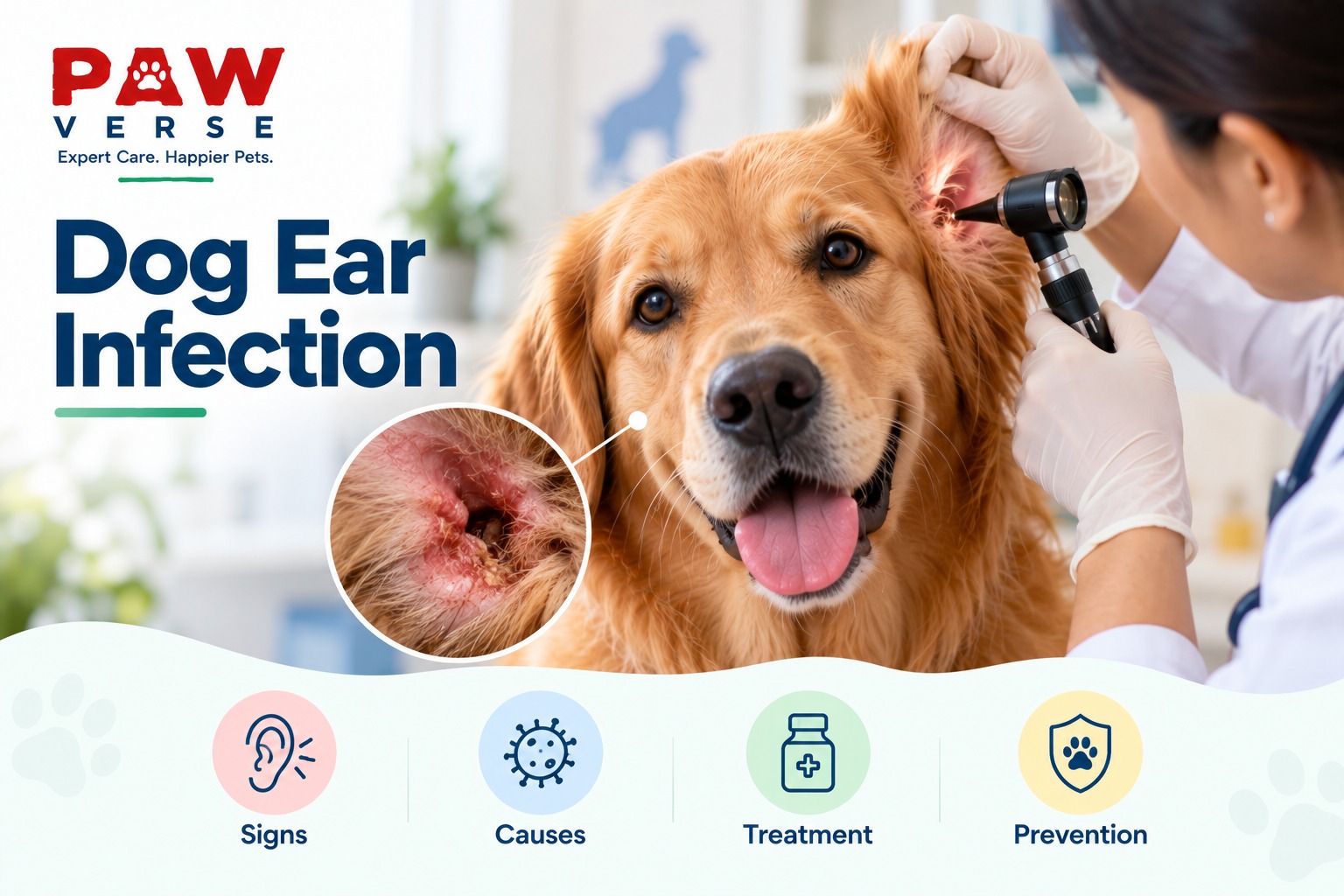
The giveaway is usually the sound. A dog shaking their head at 2am, the flap of the ears against their face, followed by the scratch of a back paw. By the time you look, the ear is red, there is something brown or yellow inside, and a smell has appeared that was not there yesterday.
Ear infections are one of the most common reasons dogs see a vet, and also one of the most commonly mistreated at home, usually with a leftover bottle of drops or a kitchen remedy. This guide covers how to recognise an ear infection, why it keeps coming back, what vets actually do, how to clean ears safely, and the one rule worth remembering: do not put anything in the ear until you know what is going on.
The Quick Answer
An ear infection (otitis externa) is inflammation of the ear canal, usually with yeast, bacteria, or both overgrowing in a canal that was already irritated. The key idea is that the infection is rarely the root problem. The most common underlying cause is allergy, and unless that is dealt with, the infection tends to return.
Treatment usually involves cleaning the ear, medication matched to what is actually growing in it, and a recheck, which is why guessing with the wrong drops often makes things worse. Head tilt, loss of balance, or a sudden swollen ear flap are different: see a vet the same day.
Signs of a Dog Ear Infection
Shaking the head, tilting it to one side, or scratching at the ear
Redness, swelling, or heat in the ear flap or canal
Brown, yellow, green, or bloody discharge
A strong, unpleasant, often yeasty or sour smell
Rubbing the ear on the floor or furniture
Crying or snapping when the ear is touched, or head-shyness
Crusty or scaly skin on the flap, or hair loss around the ear
Hearing seems worse, or your dog seems unsettled or irritable
You can often see infection in both ears, but one ear is also common. A simple home check helps: lift the flap, look inside gently, and sniff. Compare both ears, and note anything unusual, but do not poke or probe.
What the discharge may suggest
What You See | What It May Suggest |
Dark brown, waxy, greasy debris with a sour or yeasty smell | Yeast overgrowth is common |
Yellow or green, thick or runny discharge, often painful | Bacterial infection is common |
Dark, dry, crumbly debris like coffee grounds, with intense itching | Possible ear mites, more common in puppies and strays |
Bloody discharge or visible scabs | Needs a vet, could be a deeper problem or a foreign body |
Clean ear with sudden head shaking after a walk | Possible grass seed or foreign object |
Treat this as a clue, not a diagnosis. Different infections can look alike, and many ears have more than one thing going on.
Why Dogs Get Ear Infections
Vets often think of ear infections in layers rather than a single cause.
Underlying (primary) causes. These are what actually start the problem. Allergy is the most common, whether environmental, food, or flea-related, and others include ear mites, foreign objects such as grass seeds, and hormonal conditions such as hypothyroidism. Allergic skin disease often affects the ears as well as the paws and belly, so our guide on dog skin allergies is worth reading if infections keep returning.
Predisposing factors. These make infection more likely. Floppy ears, narrow or hairy ear canals, and moisture from swimming, baths, or humid weather all trap warmth and wetness. Breeds such as Labradors, Golden Retrievers, Cocker Spaniels, Beagles, and Basset Hounds are commonly affected, though any dog can get one, and upright ears are not a guarantee.
Yeast and bacteria. These are usually secondary invaders. Yeast (Malassezia) lives in small numbers in healthy ears and multiplies when conditions change, and bacteria such as Staphylococcus join in. They are the visible problem, but treating them without addressing the cause often leads to recurrence.
Chronic changes. With repeated infections, the canal lining can thicken and narrow, which traps more debris and makes future infections more likely, so catching problems early matters.
Why India Makes It Harder
Heat and humidity are the main drivers. During monsoon, ears stay damp, and post-bath moisture, swimming, and humid indoor air create ideal conditions for yeast. Our monsoon dog care guide covers the wider seasonal picture. Water-loving breeds, such as Labradors and Golden Retrievers, which our Golden Retriever health guide covers, are particularly prone. Street and community dogs also pick up ticks, ear mites, and grass seeds, and any dog that walks through long grass or open ground can pick up a foreign object in the ear.
How Vets Diagnose It
A proper diagnosis usually involves three things:
Otoscopy. Looking into the canal with an otoscope to check for swelling, debris, foreign objects, and, importantly, whether the eardrum is intact.
Ear cytology. A swab of the discharge is examined under a microscope to see whether yeast, bacteria, or both are present. This is quick, relatively inexpensive, and the step that decides which medication to use.
A search for the underlying cause, especially in recurring cases, which may involve an allergy history, a thyroid check, and treating fleas.
Cytology matters because yeast, rod-shaped bacteria, and round bacteria respond to different medications, which is why a drop that worked last time may do nothing now. If the eardrum is damaged, some cleaners and medications become unsafe, which is another reason a vet needs to look first. The wider problem with reusing old medication is covered in our piece on pet medicine and prescriptions.
Treatment: What to Expect
Treatment generally follows four steps:
Clean the ear to remove wax and debris, since medication can be inactivated by discharge and often cannot reach the skin through it. A painful ear may need sedation for proper cleaning.
Medication, typically ear drops matched to what is growing, often combining an antifungal, an antibacterial, and an anti-inflammatory. In some cases, oral medication is added, and for severe or stubborn infections a vet may flush the canal.
Recheck, so a vet can confirm the infection has actually cleared, since ears can look better before the infection is fully gone.
Fix the underlying cause, whether that is allergy management, flea control, or treating a hormonal problem.
Mild infections can improve in days, but expect longer for severe or chronic cases, and finish the full course even when the ear looks better. Stopping early, or using a medication that targets only one organism, can leave the other to take over.
If infections keep returning, or become chronic, they can spread to the middle ear, and in long-standing cases the canal lining can thicken to the point where surgery is occasionally considered, which is why repeated flare-ups are worth investigating rather than managing indefinitely.
How to Clean Your Dog's Ears at Home
Home cleaning is useful for maintenance and after a vet has treated an infection. It is not a substitute for treatment, and it should not be done on a very painful, bleeding, or severely inflamed ear.
What you need: a vet-recommended ear cleaner, cotton balls (not cotton buds), a towel, and treats.
Steps:
Hold the ear flap up gently, and fill the canal with cleaner, following the product's instructions.
Massage the base of the ear for 20 to 30 seconds, and you should hear a soft squelching sound.
Step back and let your dog shake their head, since this brings debris up out of the canal.
Wipe the visible parts of the ear with a cotton ball, removing what comes out.
Repeat if the cotton ball still comes away dirty, and reward your dog.
How often: a vet may suggest daily or frequent cleaning during treatment, then drop to once or twice a week for maintenance, or every one to two weeks for dogs prone to infection. Over-cleaning irritates the canal and can itself cause problems, so follow your vet's schedule rather than your own.
Key rules: never push cotton buds into the canal, use only a cleaner your vet recommends, and see a vet rather than cleaning if the ear is very painful, bloody, or has a strong discharge.
What Not to Do
Don't use leftover or pharmacy drops without a vet checking first. The wrong drops can fail or worsen the infection, and some are unsafe if the eardrum is damaged.
Don't use home remedies such as hydrogen peroxide, vinegar, alcohol, baking soda, or homemade mixtures. Products that are safe in a healthy ear can sting an inflamed one, and some are harmful if the eardrum is damaged.
Don't pour oils into the ear, including coconut, neem, or garlic oil. They are unproven for ear infections, and oils can leave the canal greasy, which yeast may thrive on.
Don't use human ear drops.
Don't use cotton buds in the canal.
Don't pluck or trim ear hair without checking with a vet or groomer first.
Don't ignore head tilt, loss of balance, or hearing changes.
Preventing Ear Infections
Dry the ears after baths and swimming, using a cotton ball to gently dry the visible ear, or a vet-recommended drying cleaner, and take extra care during monsoon.
Check weekly: a quick look and sniff catches early redness, wax, and odour.
Clean on schedule if your dog is prone, but not more often than your vet advises.
Manage the underlying cause, especially allergies and fleas, since this is the most effective prevention for recurring infections.
Keep ear hair under control as your vet or groomer advises, so air can circulate.
Check after walks for grass seeds, ticks, and dirt in the ears.
Don't let water sit in the ears during bathing, and avoid spraying water directly into the canal.
When It's Urgent
Sign | What It May Mean | What to Do |
Head tilt, loss of balance, circling, or eyes flickering | Possible inner or middle ear involvement | Same-day vet visit |
Sudden, hot, swollen ear flap | Possible aural hematoma, caused by blood collecting in the flap after heavy shaking | See a vet promptly |
Severe pain, crying, or aggression when touched | Significant inflammation or a deeper problem | See a vet the same day |
Bloody or pus-filled discharge, or a very strong smell | Serious infection or foreign object | See a vet promptly |
Sudden hearing loss | Possible middle or inner ear disease | See a vet |
Three or more ear infections in a year | Likely an underlying cause, such as allergy | Book a workup, not just another round of drops |
A puppy with ear signs | Ear mites are common in puppies | See a vet |
What a Video Consultation Can and Can't Tell You About an Ear
Ears are one of the easier problems to show on camera, so a video call is genuinely useful here, as long as you know where it stops.
A video consultation can | It can't |
Show a vet the flap, the visible canal, and any discharge | Look past the bend in the canal with an otoscope |
Help judge how urgent the problem is, today or this week | Confirm whether the eardrum is intact |
Flag look-alikes such as wax, mites, or a grass seed | Take a swab and read it under a microscope |
Tell you what to avoid putting in the ear | Replace the in-person exam a first or severe infection needs |
Review weekly photos once treatment has started |
In practice, that makes it most valuable at three moments: before the clinic visit (so you arrive prepared and know what to ask), during treatment (to check progress and answer cleaning questions), and with recurring infections (where a vet with your dog's earlier records can adjust the plan). A prescription issued after a consultation can go straight into a home delivery order, which our guides on online vet prescriptions and pet medicine delivery walk through.
If you're unsure which format to pick, our chat, video, and voice guide helps, and for ears, video is usually the clear winner.
Want a vet's eyes on the ear before you try anything? Start a PawVerse teleconsultation →
The Bottom Line
A dog ear infection is easy to spot and surprisingly easy to get wrong. The key points are to find out what is growing before you medicate, treat the underlying cause rather than the infection alone, finish the full course, and keep ears dry and checked, especially through monsoon. If you remember one rule, make it this: nothing goes into the ear until a vet knows what is going on.
Head shaking, scratching, or a smell that wasn't there yesterday? Start your PawVerse consultation → A short video is often all it takes to get a clear next step.
With love, Team PawVerse
Have a question about your pet?
Chat with Captain Scout and reach a verified vet, guaranteed within 30 minutes.
Frequently Asked Questions
A: The most common reason is an underlying cause that was never treated, usually allergy, combined with a canal that traps moisture. Other reasons include stopping treatment early, using the wrong medication, and over-cleaning. A dog with repeated infections needs the cause investigated, not just another round of drops.
PawVerse Editorial Team
Practical pet health guides from the PawVerse team, written to help Indian pet parents understand what they are seeing and when to talk to a vet.
Your pet's health does not have to wait
Talk to a verified PawVerse vet from home. No travel, no waiting rooms, real answers within 30 minutes.