
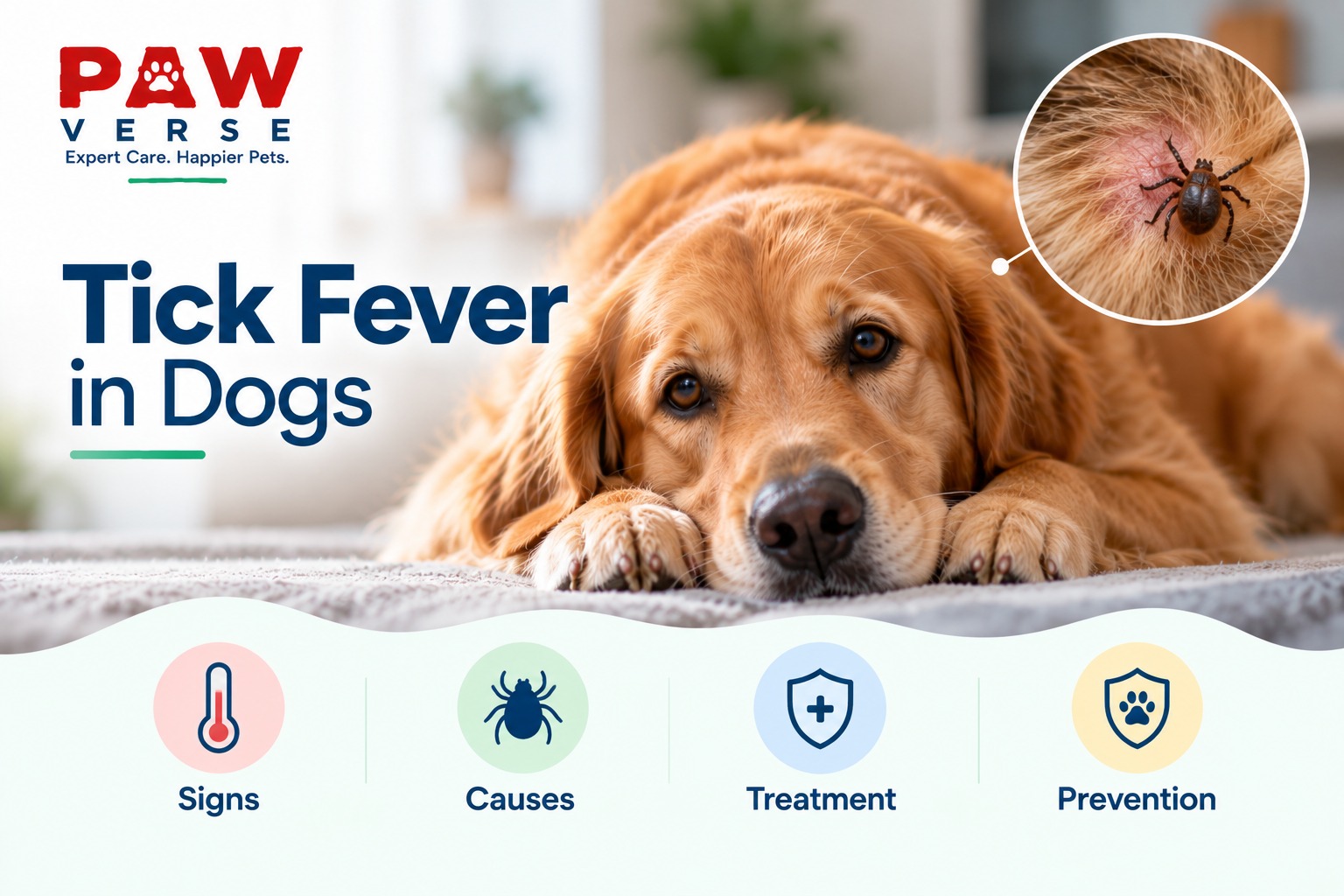
Written by Deepak
Your dog was fine two weeks ago. Today your dog is quiet turning your dogs nose up at food and warm to the touch. The only clue is a tick you pulled off your dogs ear week and promptly forgot about.
That gap, between the bite and the illness is what makes tick fever so easy to miss and so dangerous. Tick fever is one of the common serious infections, in Indian dogs tick fever is treatable when caught early and tick fever is almost entirely preventable. The tick is usually long gone by the time your dog's sick so the signs are what you have to work with.
Dog suddenly flat, feverish, or off his food? Describe it to a PawVerse vet now → We can help you judge how urgent it is and what to do next.
The Quick Answer
"Tick fever" is not a disease. It is a group of infections that are spread by ticks and in India the two that people talk about the most are ehrlichiosis and babesiosis with anaplasmosis being common. These diseases are spread by the brown dog tick, which can be found in homes and in kennels. This tick is active all year and becomes more common during and after the monsoon season.
Symptoms usually show up one to three weeks after a dog is bitten by a tick. The first signs are fever, tiredness. Not wanting to eat. If a dog has gums, nosebleeds, bruising or dark urine it is important to take it to a vet on the same day. To find out for sure a blood test is needed because the two main infections are treated differently. Most dogs that get treatment early are fine. The best way to protect a dog is with year-round tick control not, during certain seasons.
What "Tick Fever" Actually Means
Infection | Caused By | What It Mainly Attacks | Classic Signs |
Ehrlichiosis | Ehrlichia canis, a bacterium | White blood cells, then platelets and bone marrow | Fever, lethargy, bruising, nosebleeds, swollen glands |
Babesiosis | Babesia, a blood parasite | Red blood cells | Pale or yellow gums, weakness, dark urine, fever |
Anaplasmosis | Anaplasma, a bacterium | Platelets | Fever, lethargy, bruising or bleeding |
Two things are worth knowing. First, dogs are often infected with more than one at the same time, and co-infection can make the illness more severe. Second, the right treatment depends on which one it is, which is why a blood test matters and why you should never guess.
How Dogs Catch It, and Why India Is Tick Fever Country
The brown dog tick (Rhipicephalus sanguineus) is the carrier in most of India. Unlike ticks that live in grass this one breeds indoors, in kennels, sofas, bedding and the cracks and corners of walls and floors. Warm humid conditions suit it so it stays active for most of the year with a surge during and after the monsoon, which is why the weeks right after the rains are a high-risk time.
Dogs catch tick fever from an infected tick bite not from touching or sharing a bowl with another dog and not from people. Dogs of any age can be infected, though some dogs, including German Shepherds and Siberian Huskies appear likely to develop severe ehrlichiosis. Ticks can pass on infection within hours of attaching. A quick check, after a walk matters. Dogs do not give tick fever to people. In a heavily infested home the same ticks can bite family members so controlling them protects the household too.
Signs to Watch For
The three stages are worth understanding, because the middle one is the sneaky one.
Acute stage. Usually starts one to three weeks after the bite, with fever (roughly above 39.5°C), lethargy, and reduced appetite. Many dogs also have swollen lymph nodes, weight loss, red or watery eyes, joint pain, or limping.
Silent (subclinical) stage. Some dogs seem to recover, or never look very ill, while the infection lingers quietly, sometimes for months. This is why a dog that "got better on its own" is not necessarily cured.
Chronic stage. In dogs with long-standing ehrlichiosis, the bone marrow can be affected, causing severe bleeding, anaemia, and weight loss. These cases are the hardest to treat, and some dogs do not survive even with aggressive treatment.
Sign | What It May Mean | How Fast to Act |
Fever, lethargy, off food, especially after a tick | Possible acute tick fever | See a vet within 24 hours |
Pale, white, or yellowish gums | Anaemia, often babesiosis | Same day |
Nosebleeds, bleeding gums, or pinpoint red spots and bruises | Low platelets, often ehrlichiosis | Same day, emergency |
Dark or reddish-brown urine | Red blood cell breakdown | Same day |
Swollen glands, swollen legs, or red eyes | Common in ehrlichiosis | Needs a vet visit |
Weight loss, recurring fevers, or "never quite right" | Possible silent or chronic infection | Book a vet visit |
Collapse, or fast breathing with pale gums | Severe anaemia, emergency | Go now |
If your dog is also breathing fast, our guides on why dogs breathe fast and dog emergency symptoms explain why that combination matters.
What to Do Right Now If You Suspect It
Do not wait to see whether it passes. A dog with fever and lethargy after a tick exposure needs a blood test, and early treatment makes a big difference.
Call a vet and plan a same-day visit, especially if there are pale gums, bleeding, bruising, or dark urine.
Note the dates. When you found the tick, when signs started, and what your dog has eaten and drunk.
Do not give human medicines such as paracetamol or ibuprofen, which can be toxic to dogs.
Keep your dog cool, calm, and hydrated while you arrange care.
Do not start leftover antibiotics. The right drug depends on the diagnosis, as our guide on buying pet medicine without a prescription explains.
How Vets Diagnose It
There is no single "tick fever test." Vets usually combine:
A complete blood count, which often shows low platelets and anaemia
A blood smear, to look for the parasites or the bacteria in the cells
Rapid tests and antibody tests, which can miss very early infection, so a vet may repeat them
PCR, which detects the organism's DNA and helps identify exactly which infection is present
Liver and kidney tests, since both can be affected and influence treatment choices
Blood tests are what separate ehrlichiosis from babesiosis, and that matters because the treatments differ. One Indian source puts typical treatment costs at roughly ₹3,000 to ₹15,000 depending on severity and the supportive care needed, though dogs who need hospitalisation or a transfusion cost more, so ask your vet for an estimate. Our vet visit cost guide has more on typical prices.
Treatment: What Actually Happens
Ehrlichiosis and anaplasmosis are treated with an antibiotic, usually doxycycline, for a minimum of about four weeks. Dogs often start improving within days, which is exactly when owners are tempted to stop. Finishing the full course is what prevents relapse, and your vet will usually recheck blood counts, because platelets can take weeks to recover.
Babesiosis is a parasite, so it needs anti-parasite medication rather than an antibiotic alone. Imidocarb is commonly used for some types, and other combinations are used for others. Babesia can be harder to clear, and a dog may relapse, which is why follow-up matters.
Supportive care is a big part of treatment for sicker dogs: IV fluids, medicines to support the liver and kidneys, and blood transfusions in severe anaemia or bleeding.
Most dogs treated in the acute phase recover well. The picture is poorer in chronic, long-standing disease, and recovery does not make a dog immune, since a new infected tick can cause a new infection. This piece gives no doses, because those must come from your vet.
Prevention: The Part That Saves Dogs
1. Year-round tick control, not just monsoon. Monthly spot-ons, oral preventives, or collars are chosen by your vet according to your dog's weight and age. Missing a month leaves a gap that ticks will use.
2. Check your dog daily. After walks, look at the ears, neck, armpits, groin, tail base, and between the toes.
3. Treat the home as well as the dog. Because brown dog ticks breed indoors, vacuum cracks and corners, wash bedding in hot water, and clean kennels and sofas. For a heavy infestation, a professional pest treatment may be needed.
4. Remove ticks properly. Use a tick remover or tweezers, grip as close to the skin as possible, and pull straight out steadily without twisting or squeezing. Our pet first aid kit guide lists what to keep on hand.
5. Take extra care after the monsoon, around tall grass, at boarding or grooming facilities, and around community dogs.
6. Keep dog products away from cats. Many dog tick products contain permethrin, which is highly toxic to cats, as covered in our guide on why cats scratch so much and our pet poisoning emergency guide.
Mistakes to Avoid
Stopping the antibiotic early because the dog looks better
Treating the dog but not the home
Thinking ticks are only a monsoon problem
Burning ticks, or using kerosene, petrol, or other harsh substances on the skin, which can burn or poison your dog and does not stop infection
Relying on neem oil or turmeric as a substitute for proper tick control
Waiting for a nosebleed before seeing a vet
Using a Video Call Wisely With Tick Fever
Tick fever needs a blood test, so a video call cannot diagnose it. What it can do is help you take the right next step, faster. Here is how it fits:
You found a tick, and your dog seems fine. A vet can guide safe removal, set up a prevention plan for your dog and home, and tell you what to watch for over the next few weeks.
Your dog has a fever, is lethargic, or is off food. A vet can help you judge urgency and point you to a same-day blood test rather than a wait-and-see approach.
Pale gums, nosebleeds, bruising, dark urine, or collapse. Skip the call and go straight to a clinic.
Your dog has already been diagnosed. A vet can answer medication questions, review progress, and support follow-ups, with prescriptions where appropriate, which can be delivered, as covered in our guides on how online vet prescriptions work and pet medicine delivery.
Found a tick, or worried about the weeks after one? Get a tick prevention plan from a PawVerse vet →
The Bottom Line
Tick fever follows a pattern that is easy to break: a tick bite, a quiet gap, then a dog who is suddenly unwell. Treat any fever, lethargy, or loss of appetite after a tick as a reason for a blood test, go to a vet the same day for pale gums, bleeding, or dark urine, finish the full course of treatment, and keep ticks off your dog and out of your home all year. The weeks after the monsoon are when tick numbers climb, which makes right now a good moment to set up your prevention plan.
Want to stop tick fever before it starts? Talk to a PawVerse vet online now → Set up a year-round plan for your dog and your home.
With love, Team PawVerse
Have a question about your pet?
Chat with Captain Scout and reach a verified vet, guaranteed within 30 minutes.
Frequently Asked Questions
A: Yes, particularly if it goes untreated or becomes chronic. Many dogs treated early recover well, which is why a quick blood test and prompt treatment matter so much.
PawVerse Editorial Team
Practical pet health guides from the PawVerse team, written to help Indian pet parents understand what they are seeing and when to talk to a vet.
Your pet's health does not have to wait
Talk to a verified PawVerse vet from home. No travel, no waiting rooms, real answers within 30 minutes.