
It’s 11pm, your dog is acting weird, and you’re in the kitchen trying to decide if this can wait until morning or if you need to be in the car right now. That decision, made under stress and without a medical background, is one of the hardest parts of having a pet.”
Some symptoms are really urgent and should wait not, even a few hours matter. Others sound alarming but are typically not emergencies. This guide is made to help you tell the difference fast, so you're not wasting time when it counts, or panicking for no reason when it doesn't. Our Complete Pet Care Guide is a handy companion for reading up on general health monitoring and warning signs.
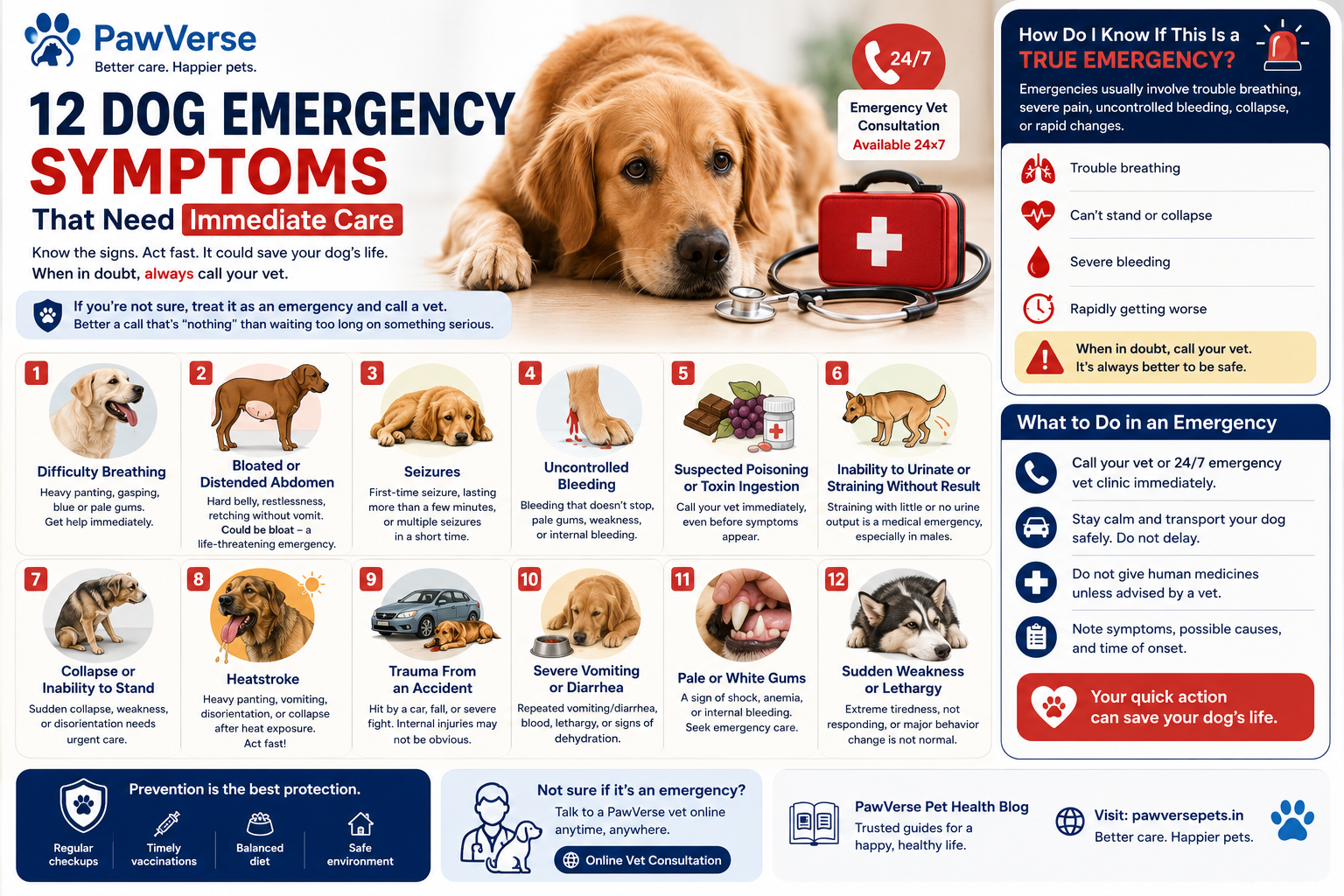
How Do I Know If This Is a True Emergency?
A good rule of thumb is: if you really aren't sure if something is an emergency, treat it as one and call a vet right away, even if it means an emergency line rather than waiting for a regular appointment. “Vets would rather have a call that turns out to be nothing than have an owner wait too long on something serious.”
That said, there are some patterns that tend to separate real emergencies from worrying but less urgent symptoms. In an emergency, you usually have trouble breathing, can’t stand or move normally, have obvious severe pain, uncontrolled bleeding, or your condition changes rapidly over minutes rather than hours. These are not emergencies, but they are worth watching. Symptoms usually develop slowly and do not affect your dog's ability to breathe, move, or stay conscious.
12 Dog Emergency Symptoms That Need Immediate Care
1. Difficulty Breathing
Signs of a true emergency are laboured breathing, gasping, blue or pale gums, or a dog that does not normally breathe with an open mouth but is now doing so. This can be a sign of heatstroke , allergic reaction , a foreign object in the throat , heart failure or a collapsed lung to name a few . In the moment the underlying cause is less important than getting oxygen and treatment quickly .
2. Bloated or Distended Abdomen
A distended, hard or tight abdomen, especially when accompanied by retching without producing anything, restlessness and pacing, may indicate gastric dilatation volvulus, or bloat, in which the stomach becomes distended with gas and twists on itself. This most commonly occurs in large deep-chested breeds and can be fatal within hours if not treated with emergency surgery.
3. Seizures
A single brief seizure in a dog with a known history of seizures may not always require an emergency visit straight away but should always be discussed with a vet. Emergency care is needed for a first time seizure, seizure lasting more than a few minutes, multiple seizures in a short period of time or a dog that does not regain normal awareness after a seizure.
4. Uncontrolled Bleeding
Bleeding that does not slow with firm, direct pressure after several minutes, bleeding from multiple sites, or bleeding accompanied by pale gums and weakness are all signs of an emergency. Internal bleeding is an emergency just like any other, even if you cannot see it from the outside. Sudden weakness, pale gums and a distended abdomen can be signs of internal bleeding.
5. Suspected Poisoning or Toxin Ingestion
If your dog has eaten something he shouldn’t, including chocolate, grapes, xylitol, rodent poison, certain plants or human medication, call your vet or a pet poison hotline immediately—even before symptoms appear. Some toxins act with a dangerous delay between ingestion and visible symptoms, so waiting for symptoms to appear before acting can cost precious time in treatment.
6. Inability to Urinate or Straining Without Result
This is especially urgent in male dogs who may develop a urinary blockage, a real emergency that can be life threatening within hours if untreated when they strain to urinate with little or no output. Bitches can also get blocked urines, but it’s not as common. Any dog that is straining to pee but can’t should be seen immediately.
7. Collapse or Inability to Stand
A dog that suddenly can't stand, collapses, or seems disoriented and unable to walk normally needs emergency evaluation. This can point to a range of serious causes, including heart problems, internal bleeding, severe pain, or neurological issues, and shouldn't be treated as something to wait out.
8. Heatstroke
Heavy panting, drooling, weakness, vomiting, disorientation, or collapse after heat exposure, especially in warmer months or after time in a hot car, are signs of heatstroke, which can be fatal without rapid cooling and veterinary treatment. Move the dog to a cool area and contact a vet immediately rather than waiting to see if they recover on their own.
9. Trauma From an Accident
Any dog hit by a car, fallen from a height or involved in a serious fight with another animal needs veterinary assessment, even if they appear fine immediately afterward. Internal injuries aren’t always obvious right away, and a dog that seems fine during the first few minutes can go downhill in the next few hours.
10. Severe Vomiting or Diarrhea
One episode of loose stool or an occasional episode of vomiting is usually not an emergency in itself. Prompt veterinary attention is needed for frequent vomiting or diarrhoea, particularly if bloody, accompanied by lethargy and a distended abdomen, or if it lasts more than 24 hours, especially in puppies or small breed dogs, due to the risk of dehydration.
11. Eye Injuries
A visibly injured, bulging, or suddenly cloudy eye, or an eye your dog is holding shut and won't let you examine, needs same day veterinary care. Eye injuries can worsen quickly and sometimes threaten permanent vision loss if treatment is delayed.
12. Sudden Extreme Pain
If a dog is making a lot of noise, or is very sensitive to touch, or is hunching over in a strange position, it is in extreme pain and needs to be seen soon, even if you don’t know the reason. Pain is one of the most obvious signals a dog can give, and it should not be waited out at home.
Quick Reference: Emergency vs Wait and Watch
Symptom | Emergency | Can Often Wait and Monitor |
Breathing | Labored, gasping, blue or pale gums | Normal panting after exercise or heat |
Vomiting | Frequent, bloody, with distended abdomen | Single episode, otherwise normal |
Energy level | Sudden collapse, unresponsive | Mild tiredness, still responsive |
Gums | Pale, white, blue, or bright red | Normal pink color |
Abdomen | Swollen, hard, painful to touch | Soft, no visible change |
Mobility | Can't stand, dragging limbs | Mild limp, still walking |
Bleeding | Doesn't stop with pressure, internal signs | Minor scrape, stops quickly |
Urination | Straining with no output | Slightly more or less frequent |
What To Do While You're Getting to the Vet
Stay calm and move slowly. A stressed, fast moving owner can make an already frightened or hurting dog more anxious.
Do not give human medication unless specifically instructed by a vet, since common pain relievers like ibuprofen and acetaminophen are toxic to dogs.
Apply firm, direct pressure to external bleeding with a clean cloth while transporting to care.
Move a dog with a suspected spinal or leg injury as little as possible, using a flat, firm surface like a board to transport if you can do so safely.
Call ahead if possible, so the clinic can prepare for what's coming in.
Bring the packaging if you suspect poisoning, since it helps the vet identify the substance and dose quickly.
When to Contact a Vet
If you see any of the symptoms above, contact a vet right away instead of waiting. If you're not sure if something fits, it's always best to call and describe what you're seeing instead of guessing and waiting it out.
The first opinion does not have to be obtained in a clinic. That's precisely why we have our 24/7 emergency vet consultation through PawVerse—you can get immediate guidance on next steps, including whether or not in person emergency care is needed right away. You can also book an online vet consultation for non-urgent questions or general health concerns.
Frequently Asked Questions
Q: How can I tell if my dog is in pain?
A: Dogs often hide pain rather than showing it obviously. Signs include reluctance to be touched in a certain area, a hunched or stiff posture, panting when not hot or exercising, reduced activity, and crying out when moving or being handled. Sudden, sharp reactions to touch in a specific spot are a strong indicator of pain worth addressing.
Q: What color should my dog's gums be?
A: Normal gums are a healthy pink color. Pale or white gums can indicate shock, blood loss, or anemia. Blue or grey gums indicate a lack of oxygen and are an emergency. Bright red or brick colored gums can indicate heatstroke or certain types of poisoning. Checking gum color is a fast way to gauge how urgent a situation is.
Q: Should I induce vomiting if my dog ate something toxic?
A: Not without instruction from a vet or poison hotline first. Some substances cause more damage coming back up than staying down, and inducing vomiting incorrectly can cause additional harm. Call for guidance before attempting this at home.
Q: How long can I wait to see if my dog's symptoms improve on their own?
A: This depends entirely on the symptom. True emergencies, like difficulty breathing, bloat, seizures, or collapse, should never be waited out, even briefly. Milder symptoms, like a single episode of vomiting in an otherwise normal dog, can often be monitored for 12 to 24 hours before deciding whether a vet visit is needed.
Q: Is bloat only a risk for large dogs?
A: Large, deep chested breeds like Great Danes, German Shepherds, and Standard Poodles are at higher risk, but bloat can occur in dogs of other sizes as well, though less commonly. Any dog showing a swollen abdomen with unproductive retching should be treated as an emergency regardless of breed.
Q: What should I keep in a dog first aid kit at home?
A: A basic kit should include gauze and non stick bandages, adhesive tape, a digital thermometer, saline solution for flushing wounds or eyes, a muzzle in case a frightened or injured dog tries to bite, and the phone number for your regular vet and an emergency clinic saved somewhere easy to find in a hurry.
The Bottom Line
Most symptoms your dog shows day to day aren't emergencies, but knowing which ones are can genuinely make the difference in an outcome. Difficulty breathing, a swollen abdomen, seizures, uncontrolled bleeding, suspected poisoning, and inability to urinate or stand are the situations where minutes matter and waiting isn't the safer choice.
When in doubt, call. A quick phone consultation costs you almost nothing, and it can either bring you real peace of mind or get your dog help faster than guessing would have.
Talk to a PawVerse vet online now, or reach our emergency vet consultation any time of day if you think your dog needs urgent care.
With Love, Team PawVerse
Have a question about your pet?
Chat with Captain Scout and reach a verified vet, guaranteed within 30 minutes.
PawVerse Editorial Team
Practical pet health guides from the PawVerse team, written to help Indian pet parents understand what they are seeing and when to talk to a vet.
Your pet's health does not have to wait
Talk to a verified PawVerse vet from home. No travel, no waiting rooms, real answers within 30 minutes.