
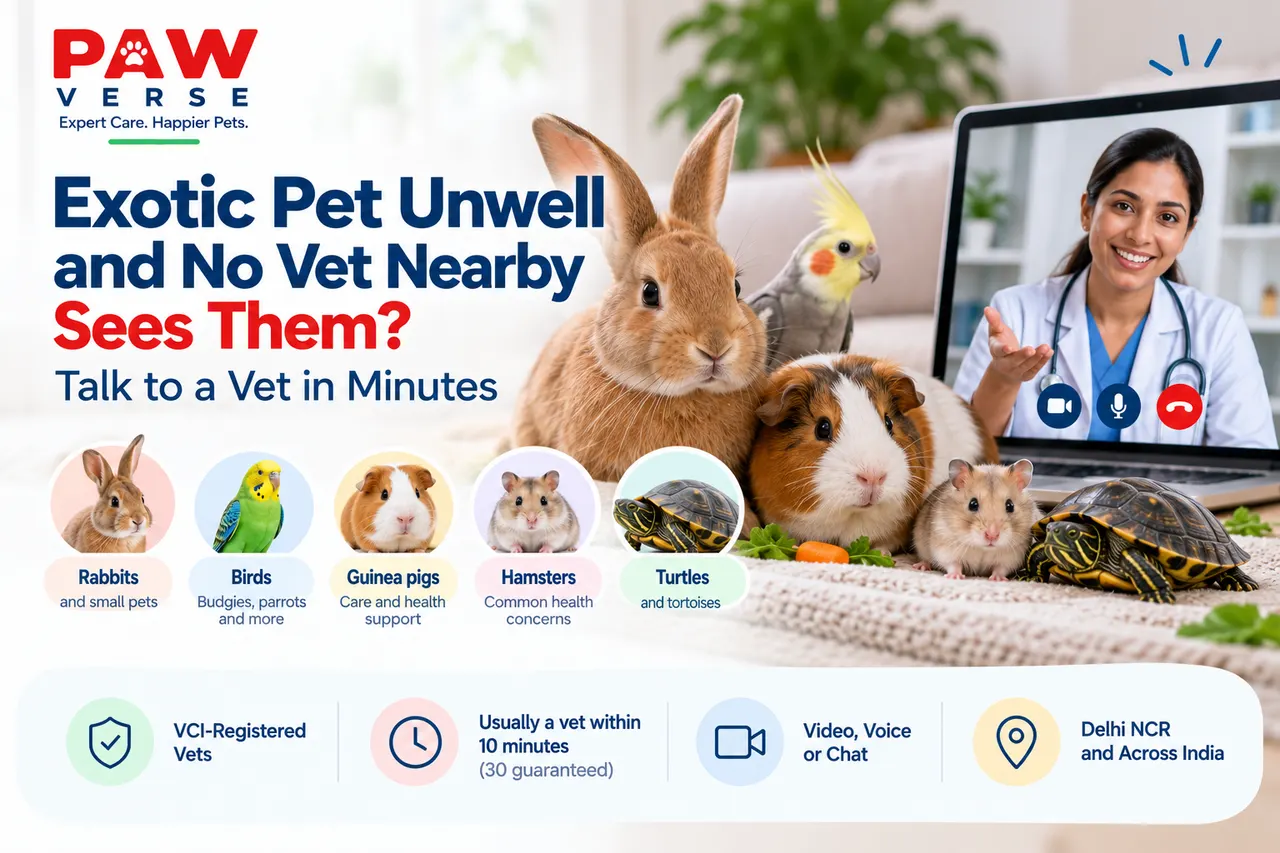
It's 9pm. Your rabbit hasn't touched his hay since morning, and you're worried. Your regular clinic is wonderful with dogs, but when you asked about rabbits last time, the answer was a polite "bring him in and we'll see." The nearest clinic that actually treats rabbits is an hour away, if it's open at all.
This is the problem with owning an exotic pet in India. Exotic animals get sick quickly, they hide it well, and the vets who treat them are hard to find. What you need first isn't a drive across the city. It's a quick answer to one question: is this a go-now situation, or something a vet can help you with right here?
Exotic pet unwell right now? Talk to a vet now → Tell Captain Scout the species first. Usually about ten minutes to a vet.
VCI-registered vets · Connected in about ten minutes, guaranteed within thirty · Small mammals, birds, and reptiles · Delhi NCR and across India
Which Pets Can You Consult For?
PawVerse supports dogs and cats, and also a full range of exotic pets, with video, audio, or chat consultations for:
Rabbits and other small pets, including their diet, droppings, teeth, and breathing
Birds, from budgies and lovebirds to cockatiels and larger parrots
Guinea pigs, including appetite, vitamin C, breathing, and feet
Hamsters, from wet tail to lumps and teeth
Reptiles, including turtles and tortoises
Say what species you have when you begin, so Captain Scout, our AI intake assistant, gathers the right details from the start. If you aren't sure a bird is legal to keep in India, read our pet bird legality guide first, since several common birds, including the classic green parakeet, are protected native species.
Why Exotic Pets Are Different, and Why It Matters Tonight
Four things make exotic pets harder than dogs and cats:
They hide illness. Rabbits, guinea pigs, hamsters, and birds are prey animals, so by the time they look sick, they're often very sick.
They decline fast. Small bodies and quick metabolisms mean hours matter. A rabbit that stops eating, or a guinea pig that stops producing droppings, can become critical in a day.
Their needs are specific. A guinea pig needs a daily source of vitamin C, a rabbit's gut needs constant fibre, and a turtle needs the right heat and light.
Common medicines can be dangerous. Some products that are routine for dogs and cats can harm small pets, which is why guessing is risky.
Our guides on raising a rabbit in India, pet bird care, guinea pig care, and guinea pigs, hamsters, and turtles cover each species in depth.
Go Now, or Talk to a Vet? The Time-Critical Signs
If you see any of these, don't wait for a consultation. Go to the nearest vet who sees your species, call ahead, and keep your pet warm and calm on the way.
Pet | Go-now signs |
|---|---|
Rabbit | No food or droppings for 8 to 12 hours, a hunched posture with teeth grinding, rapid breathing or a wet nose and mouth in the heat, a head tilt or loss of balance |
Guinea pig | Not eating or no droppings for 12 to 24 hours, laboured breathing, unresponsive or very lethargic |
Bird | Fluffed up for long periods, sitting at the bottom of the cage, tail bobbing with every breath, open-mouth breathing, straining to lay an egg |
Hamster | A wet, matted tail area with lethargy, or not moving and not warming up after careful, gradual warming |
Turtle or tortoise | Open-mouth breathing, bubbles from the nose, a swollen, closed eye, or a very soft shell |
If you see something on that list and you aren't sure where to go, call the emergency line on +91 96255 21168 and say what species you have.
Consultation or Clinic Tonight? A Quick Decision Guide
Where you are | What to do |
|---|---|
A go-now sign from the table above | Get to a vet who sees your species, and call ahead. Use the emergency line if you need help finding one |
Something is off, but not a go-now sign: eating less but still eating, sneezing, a watery eye, a change in droppings, limping, plucked feathers, a lump | Start a consultation. A vet will judge urgency and help you decide what's next |
No problem right now, but you want a plan: a new pet, a diet or housing check, or a second opinion | Plan a consultation, and have your enclosure and food details ready |
If You Have to Travel
Use a small, secure carrier with a warm, dim, quiet interior and a towel or hay for grip.
Keep it out of direct sun and cold drafts, and never leave your pet in a closed car.
Bring photos of the enclosure, a sample or photo of droppings, the food you use, and a list of anything you've given.
Transport pets that live together separately if one is unwell.
Not sure which row your pet is in? Let a vet decide in minutes →
What a PawVerse Exotic Consultation Does
You tell Captain Scout the species and what's happening, and the vet joins with that context.
A VCI-registered vet looks and asks: on video you can show your pet's posture, breathing, droppings, and enclosure, and a vet asks the questions that matter for that species.
You get an honest urgency read: go now, consult now, or monitor with a plan.
You get practical care guidance: feeding, warmth, hydration, handling, and what to watch for overnight.
A prescription, only where appropriate. Exotic pets are sensitive to medicines, so a vet will be cautious, and will tell you plainly if your pet needs an in-person exam first.
Everything is saved to your pet's digital health record, with a follow-up and medicine delivery if something is prescribed.
What a screen can't do is examine your pet by hand, run tests, or treat an emergency. If your pet needs in-person care, you'll hear it early, and a vet will help you plan the journey and what to tell the clinic.
How it works
Open the chat, name your pet's species, and describe what you've seen.
Meet a VCI-registered vet by video, audio, or chat.
Leave with a plan, and a record that follows your pet.
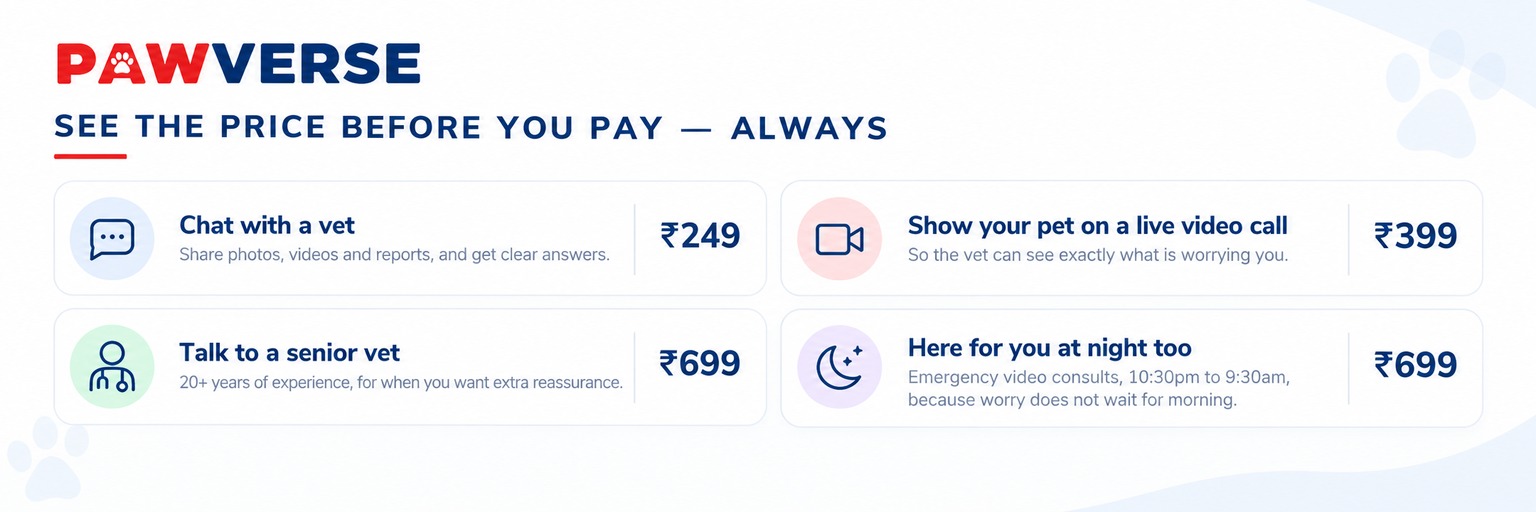
Ready? Start your consultation →
Please Don't Guess With Medicine
It's tempting to reach for whatever is in the cupboard, especially at night. With exotic pets, that's where small mistakes become serious. Some antibiotics, human medicines, and dog or cat products can harm rabbits, guinea pigs, hamsters, and birds, even in small amounts, and the right dose is rarely a simple adjustment.
Don't give leftover or human medicines, and don't buy a treatment off the shelf without a vet's advice. Why reused medicines are risky is covered in our pet medicine and prescriptions piece, and a quick consultation costs far less than a guess that goes wrong.
Start With Your Pet
Rabbit: Raising a Rabbit in India covers the emergencies every owner must know, from gut stasis to heat.
Bird: our guides on pet bird care and on pet bird legality and health cover diet, behaviour, and the legal traps.
Guinea pig: our guinea pig care guide covers vitamin C, housing, and appetite loss.
Hamster and turtle: our overview of guinea pigs, hamsters, and turtles covers wet tail, torpor, and the turtle legal picture.
Questions Before You Book
Can an exotic pet really be helped online?
For triage, care questions, follow-ups, and second opinions, yes. A vet can judge urgency and guide your next steps. For an examination, tests, or emergency treatment, your pet will need to be seen in person, and you'll be told early.
Which pets can I consult for?
The list near the top of this page, plus dogs and cats. If your pet isn't named there, tell Captain Scout what you have, and you'll be told whether a consultation can help.
Is the vet experienced with exotic pets?
Every vet on the platform is registered with the Veterinary Council of India, and you name your pet's species at the start so the consultation begins with the right context. If your pet needs a vet with hands-on exotic experience in person, a vet will say so.
Can I wait until morning?
Only if none of the go-now signs apply. For rabbits and guinea pigs especially, a lost appetite or no droppings shouldn't wait.
Can you prescribe medicine for my rabbit, bird, or hamster online?
Where it's appropriate, and with caution. Small pets react badly to many medicines, so a vet may want an in-person exam first, and will tell you plainly.
What should I bring if I have to go to a clinic?
Everything in the travel notes above: the carrier, the photos, the droppings, and your list of foods and medicines.
Is it legal to keep my bird or turtle?
Not always. Several common birds and turtles are protected or restricted in India, so check before you buy. Our guides on bird legality and on turtles explain what to look for.
How long until I reach a vet?
Usually about ten minutes, and the guarantee is half an hour. Your vet will be VCI-registered. Start now →
If You'd Like Another Route
The quickest way is to start a consultation here. A question that can wait?
WhatsApp us on +91 96255 21168 (8am to 10pm IST).
For a go-now sign, call +91 96255 21168 and tell them the species.
The Bottom Line
Exotic pets don't give you much warning, and finding the right vet shouldn't take longer than the problem does. Know the go-now signs for your species, decide quickly between a clinic and a consultation, and skip the guesswork with medicines. If you're not sure, ask a vet, in minutes, not after a night of worrying.
Your exotic pet can't tell you what's wrong, but a vet can help you work it out. Talk to a vet now →
With love, Team PawVerse
Have a question about your pet?
Chat with Captain Scout and reach a verified vet, guaranteed within 30 minutes.
PawVerse Editorial Team
Practical pet health guides from the PawVerse team, written to help Indian pet parents understand what they are seeing and when to talk to a vet.
Your pet's health does not have to wait
Talk to a verified PawVerse vet from home. No travel, no waiting rooms, real answers within 30 minutes.