
Written by PawVerse Editorial Team
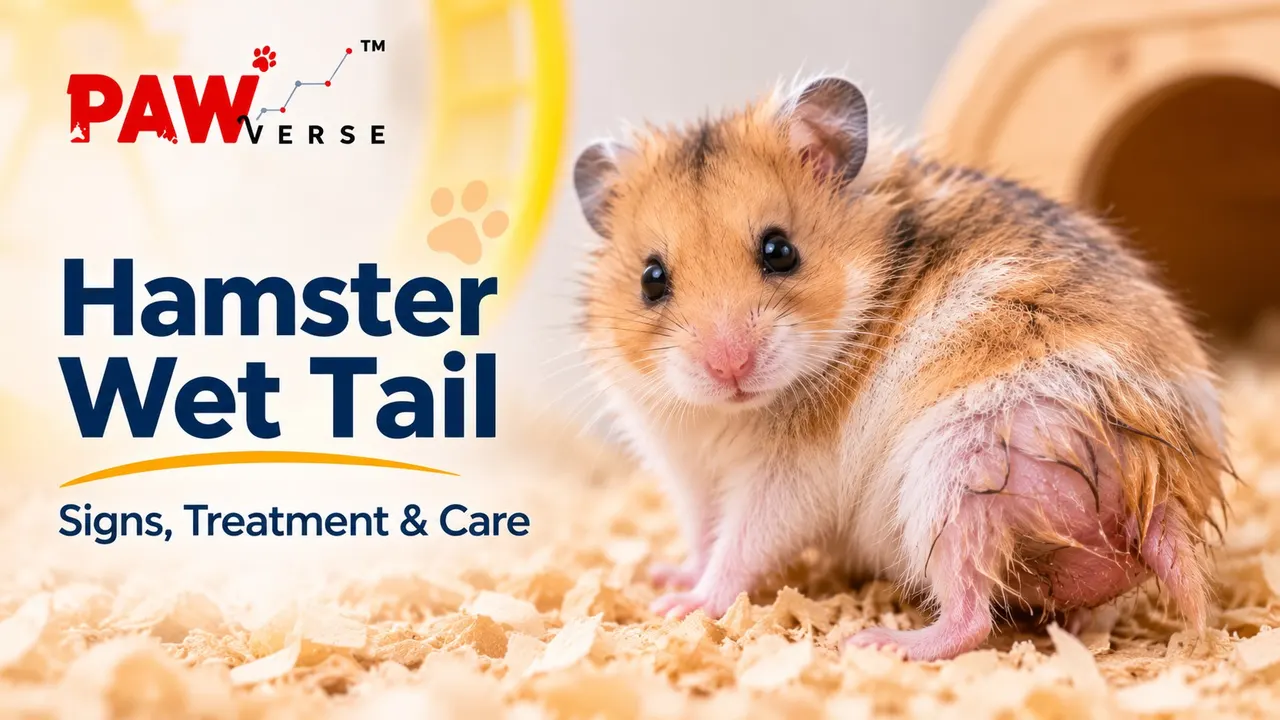
You pick up the cage in the morning and something is wrong. Your hamster, who is usually bustling around the wheel by now, is hunched in a corner. His back end is wet and matted, there is a sour smell, and he barely lifts his head when you open the lid.
This is the picture of wet tail, and it is one of the few hamster problems where hours matter. A young hamster can go from "a bit quiet" to critically ill in a day or two. This guide helps you recognise it, tells you what to do right now, and explains what a vet can do. If your hamster has a wet tail or diarrhoea at this moment, don't wait to finish reading: get a vet's view now.
Hamster with a wet, dirty bottom? Show a vet on video now → Early treatment is the single biggest factor in how this ends.
VCI-registered vets · Tell us "hamster" first · Usually connected in around ten minutes, never later than thirty · Serving Delhi NCR and all of India
What Wet Tail Is
"Wet tail" is the common name for a serious diarrhoeal disease in hamsters, usually caused by an infection of the gut with a bacterium called Lawsonia intracellularis. Vets call it proliferative ileitis or proliferative enteritis. It hits young hamsters hardest, particularly those around the age of weaning, and it is strongly linked to stress. Veterinary sources describe it as one that can kill within a few days, even with treatment.
The name describes what you see: a wet, soiled tail and bottom, matted with loose, smelly droppings.
Is It Wet Tail? The Signs
Look for several of these together:
A wet, matted tail and rear end, often with a sour smell
Loose or watery droppings
Hunched, dull, puffed-up appearance
Not eating or drinking, or eating much less
Lethargy, sleeping at times when he'd normally be active
Weight loss and a rough coat
Sunken eyes or tented skin, which are signs of dehydration
Signs of belly pain, such as teeth grinding or hunching when touched
Not every wet bottom is wet tail. Some soiling comes from a urinary problem or simply a dirty cage. But in a young hamster, treat it as wet tail until a vet says otherwise.
Why It Happens: The Stress Link
The bacteria are often present in the gut, but illness appears when the hamster's defences drop. Common triggers:
Recent move to a new home, especially a young hamster bought from a pet shop
Weaning too early, or being separated from the mother
Overcrowding or sharing a cage
Too much handling in the first days
A sudden change in food
A dirty or badly ventilated cage
Heat, cold or a noisy, stressful location
Another illness, or a recent antibiotic course
If your hamster came home within the past two weeks, that is a clue worth telling the vet.
Other Causes of Diarrhoea in Hamsters
Not all diarrhoea is wet tail. A vet may also consider:
The clue | A possible cause | Why it matters |
|---|---|---|
Watery droppings after a new food or too many fresh veg | Diet upset | Often milder, but still worth watching closely |
Diarrhoea after a course of antibiotics | Antibiotic-related gut upset | Some antibiotics can be deadly to hamsters |
Fever-like dullness, rough coat, weight loss | Salmonella or other bacteria | Can pass to people, so wash hands |
Diarrhoea with a protruding red tube from the bottom | Rectal prolapse | An emergency, go now |
Diarrhoea in a hamster with visible worms or segments | Parasites such as tapeworm | Needs a stool check |
Sudden death or severe illness in a group | Contagious bacteria | Separate and clean thoroughly |
Only a vet can sort these out, and they can look at the hamster, the droppings and the cage routine together.
What to Do Right Now
Do:
Call a vet or start a video consult straight away. Don't wait to see if it settles
Move him to a separate, clean, quiet cage, away from other hamsters
Keep him warm but not hot, in a draught-free room
Offer fresh water, in a small shallow dish or a bottle he can reach easily
Offer his usual food, plus a little cucumber or a plain, safe veg for moisture
Gently wipe the soiled fur with a damp, lukewarm cloth if he tolerates it, then pat dry. Never bathe a sick hamster
Note the time he last ate, drank and passed droppings, and take a clear photo of the droppings and the soiled area
Wash your hands before and after you handle him or the cage
Don't:
Give any antibiotic, leftover medicine or human diarrhoea remedy. Wrong antibiotics can be deadly to hamsters, and even the right one needs a vet's dose
Wait overnight hoping he'll improve
Bathe him, which chills a sick hamster
Change his food suddenly
Handle him more than necessary
Put him back with other hamsters
The reasons for the medicine warning are covered in our pet medicines and prescriptions guide.
Not sure whether it's wet tail? Ask a vet to look at him on video →
Dehydration: The Real Danger
Hamsters are tiny, and the diarrhoea drains fluid from a very small body fast. Dehydration is what usually makes wet tail dangerous. Signs include sunken eyes, a dull coat, skin that stays pinched when you gently lift it, very little urine, and sluggishness.
A vet's treatment focuses on this first, with fluids, along with medicines chosen for the likely cause and supportive feeding. Never try to syringe fluids into a hamster without being shown how, since the risk of choking is real.
Getting Him Seen
Phone clinics first and ask whether they see hamsters and can take him now. Many general vets are not used to hamsters, so ask early. If nobody near you does, the emergency line, +91 96255 21168, will put you through to a vet.
Transport him in a small, secure carrier with bedding and a little food, keep it warm, and cover it with a light cloth. Bring the photo of the droppings, notes on his diet and cage setup, the date you got him, and a note of any recent medicine.
What the Vet Does
On arrival the vet will handle him gently, judge how dried out he is, inspect the droppings and ask about his cage, food and any recent changes. Treatment can include fluids, medicines chosen specifically for a hamster, warmth, assisted feeding and a plan for cleaning the cage. If a cage-mate is at risk, they will advise on that too.
A video call can judge how urgent it is, look at his posture, tail, droppings and cage, and help you plan the next hours. It can't give fluids, run a stool test or hospitalise him. If any of those are needed, the vet will tell you straight away, so you don't lose time.
How it works
Tell Captain Scout "hamster," and give the timeline: when the diarrhoea began and when he last ate.
A VCI-registered vet watches him on the call, checking how he sits, his tail end, the droppings and the cage.
You end the call with a plan: who should see him in person, and how to keep him comfortable until then.

Ready? Start now →
After the Crisis: Cleaning and Prevention
If your hamster recovers, or if you are protecting other hamsters:
Clean the cage thoroughly and replace soiled bedding. Wash the bowl, bottle and wheel with hot water and a pet-safe cleaner, and let everything dry
Quarantine new hamsters in their own cage for at least a couple of weeks
Keep each hamster in its own cage if they are Syrians, which are solitary, and avoid overcrowding in dwarf pairs
Give a new hamster several days to settle before handling
Keep the diet steady, with a good hamster mix and only small amounts of fresh veg
Keep the cage clean, dry and well ventilated, away from direct sun and loud noise
Wash your hands after handling any hamster or cage
Questions Before You Book
How fast can wet tail kill? Very fast. In young hamsters it can become life-threatening within a day or two, which is why getting a vet's view the same day matters.
Is a wet bottom always wet tail? No. A urinary problem, a dirty cage or a diet upset can all cause it. But in a young hamster, treat it as wet tail until a vet says otherwise.
Can I treat it at home? Home care is for keeping him warm, clean and hydrated while you arrange help. It can't treat the infection, and the wrong medicine can be fatal.
Can I give him antibiotics I have at home? No. Some antibiotics can be deadly to hamsters because they upset the gut bacteria. Only use what a vet prescribes for hamsters.
Can wet tail spread to my other hamsters? It can, because the bacteria spread through droppings. Separate him at once and clean the cage carefully.
Can people catch it? Wet tail is not usually a concern for people, but some other causes of hamster diarrhoea, such as Salmonella, can be. Wash your hands after any contact.
How soon can I reach a vet? Most owners reach a vet in about ten minutes, and always within thirty. Start now →
Phone First If He's Struggling
If he is limp, cold, not responding, has a red tube sticking out of his bottom, or is breathing fast, ring +91 96255 21168 and you'll be put through to a vet fast. Less urgent questions can go to +91 96255 21168 on WhatsApp, 8am to 10pm IST.
The Bottom Line
Wet tail is a stress-triggered, fast-moving infection that mostly hits young hamsters. Treat a wet, smelly bottom as an emergency, keep him warm, clean and separate, offer water, avoid any medicine of your own, and get a vet's view the same day. The sooner treatment starts, the better the odds.
A hamster with wet tail can't wait until tomorrow. Get him in front of a vet now →
With love, Team PawVerse
Have a question about your pet?
Chat with Captain Scout and reach a verified vet, guaranteed within 30 minutes.
PawVerse Editorial Team
Practical pet health guides from the PawVerse team, written to help Indian pet parents understand what they are seeing and when to talk to a vet.
Your pet's health does not have to wait
Talk to a verified PawVerse vet from home. No travel, no waiting rooms, real answers within 30 minutes.