
Reviewed by dr-rt-sharma
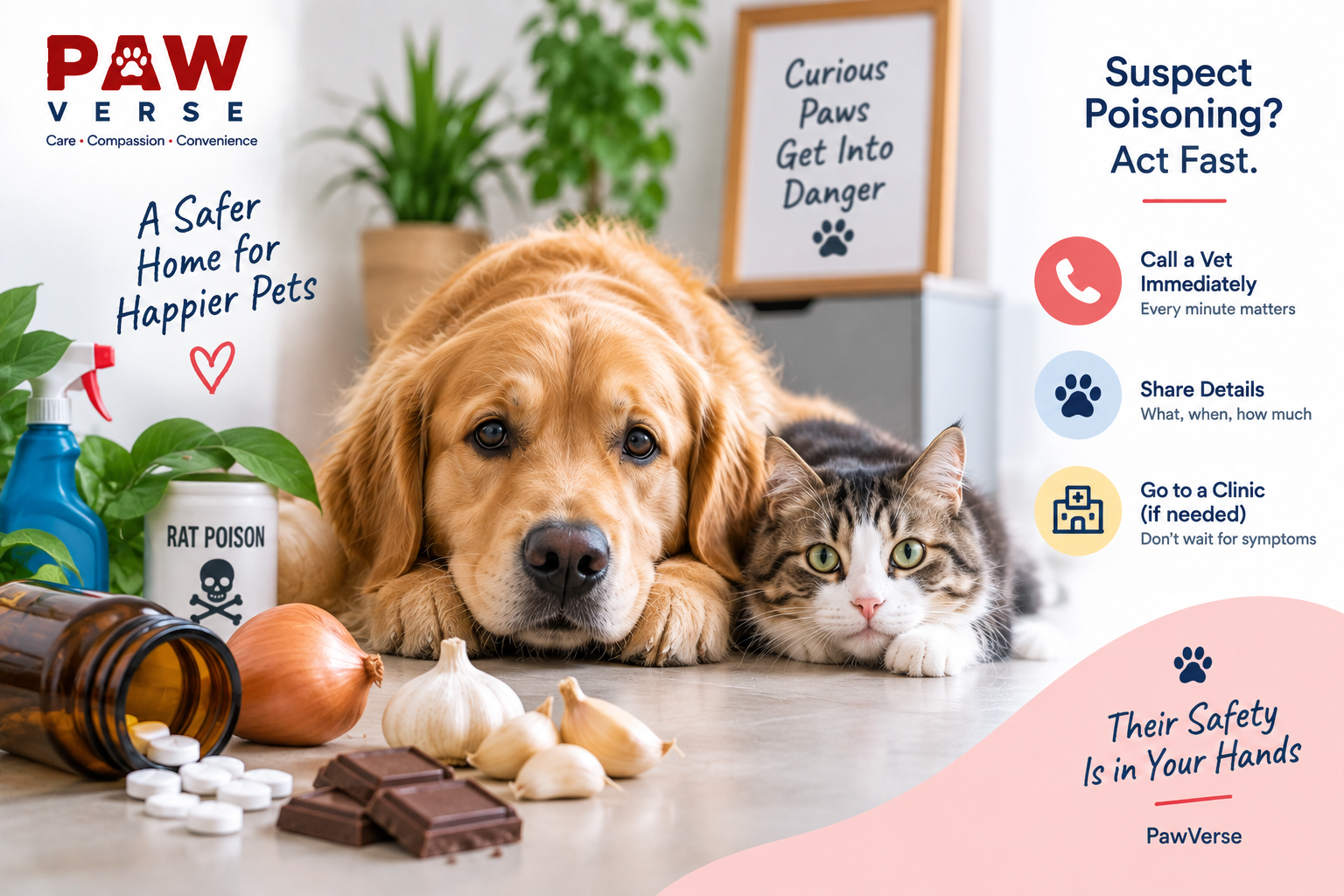
There's a particular kind of panic that hits when you realize your dog just ate something off the kitchen counter that definitely wasn't meant for them, or your cat's been sniffing around a plant you never thought to check. In that moment, what you do in the next few minutes matters more than almost any other pet health situation, because with poisoning, the damage is often already progressing before any symptom shows up at all.
This guide covers what to do immediately if you suspect poisoning, the substances that cause the most poisoning cases in Indian homes specifically, and why waiting for symptoms is the single biggest mistake pet owners make in this situation. For the broader picture of emergency signs beyond poisoning, our dog emergency symptoms and cat emergency symptoms guides are worth having bookmarked alongside this one.
The One Rule That Matters Most: Don't Wait for Symptoms
Before anything else, let’s get this straight: this is the mistake that can waste the most time when time is literally ticking down like a game show buzzer. Many toxins are sneaky little devils, causing serious and sometimes irreversible organ damage long before your furry friend even starts to show symptoms. By the time your pet looks like they’ve had a rough night at a college party, they might have already suffered some serious harm. So, if you even think your pet has nibbled on something toxic, don’t wait around to see if they’re just being dramatic—spring into action! Remember, your pet’s health is no laughing matter, but taking quick action can save the day!
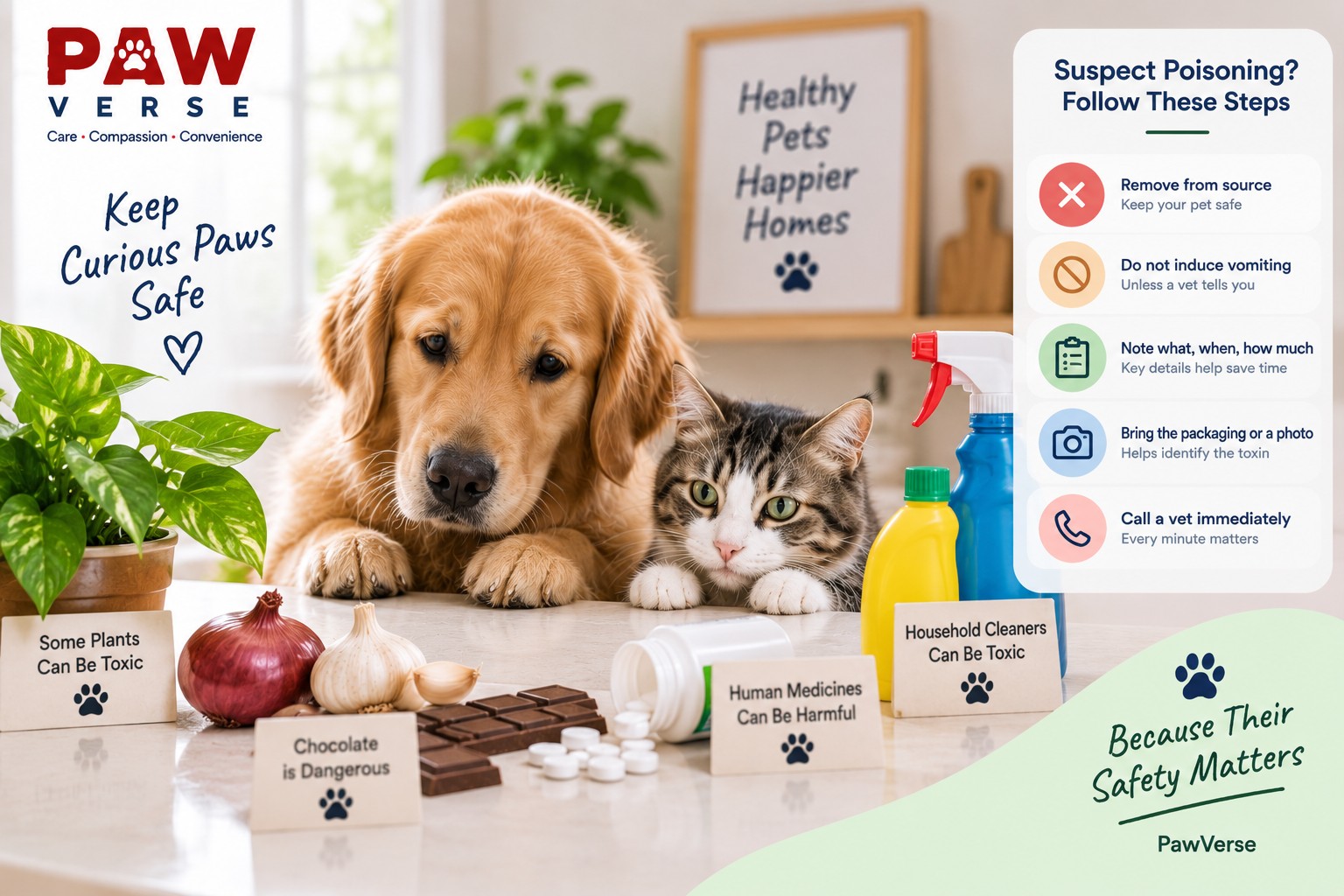
What to Do Right Now, Step by Step
Remove your pet from the source. If there's more of the substance accessible, move your pet away from it immediately, and remove any remaining material from their mouth if you can do so safely without risking a bite.
Do not induce vomiting unless a vet specifically tells you to. This is a common instinct that can actually cause serious additional harm. Some substances cause more damage coming back up than staying down, particularly anything corrosive or sharp, and inducing vomiting incorrectly, with the wrong method or in the wrong situation, can lead to aspiration or further injury. Only do this if a vet instructs you to, and only using a method they specify.
Note what, when, and how much. Identify the substance if you can—like, was it a mystery drink from that questionable party? Note roughly when the ingestion happened—was it last night or did you just finish your sixth cup of ramen? And estimate how much was consumed—because “a lot” doesn’t really cut it when talking to a vet. This single piece of intel is often the game-changer for how a vet approaches treatment, and trust me, it’s way easier to gather in the moment than to play detective later. So, take a deep breath, don’t panic, and let’s get this info sorted out!
Bring the packaging, plant, or a photo. If you're heading to a clinic, bring the container, a piece of the plant, or a clear photo of what your pet ingested. This can meaningfully speed up identifying the right treatment.
Call a vet immediately, in person or online. Contact your regular vet, the nearest emergency clinic, or an online consultation for immediate guidance while you arrange transport if needed. Every minute matters here more than in most other situations covered in this content series.
Why India Doesn't Have a Dedicated Animal Poison Control Hotline
In the United States, there are dedicated 24-hour animal poison control hotlines, such as the ASPCA Animal Poison Control Center, designed specifically for this scenario. India does not currently have a comparable nationwide, dedicated poison hotline readily available. Consequently, the fastest route to guidance is your regular veterinarian, a nearby emergency clinic, or an online veterinary consultation platform that offers round-the-clock access, rather than a specialized poison hotline. It’s important to know this in advance, as discovering the gap during an actual emergency can waste precious time.
Common Poisoning Sources in Indian Homes
India's food culture and household habits create a specific set of poisoning risks that don't always match the generic lists written for other countries. A few are worth knowing in detail.
Rodenticides (Rat Poison)
Brodifacoum-based anticoagulant rodenticides are among the most commonly used rat poisons in Indian households, and their danger is amplified by how they affect the body. These poisons disrupt the body's ability to recycle Vitamin K, a vital component for normal blood clotting. The result is progressive, hidden internal bleeding that often shows no obvious signs for three to seven days after ingestion. By the time symptoms appear, a pet may experience sudden, unexplained bleeding from the gums or nose, or internal bleeding into body cavities, placing them in a genuine medical crisis. Cats can also suffer secondary poisonings by consuming a rodent that has already ingested the poison. Because the onset and severity can be delayed and dramatic, any known or suspected exposure to rodenticides warrants an immediate veterinary visit, even if the pet appears well in the days that follow. The safest long-term prevention is to remove rodenticides from any area accessible to a pet and to rely on physical traps instead.
Common Kitchen Ingredients
Onions and garlic, present in the vast majority of Indian cooking, are toxic to dogs and cats even in small, cumulative amounts, damaging red blood cells over time rather than causing an obvious immediate reaction. Grapes and raisins, common in mithai and baked goods, can cause acute kidney failure in dogs, and there's no known safe threshold amount. Xylitol, a sugar substitute increasingly found in imported sugar-free products, is highly toxic even in small quantities. Chocolate, particularly darker varieties, contains theobromine and caffeine, both dangerous to dogs and cats.
Household Plants
The castor plant, Ricinus communis, is exceptionally common throughout India, thriving in fields, along roadways, and even in some home gardens for its ornamental or commercial value. Its seeds contain ricin, one of the most toxic naturally occurring substances, and just one seed can prove fatal to a small dog. Oleander, known as kaner in many Indian languages, is a widely planted ornamental shrub and hedge plant prized for its blossoms. Unfortunately, every part of the plant—leaves, flowers, stems, and even the water in which it has stood—contains cardiac glycosides that can disrupt heart rhythm. Poisoning symptoms typically appear within a few hours and include vomiting, diarrhea, an irregular heartbeat, and, in severe cases, collapse. Given how prevalent oleander is as a garden and roadside hedge in India, it’s important to learn to identify it clearly, especially if you walk your dog in areas where it grows.
Pesticides and Mosquito Control Products
Beyond rat poison specifically, agricultural and household pesticides, particularly those containing zinc phosphide, can create toxic gases inside a pet's body once ingested and need emergency care immediately. Mosquito repellent liquids and coils, found in nearly every Indian home, are toxic if chewed or ingested, a risk covered in more detail in our puppy care guide India given how often curious young pets investigate these devices.
Human Medication
Over-the-counter and prescription human medications remain one of the most common poisoning sources for pets everywhere, India included. Common pain relievers like ibuprofen and paracetamol, cold medications, and everyday vitamins and supplements can all be dangerous even in doses that seem small relative to human use. Store all medication, including anything kept in a bag, purse, or on a nightstand, well out of reach.
Symptoms That May Indicate Poisoning
Symptom | Possible Cause |
Sudden vomiting or diarrhea | Many toxins, including foods and plants |
Unexplained bleeding from gums or nose | Possible rodenticide exposure |
Irregular heartbeat, weakness, or collapse | Possible oleander or cardiac glycoside exposure |
Seizures or tremors | Several toxin categories, including pesticides |
Pale gums | Possible internal bleeding or red blood cell damage |
Difficulty breathing | Possible pesticide or gas-releasing toxin exposure |
Excessive drooling | Common early sign across many toxin types |
Lethargy appearing days after a known exposure | Classic delayed rodenticide presentation |
When to Contact a Vet
Any known or strongly suspected ingestion of a toxic substance warrants contacting a vet immediately, before symptoms appear, not after. This applies even if your pet seems completely fine in the moment, given how many of the substances above cause delayed damage. You don't need to visit a clinic in person to get immediate guidance while arranging transport. Through PawVerse, our emergency vet consultation is available around the clock for exactly this kind of situation, helping you understand next steps fast while you get your pet to in-person care if that's what's needed.
Frequently Asked Questions
Q: Should I make my dog vomit if I think they ate something toxic?
A: Not without instruction from a vet first. Some substances cause more harm coming back up than staying down, and inducing vomiting with the wrong method can cause additional injury. Call a vet immediately and follow their specific guidance rather than acting on your own.
Q: My pet ate something toxic hours ago but seems fine now, do I still need to see a vet?
A: Yes, in most cases. Several of the most dangerous common toxins, including rodenticides, cause damage well before any visible symptom, sometimes days later. Seeming fine now doesn't rule out a serious problem developing internally.
Q: Is there a poison control hotline for pets in India?
A: Not a dedicated, widely available national hotline equivalent to what exists in some other countries. Your fastest options are your regular vet, a nearby emergency clinic, or a round-the-clock online vet consultation service, which is why it's worth having one of these contacts saved before you need it urgently.
Q: How much chocolate is dangerous for a dog?
A: This depends on the type of chocolate, darker and more concentrated chocolate is more dangerous, and your dog's body weight. Rather than trying to calculate this yourself in a stressful moment, contact a vet with the type and approximate amount consumed, and they can advise quickly based on those specifics.
Q: Are all lilies dangerous, or just some types?
A: For cats specifically, true lilies are severely toxic in every part of the plant, including pollen, and can cause fatal kidney failure even from minimal exposure like grooming pollen off fur. Given how easy this is to underestimate, it's simplest to avoid keeping true lilies in a home with cats entirely rather than trying to distinguish safe from unsafe varieties.
The Bottom Line
Pet poisoning is one of the few genuine emergencies where the instinct to "wait and see" works directly against your pet, since so many common toxins cause their real damage silently before any symptom appears. Knowing the substances most likely to show up in an Indian home specifically, rat poison, onion and garlic, grapes, oleander, and human medication, and having a vet contact ready before you need it, are the two things that matter most in the moment this actually happens.
If you ever suspect your pet has ingested something toxic, don't wait for confirmation that something's wrong. Call first.
Talk to a PawVerse vet online now, or reach our emergency vet consultation any time of day if you suspect poisoning.
With love, Team PawVerse
Have a question about your pet?
Chat with Captain Scout and reach a verified vet, guaranteed within 30 minutes.
Admin
Part of the PawVerse team, on a mission to make trusted pet healthcare simple and reachable for every Indian pet parent.
Your pet's health does not have to wait
Talk to a verified PawVerse vet from home. No travel, no waiting rooms, real answers within 30 minutes.