
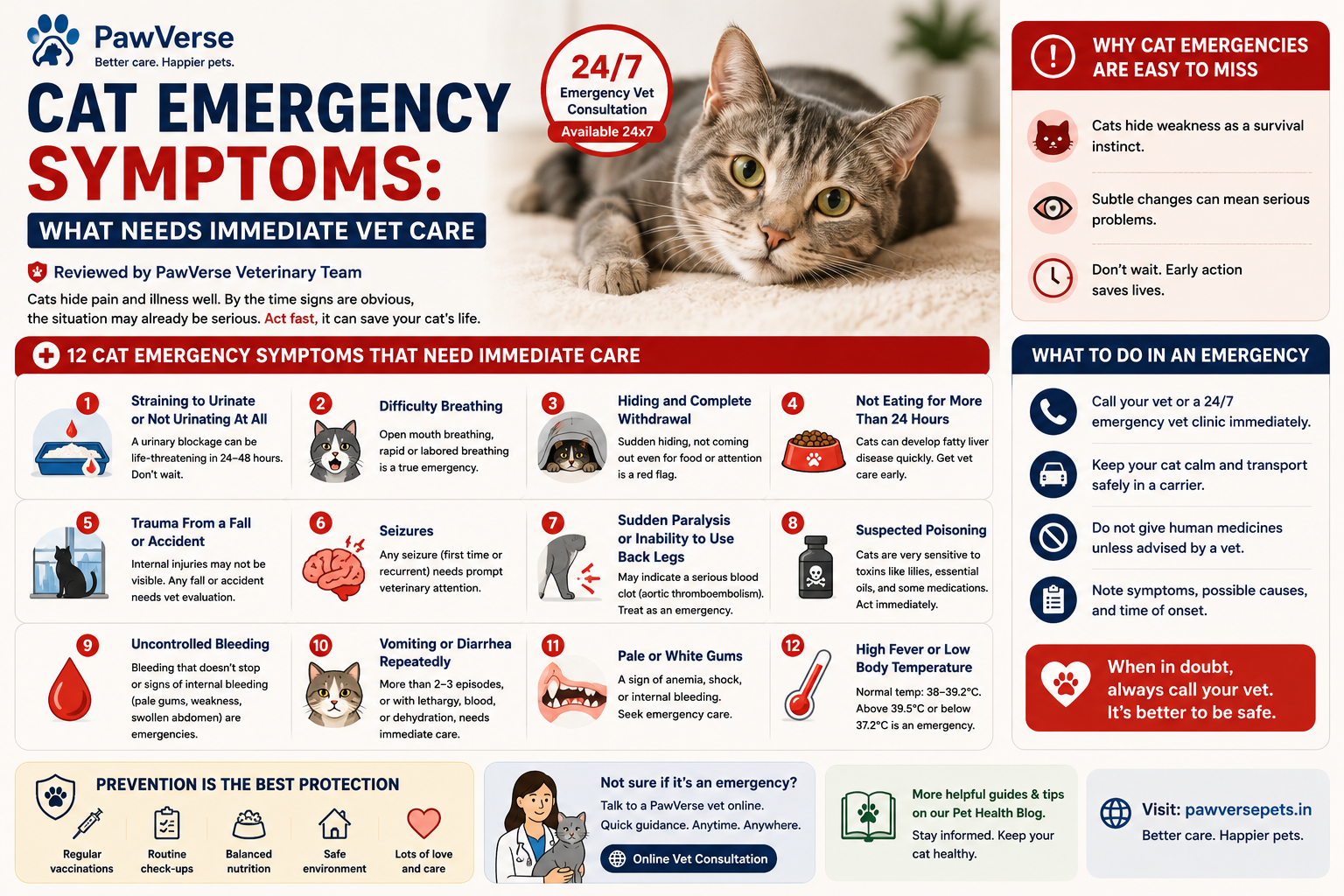
Cats are experts at hiding when something's wrong, which is exactly what makes emergencies harder to catch early. A dog in distress is usually obvious. A cat in distress might just seem quiet, tucked into a corner somewhere, and by the time the signs are unmistakable, the situation has often already become serious.
This is one of the reasons cat emergencies get missed more often than dog emergencies, not because owners care less, but because cats are simply built to mask illness and pain as a survival instinct left over from being both predator and prey in the wild. This guide walks through the symptoms that genuinely need immediate care, the more subtle signs cat owners tend to miss, and what to do in the moment. For everyday health monitoring, our Complete Pet Care Guide is a useful companion read.
Why Cat Emergencies Are Easy to Miss
Cats instinctively hide weakness, since appearing vulnerable would make them a target in the wild. This means a cat that seems "a little off" is often further along in a medical crisis than the same behavior would suggest in a dog. A cat hiding under the bed for a day, eating less, or moving less isn't automatically an emergency, but it's worth taking more seriously in cats than the same behavior might warrant in a more openly expressive animal.
The general rule with cats: subtle changes deserve attention sooner rather than later, and any of the clearer emergency signs below should never be waited out.
12 Cat Emergency Symptoms That Need Immediate Care
1. Straining to Urinate or Not Urinating At All
This is one of the most frequent and pressing emergencies in cats, especially male cats. A urinary blockage can develop rapidly and be life threatening in 24 to 48 hours. Watch for frequent trips to the litter box, with little or no urine passed, crying out while trying to urinate, or repeatedly going to the box without seeming to accomplish anything. This is never a symptom to wait and see.
2. Difficulty Breathing
Open mouth breathing, rapid or labored breathing, or breathing with visible effort in the chest and belly are all signs of a genuine emergency in cats. Unlike dogs, cats rarely pant unless they're in real distress, so any open mouth breathing at rest should be treated as urgent. This can indicate heart disease, fluid in the lungs, asthma, or trauma.
3. Hiding and Complete Withdrawal
A cat that suddenly stops interacting at all, hides in an unusual spot and won’t come out even for food or normal routines is giving a strong signal something is wrong. This is more subtle than most of the emergency signs but when combined with reduced appetite or any physical symptom it shouldn't be dismissed as just a mood.
4. Not Eating for More Than 24 Hours
This is more urgent than it sounds, because cats are especially vulnerable. If a cat doesn’t eat for a long time, the body may start using fat for energy faster than the liver can process it. This can lead to a serious condition known as hepatic lipidosis or fatty liver disease. This is one of the reasons that a cat not eating for more than a day needs veterinary attention sooner rather than later, especially an overweight cat even without other obvious symptoms.
5. Trauma From a Fall or Accident
Cats are known for surviving falls that seem like they shouldn't be survivable, which sometimes leads owners to assume a cat is fine after a fall from a balcony or window. Internal injuries aren't always visible right away, and a cat that seems to walk away fine can develop serious complications over the following hours. Any fall from height or vehicle related trauma needs veterinary evaluation, even without obvious injury.
6. Seizures
Any cat having a seizure, either for the first time or a known condition, requires prompt assessment. This is especially important if the seizure lasts longer than a few minutes, occurs again within a short period of time or the cat does not return to normal awareness afterward. Don't try to restrain the cat. Remove objects from around the cat that may cause harm during the seizure.
7. Sudden Paralysis or Inability to Use Back Legs
A cat that suddenly can't move its back legs, drags them, or cries out in pain with paralysis can be experiencing a serious blood clot condition called aortic thromboembolism, often linked to underlying heart disease. This is a true emergency, and the faster treatment starts, the better the outcome tends to be.
8. Suspected Poisoning
Cats are particularly sensitive to certain substances that are far less dangerous to dogs, including lilies, which are severely toxic to cats even in small amounts like pollen brushed off a flower, along with essential oils, certain human medications, and some flea products formulated for dogs. If you suspect any toxic exposure, contact a vet immediately rather than waiting for symptoms to appear.
9. Uncontrolled Bleeding
Bleeding that doesn't stop after several minutes of firm pressure, or that is accompanied by pale gums and weakness require emergency care. You may not see blood, but you may have internal bleeding. This will look like sudden weakness, a swollen abdomen and pale gums.
10. Persistent Vomiting
An occasional hairball or single vomiting episode usually isn't an emergency in an otherwise normal cat. Frequent vomiting, vomiting combined with lethargy and not eating, or vomiting that contains blood needs prompt veterinary attention, particularly because vomiting can worsen dehydration quickly in cats.
11. Straining or Crying in the Litter Box for Any Reason
Beyond urinary blockage specifically, any crying, straining, or clear discomfort while using the litter box, whether urinating or defecating, warrants a same day evaluation. Cats rarely vocalize discomfort without real cause.
12. Collapse or Sudden Weakness
A cat that collapses, seems unable to stand, or becomes suddenly limp and unresponsive needs emergency evaluation immediately. This can point to a range of serious causes including heart disease, poisoning, severe anemia, or shock.
Quick Reference: Emergency vs Wait and Watch
Symptom | Emergency | Can Often Wait and Monitor |
Litter box | Straining with no urine produced | Slightly more or less frequent visits |
Breathing | Open mouth breathing, labored | Normal quiet breathing at rest |
Appetite | No food for 24+ hours | Skipped one meal, otherwise normal |
Mobility | Sudden inability to use back legs | Mild stiffness, still walking normally |
Behavior | Complete withdrawal, unresponsive to normal routine | Sleeping more than usual, still responsive |
Vomiting | Frequent, bloody, with lethargy | Single hairball episode |
Gums | Pale, white, or blue | Normal pink color |
What To Do While You're Getting to the Vet
Use a secure carrier, even for a short trip, since a frightened or injured cat can hide, bolt, or scratch unpredictably.
Keep the environment calm and quiet, covering the carrier with a light towel can help reduce stress during transport.
Do not give any human medication, including common pain relievers, since several are highly toxic to cats even in small doses.
Apply gentle, firm pressure to visible bleeding with a clean cloth if you can do so safely.
Call ahead so the clinic can prepare, especially if you suspect a urinary blockage, poisoning, or breathing difficulty.
Bring packaging or a sample if you suspect poisoning, to help the vet identify the substance quickly.
When to Contact a Vet
Any of the symptoms listed above warrant contacting a vet immediately. Because cats hide illness so effectively, it's generally safer to call and describe what you're seeing than to wait and hope it resolves on its own, especially with urinary symptoms or a cat that's stopped eating.
You don't always need to be in a clinic to get the first opinion. Through PawVerse, our emergency vet consultation is available around the clock for exactly these situations. For non urgent questions and everyday health concerns, you can also book an online vet consultation.
Frequently Asked Questions
Q: How urgent is it if my male cat can't urinate?
A: Extremely urgent. Urinary blockage in male cats can become life threatening within a day or two due to the buildup of toxins the body can no longer eliminate. If your cat is straining in the litter box with little or no urine coming out, this needs emergency care immediately, not a wait and see approach.
Q: Why is not eating more dangerous for cats than for dogs?
A: Cats can develop a serious liver condition called hepatic lipidosis when they go without food for an extended period, something dogs are far less prone to. This is why a cat refusing food for more than 24 hours needs veterinary attention sooner than the same duration might warrant in a dog.
Q: My cat is hiding more than usual but seems otherwise fine, should I worry?
A: Hiding alone isn't automatically an emergency, cats do seek out quiet spaces for many normal reasons. But because cats mask illness so well, hiding combined with reduced appetite, activity, or any physical symptom deserves closer attention and a lower threshold for calling a vet than you might apply to a dog showing similar behavior.
Q: Are lilies really dangerous to cats?
A: Yes, severely. All parts of true lilies, including the pollen, are highly toxic to cats and can cause fatal kidney failure even from minimal exposure, such as grooming pollen off their fur. If you have cats at home, it's worth avoiding lilies entirely rather than trying to keep them out of reach.
Q: How can I tell if my cat is in pain?
A: Cats show pain very subtly. Signs include reduced grooming, hiding, reluctance to jump or climb the way they normally would, changes in posture, purring in unusual contexts as a self soothing behavior, and reduced interest in food or interaction. Any noticeable change in normal behavior is worth taking seriously in a cat.
Q: What should I keep in a cat first aid kit at home?
A: A secure carrier, gauze and non stick bandages, a digital thermometer, saline solution for flushing wounds or eyes, a soft towel for restraint and comfort during transport, and the saved phone numbers for your regular vet and an emergency clinic are worth having ready before you need them.
The Bottom Line
Cats don't show distress the way dogs do, which means owners need to lean toward caution rather than waiting for obvious signs. Urinary straining, breathing difficulty, not eating for over a day, sudden hind leg weakness, and complete withdrawal are all situations where calling a vet immediately is the safer choice, even if it turns out to be nothing serious.
When your cat seems even slightly off in a way that's unusual for them, trust that. A quick call costs very little, and it can catch something early that would otherwise be missed until it became much harder to treat.
Talk to a PawVerse vet online now, or reach our emergency vet consultation any time of day if you think your cat needs urgent care.
With Love, Team PawVerse
Have a question about your pet?
Chat with Captain Scout and reach a verified vet, guaranteed within 30 minutes.
PawVerse Editorial Team
Practical pet health guides from the PawVerse team, written to help Indian pet parents understand what they are seeing and when to talk to a vet.
Your pet's health does not have to wait
Talk to a verified PawVerse vet from home. No travel, no waiting rooms, real answers within 30 minutes.