
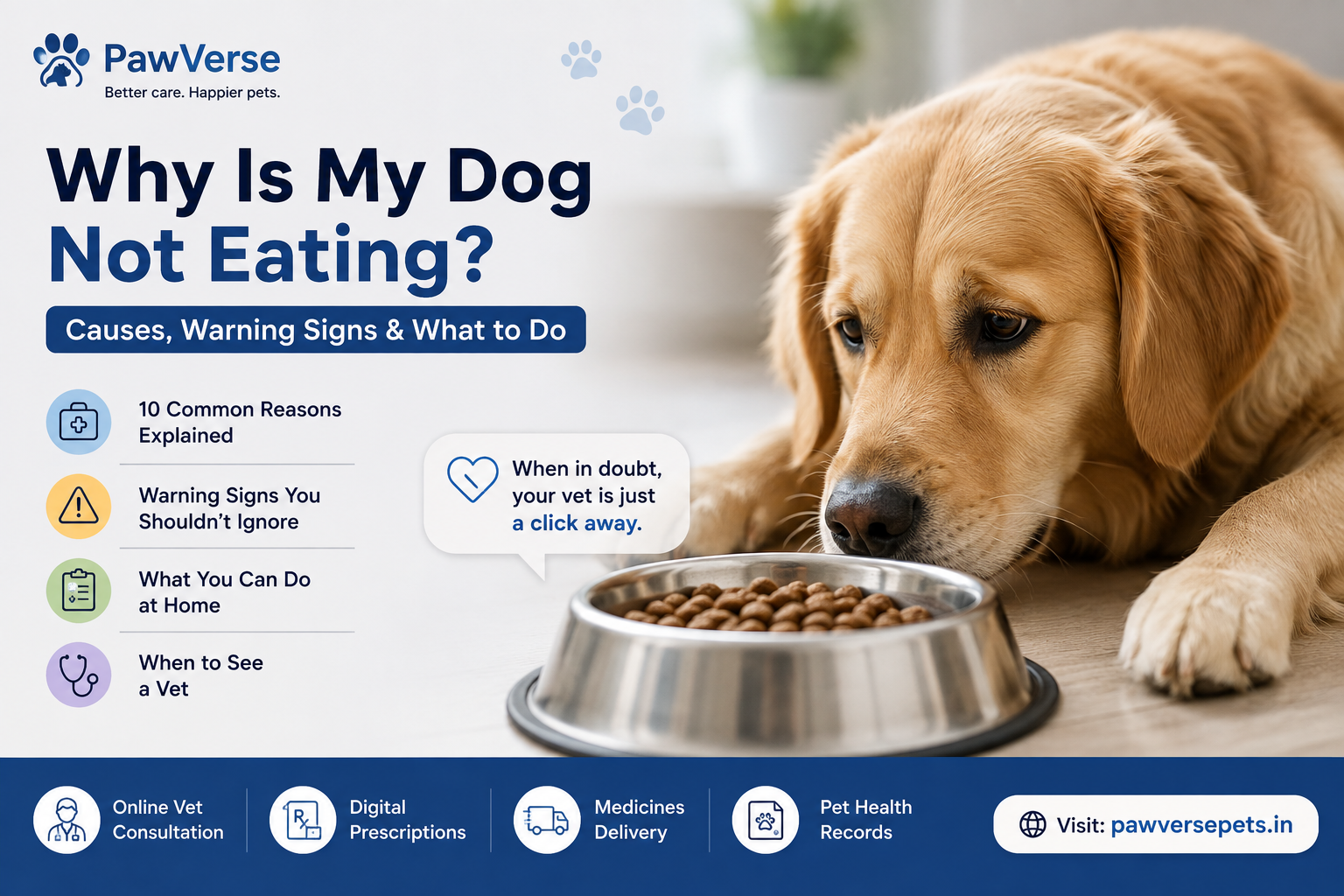
You set down the bowl, walk away, and come back five minutes later to find it untouched. Your dog is staring at you - not at the food. Yesterday, same thing. Now you're googling at midnight wondering if something is seriously wrong.
First - take a breath. A dog skipping a meal isn't always a crisis. But it's also not something to completely ignore, because the reason behind it matters enormously. A dog refusing food due to stress is a very different situation from one refusing food because of a kidney infection.
This guide walks you through every likely reason your dog has stopped eating, how to tell what's going on, and exactly when it's time to stop waiting and call a vet. For a full seasonal and breed-specific breakdown, our Dog Health Guide is a good companion read.
How Long Can a Dog Go Without Eating?
Most healthy adult dogs can safely go 24 to 48 hours without food before it becomes a medical concern. Their bodies have reserves, and a single skipped meal is rarely dangerous on its own.
Puppies are different. They have much smaller reserves and less metabolic resilience - a puppy under six months that hasn't eaten for 12 to 24 hours needs veterinary attention sooner. The same applies to senior dogs, dogs with existing health conditions, and pregnant or nursing females.
The clock matters less than what's accompanying the refusal. A dog that skips dinner but is otherwise alert, playful, and drinking water is in a very different situation from a dog that's also lethargic, vomiting, or acting out of character.
10 Reasons Your Dog Is Not Eating
1. Illness or Infection
The most straightforward reason - your dog feels unwell. Just like humans lose their appetite when sick, dogs experiencing infections, fevers, digestive upset, or internal inflammation will often stop eating as a first sign.
Common illnesses that cause appetite loss include parvovirus (especially in unvaccinated or partially vaccinated puppies), bacterial infections, urinary tract infections, and respiratory illness. In these cases, the lack of eating is usually accompanied by other symptoms - lethargy, vomiting, diarrhoea, or a noticeably dull coat and eyes.
If your dog stopped eating and also seems "off" in other ways, illness should be the first thing you investigate.
2. Dental Pain or Oral Discomfort
This is one of the most underdiagnosed causes of appetite loss in dogs - and one of the most common.
Dental disease, cracked teeth, gum infections, mouth ulcers, or something lodged between the teeth can make eating painful. Dogs will often approach the bowl, sniff it, and then walk away - not because they aren't hungry, but because it hurts to chew.
Watch for: pawing at the mouth, drooling more than usual, chewing on one side only, dropping food from the mouth, or bad breath that's notably worse than usual. Dental issues almost always need in-person veterinary attention, but an online vet consultation can help you assess the signs and decide how urgently to act.
3. Stress or Anxiety
Dogs are deeply sensitive to changes in their environment and routine. A move to a new home, a new pet or person in the household, a recent separation from a family member, loud construction nearby, or even a change in the feeding location can cause a dog to stop eating temporarily.
Stress-related appetite loss tends to resolve on its own once the dog adjusts - usually within 2 to 5 days. You may also notice other signs of anxiety alongside the food refusal: hiding, excessive panting, pacing, or increased clinginess.
If the stressor is identifiable, minimising it and maintaining a consistent routine usually helps. Our Pet Care Tips page has more guidance on managing anxiety in dogs.
4. Recent Vaccination
A mild, temporary loss of appetite after a vaccine is completely normal and expected. The immune response triggered by vaccinations can cause low-grade fatigue and reduced hunger for 24 to 48 hours post-injection.
If your dog had vaccines recently and stopped eating shortly after - and is otherwise acting normally - this is almost certainly the reason. It should resolve within two days. If it doesn't, or if other symptoms develop, check in with a vet.
5. A Sudden Change in Food
Dogs have strong food preferences, and abrupt switches - even to a higher-quality food - can cause refusal. The digestive system also needs time to adjust to new ingredients, and some dogs will simply protest the change with a hunger strike.
The correct way to switch foods is to blend old and new over 7 to 10 days: 75% old + 25% new for the first few days, then 50/50, then 25% old + 75% new, then fully new. If the switch has already happened abruptly and your dog is refusing, try mixing a small amount of the previous food in temporarily.
6. Picky Eating or Boredom
Some dogs - particularly small breeds, pampered household pets, and dogs who have learned that refusing food leads to tastier alternatives - simply become selective eaters. They may hold out because they know something better is coming.
This is more behavioural than medical. Signs that this is the cause: your dog refuses regular food but immediately eats treats or human food, shows no other symptoms, and has good energy levels. The solution is usually structured feeding - offering food for 20 minutes, removing it if uneaten, and not supplementing with treats until regular meals are consumed. A vet can help distinguish picky eating from genuine appetite loss.
7. Heat Cycle in Female Dogs
Unspayed female dogs often experience significant appetite reduction during their heat cycle. Hormonal fluctuations affect appetite, and some dogs may eat very little for the duration of the cycle (typically 2 to 3 weeks). This is normal and expected.
If the appetite loss is severe, prolonged beyond the heat period, or accompanied by other symptoms, it's worth getting a vet's assessment. This is also a good time to discuss spaying with a veterinarian - for health benefits beyond heat management. Read more in our Dog Health Guide.
8. Medication Side Effects
Several common medications - including antibiotics, anti-parasitics, anti-inflammatories, and certain heartworm preventatives - can temporarily reduce appetite as a side effect. If your dog recently started a new medication and stopped eating around the same time, the two are likely connected.
Don't stop medication without consulting your vet first. An online vet consultation can quickly help you assess whether the reduced appetite is within expected side effects or something that needs attention.
9. Digestive Obstruction
A more serious cause - if your dog ate something they shouldn't have (a toy part, a bone fragment, fabric, a stone), it may have partially or fully blocked their digestive tract. This causes nausea, pain, and complete food refusal.
Signs that point to an obstruction: your dog is trying to vomit but bringing nothing up, has a bloated or tender abdomen, is visibly uncomfortable when lying down, or stopped defecating. This is an emergency. If you suspect an obstruction, do not wait - seek in-person veterinary care immediately. You can also call our emergency vet consultation line for immediate guidance while you arrange transport.
10. Serious Underlying Illness
Persistent appetite loss - especially in a dog that was previously a reliable eater - can be an early signal of more serious conditions: kidney disease, liver disease, diabetes, Addison's disease, cancer, or severe intestinal disease.
These conditions won't always come with dramatic symptoms at first. Sometimes a quiet, gradual reduction in appetite is the only early sign. This is why any appetite loss that persists beyond 48 hours in an adult dog, or that comes back repeatedly, deserves professional evaluation.
Warning Signs That Make This Urgent
A dog not eating is concerning. These signs make it urgent:
Sign | What It May Mean |
No food for 48+ hours (adult) or 12-24 hours (puppy) | Body reserves running low; vet attention needed |
Vomiting or diarrhoea alongside food refusal | Infection, obstruction, or systemic illness |
Lethargy - unusually still, won't play | Illness, pain, or serious underlying condition |
Visibly bloated or painful abdomen | Possible obstruction or bloat (GDV) - emergency |
Weight loss over several days | Chronic issue, not a one-off |
Known exposure to toxins or foreign objects | Possible poisoning or obstruction |
Pale or white gums | Anaemia or shock - emergency |
Puppies under 6 months not eating | Always treat as urgent |
If you see any combination of the above, this is no longer a "wait and see" situation. Contact a vet.
What You Can Try at Home First
If your dog has missed one or two meals and shows no other symptoms, there are a few things you can try before booking a vet appointment:
Warm the food slightly. Dogs rely heavily on smell. Warming food to body temperature (not hot) releases more aroma and can reignite interest, especially in dogs recovering from mild illness.
Try hand-feeding. Sometimes a dog that refuses the bowl will eat from your hand. This is especially useful for anxious dogs who may need the reassurance of your presence.
Check for dental discomfort. Gently examine the mouth for visible swelling, redness, foreign objects lodged between teeth, or a broken tooth. Don't force their mouth open if they resist.
Eliminate the stressor if possible. If something changed recently - a new pet, new schedule, a visitor - try to identify and reduce it.
Skip treats temporarily. If you've been offering treats when regular meals are skipped, stop. This often resolves picky eating within 1 to 2 days.
Stick to one food. Constantly switching foods or adding variety to entice eating can reinforce picky behaviour and make it harder to return to a consistent diet.
When to Contact a Vet
Stop waiting and reach out to a vet if:
Your adult dog hasn't eaten for more than 48 hours
Your puppy hasn't eaten for more than 12 to 24 hours
The food refusal is accompanied by vomiting, diarrhoea, lethargy, or behavioural changes
Your dog is losing weight noticeably
You suspect they may have eaten something they shouldn't have
Your dog is on medication and appetite hasn't returned after 48 hours
This is recurring - happening every few weeks
You don't need to physically visit a clinic for an initial assessment. Through PawVerse, you can book an online vet consultation from home and have a qualified vet help you understand what's going on — and whether an in-person visit is needed. For urgent situations, our emergency vet consultation is available around the clock.
Frequently Asked Questions
Q: Why is my dog not eating but drinking water normally?
A: A dog that refuses food but continues drinking is usually not in immediate danger. Drinking normally is actually a reassuring sign - it suggests the issue may be behavioural (picky eating, stress) or a mild digestive upset rather than serious systemic illness. That said, if food refusal continues beyond 48 hours, a vet assessment is still recommended.
Q: Why is my dog not eating and acting lethargic?
A: This combination is more concerning than food refusal alone. Lethargy alongside appetite loss points to an underlying medical cause - infection, pain, digestive illness, or more serious systemic disease. This should be evaluated by a vet sooner rather than later, ideally within 24 hours.
Q: My dog is not eating but wagging its tail - is it serious?
A: Tail wagging doesn't necessarily mean a dog is fine. Many dogs remain socially responsive even when unwell. Focus less on the tail and more on whether they're drinking, whether their energy levels are normal, and whether they're showing any other symptoms.
Q: My puppy is not eating - how long can I wait?
A: For puppies under six months, don't wait beyond 12 to 24 hours. Young puppies have low blood sugar reserves and can deteriorate faster than adult dogs. If your puppy misses two consecutive meals, contact a vet.
Q: Can stress make a dog stop eating completely?
A: Yes - stress and anxiety are among the most common causes of food refusal in dogs. A new home, a new pet, a change in routine, or a traumatic experience can all cause a dog to refuse food for several days. If you've identified a likely stressor, try to address it and maintain a calm, consistent routine. If the food refusal continues beyond 3 to 5 days or is accompanied by other symptoms, consult a vet.
Q: My dog ate grass and now won't eat - should I be worried?
A: Eating grass is common in dogs and often causes temporary nausea and food refusal. Most dogs recover within a few hours. If your dog is repeatedly eating grass, vomiting frequently, or refusing food for more than 24 hours after the grass incident, it's worth checking in with a vet.
Q: Is it normal for older dogs to eat less?
A: Senior dogs (typically 7+ years) often have naturally reduced appetites due to lower energy requirements and slower metabolism. However, a sudden or dramatic reduction in appetite in an older dog should always be evaluated - it can be an early sign of kidney disease, dental disease, or cancer. Gradual, slight reduction over months is more expected than sudden refusal.
The Bottom Line
A dog not eating is a signal worth paying attention to - but it doesn't automatically mean the worst. Start by ruling out the obvious: a recent vaccination, a stressor, a food change, or picky behaviour. Give it 24 hours if your dog is otherwise acting normally.
But if the refusal persists, or comes with any other symptom at all - lethargy, vomiting, visible discomfort - that's your cue to get a professional opinion. Early attention to appetite loss almost always leads to better outcomes than waiting.
Your dog can't tell you what's wrong. But a vet can help you figure it out - and you don't even need to leave the house to get started.
Talk to a PawVerse vet online now - or explore our Pet Health Blog for more guides on keeping your dog healthy year-round.
With love, Team PawVerse ❤️
Have a question about your pet?
Chat with Captain Scout and reach a verified vet, guaranteed within 30 minutes.
PawVerse Editorial Team
Practical pet health guides from the PawVerse team, written to help Indian pet parents understand what they are seeing and when to talk to a vet.
Your pet's health does not have to wait
Talk to a verified PawVerse vet from home. No travel, no waiting rooms, real answers within 30 minutes.