
Imagine this – it’s a cold December morning in Delhi or Pune, the fog is still around and your dog is shivering near the door, not willing to go outside. If you've seen that look before, you know what this article is all about.
Winters in India can be surprisingly brutal, especially in the northern and highland areas, where temperatures often drop into single digits. We can layer up. But our dogs are completely dependent on us to know what their bodies can and can’t handle.
Some breeds are okay. Other? Not much.
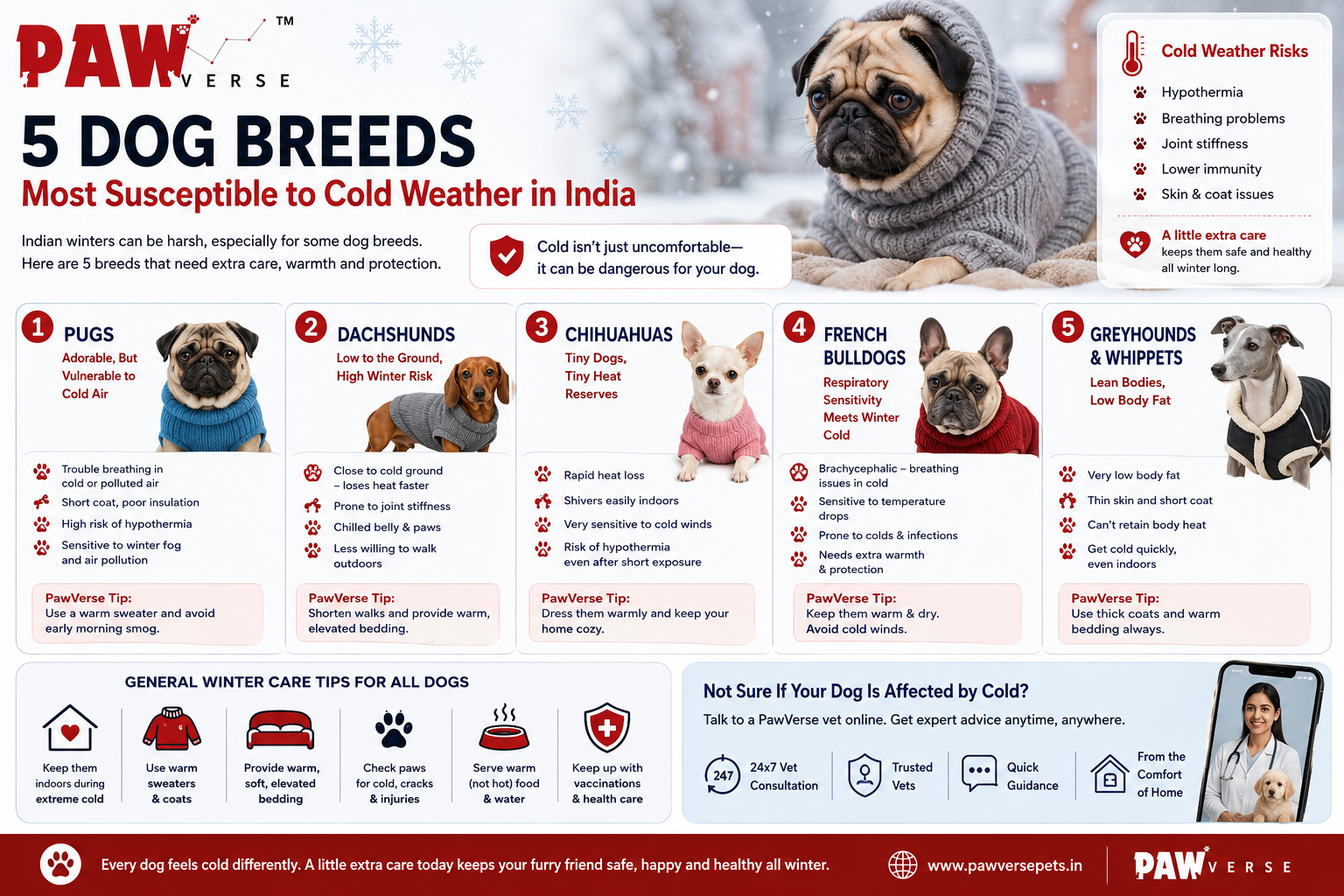
Here are the five dog breeds most susceptible to cold weather in India - and what you can do to protect them this season. Before you begin, take a look at our Dog Health Guide for a broader overview.
Why Do Some Dog Breeds Struggle More in Winter?
Not all dogs are created equal. A Siberian Husky and a Chihuahua are both dogs, but they can handle the cold very differently. Breed-specific characteristics such as coat thickness, body fat percentage, face structure and body size all play a direct roll on how well a dog retains body heat.
Many of the most popular breeds of pets originated in warmer European or tropical climates. It means their bodies simply weren't built for the cold and the winter months in India, especially in the cities like Shimla, Chandigarh, Delhi or even Pune in December, can push them well past their comfort zone.
1. Pugs - Adorable, But Vulnerable to Cold Air
No doubt about it – Pugs are one of the most loved dogs in India. Those sloppy faces, the snorts, the dramatic sighs. We know. But that’s also what makes winter really hard for them, that very thing that makes them so lovable.
Pugs are a brachycephalic breed, meaning they have a flat face and a naturally narrow airway. They already have to work a little harder to breath then other dogs. Throw in cold air, winter smog and poor air quality now and it is a lot harder.
They have short, fine coats that provide almost no natural insulation so even a mild winter morning can leave them cold and uncomfortable.
Pugs are at risk during winter:
Trouble breathing in cold or polluted air
Increased sensitivity to dust and winter fog
Very poor cold hardiness
Increased risk of hypothermia during drops in temperature
PawVerse Tip: Dress your Pug in a snug dog sweater before walks. Skip the early morning smog window (usually 6-9 AM in metro cities), wait for the air to clear a bit. If your Pug is coughing more than usual, or having laboured breathing, don’t wait – book an online vet consultation straight away.
2. Dachshunds - Low to the Ground, High Winter Risk
Dachshunds are quirky, curious, and completely loveable. But their iconic long-and-low body shape creates a real winter problem: they're physically close to the ground at all times.
Cold radiates upward from floors, tiles, and outdoor surfaces. Taller dogs have some buffer. Dachshunds don't. Their bellies are essentially skimming the cold ground on every walk, causing rapid body heat loss.
Add to this the fact that most Dachshunds have short coats and can be prone to joint stiffness, and winter becomes a season they genuinely need extra care through.
Winter risks for Dachshunds include:
Rapid body heat loss from ground contact
Joint stiffness and discomfort in cold weather
Reduced willingness to walk outdoors
Chilled belly and paws after brief outdoor exposure
PawVerse Tip: Shorten outdoor walks on cold days and always provide warm, elevated bedding - away from tiles or cold floors. A dog bed with a fleece lining can make a huge difference. Check our Pet Care Tips section for more winter bedding ideas.
3. Chihuahuas - Tiny Dogs, Tiny Heat Reserves
Don't let the attitude fool you. Chihuahuas are bold, feisty, and absolutely convinced they run the house. But underneath all that confidence is a very small body with very little ability to hold onto heat.
Here's the simple science: smaller bodies lose heat faster than larger ones. A Chihuahua's surface area relative to its body mass means warmth escapes quickly, especially in a cold wind. Most Chihuahuas also have fine, thin coats and trace their ancestry back to warm Mexican climates - cold was never part of the plan.
Winter risks for Chihuahuas include:
Rapid and significant heat loss
Shivering even indoors if the room is cool
Extreme sensitivity to cold winds and open spaces
Risk of hypothermia after even short outdoor exposure
PawVerse Tip: Layer your Chihuahua in a warm dog sweater and avoid prolonged outdoor time during mornings and nights when temperatures are lowest. If they're shivering indoors, that's your sign the house is too cold for them - not just for you.
4. French Bulldogs - Respiratory Sensitivity Meets Winter Cold
French Bulldogs have surged in popularity across Indian cities in recent years, and it's easy to see why. They're playful, compact, and have that irresistible bat-eared charm.
But like Pugs, Frenchies are brachycephalic - their compressed facial structure means breathing is already a daily effort. Cold air can irritate their airways further, leading to respiratory discomfort that's easy to miss until it becomes serious.
Their short coats provide minimal insulation, and sensitive areas like ears and paws can get painfully cold quickly during outdoor walks.
Winter risks for French Bulldogs include:
Respiratory discomfort triggered by cold or dry air
Cold-sensitive paws and ears after outdoor exposure
Reduced tolerance for extended time outside
Higher vulnerability to winter respiratory infections
PawVerse Tip: Keep your Frenchie warm indoors with consistent heating, use protective booties for outdoor walks, and consider a fleece jacket for cooler evenings. If you notice unusual breathing patterns or persistent sneezing, it's worth getting a professional vet opinion online before the condition worsens.
5. Greyhounds - Built for Speed, Not for Cold
Greyhounds are extraordinary dogs - graceful, fast, and surprisingly gentle as house pets. But their athletic build comes with a real trade-off in winter.
Greyhounds carry almost no body fat. Their skin-close coats are extremely short and thin. Put those two things together and you have a dog that loses body heat almost as fast as it generates it. Unlike some other lean breeds that compensate with a dense undercoat, Greyhounds have almost nothing between them and the cold.
Winter risks for Greyhounds include:
Rapid and significant loss of body heat
Visible, persistent shivering even after short outdoor exposure
Burning extra energy just trying to stay warm
Reluctance to go outside during cold periods
PawVerse Tip: A well-fitted dog coat or winter jacket is not optional for a Greyhound - it's essential. Indoors, ensure they have a warm, draught-free resting area with blanket access. For general guidance on keeping athletic breeds healthy year-round, explore our Dog Health Guide.
Other Breeds Worth Watching This Winter
These five get a lot of attention, but they're not the only dogs that need extra care when temperatures fall.
Great Danes - despite their size, have very little body fat and thin coats. Beagles - short-coated and low-energy in cold weather; watch for lethargy. Puppies and senior dogs -regardless of breed, are always more vulnerable to temperature extremes. Indian mixed-breed dogs (Indies) - especially community and stray dogs who sleep outdoors.
If you care for community dogs or Indies in your neighbourhood, leaving out a warm blanket or creating a simple sheltered sleeping space can genuinely save lives on cold winter nights.
How to Tell If Your Dog Is Too Cold - Signs Every Pet Parent Should Know
Dogs can't tell us when they're uncomfortable. Learning to read the signs is one of the most important things you can do as a pet parent. Check our full Pet Care Tips guide for a complete seasonal checklist, but here are the most common cold-weather warning signs to watch for:
Sign | What It May Indicate |
Excessive or prolonged shivering | Body struggling to maintain core temperature |
Lethargy or sudden weakness | Early signs of hypothermia |
Reluctance to walk or go outside | Discomfort or pain from cold exposure |
Cold ears, paws, or nose tip | Poor circulation; heat being drawn away from extremities |
Curling tightly into a ball | Instinctive attempt to conserve body heat |
Slow or unusual breathing | Possible respiratory distress (especially in flat-faced breeds) |
If your dog shows several of these signs - particularly after outdoor exposure - treat it as urgent. Bring them indoors immediately, warm them gently with blankets, and contact a vet.
When Should You Call a Vet?
Here's a simple rule: if you're unsure, call.
But specifically, reach out to a vet if your dog shows:
Persistent or severe shivering that doesn't stop after warming up
Breathing difficulty or unusual respiratory sounds
Weakness, stumbling, or collapse
Very cold skin that doesn't warm up after 20–30 minutes
Vomiting, diarrhoea, or loss of appetite alongside cold exposure symptoms
You don't need to drive to a clinic for every concern. Through PawVerse, you can book an online vet consultation from home and get professional guidance quickly. For urgent situations, our emergency vet consultation service is also available.
Frequently Asked Questions
Q: At what temperature is it too cold for dogs in India?
A: Most short-coated or small breeds begin to feel uncomfortable below 10°C (50°F). Brachycephalic breeds like Pugs and French Bulldogs may struggle even at 15°C, especially with cold winds or smog. Always watch your dog's behaviour rather than relying solely on a thermometer.
Q: Should I put a sweater on my dog in winter?
A: Yes - for most of the breeds listed in this article, a dog sweater or coat is genuinely beneficial, not just a fashion statement. Breeds with short, thin coats, flat faces, small bodies, or low body fat all benefit from additional insulation during Indian winters.
Q: How can I keep my dog warm indoors during winter?
A: Provide an elevated dog bed with a fleece or wool lining, keep the sleeping area away from cold tiles and draughts, and maintain a consistent indoor temperature. Avoid sudden temperature changes when moving from warm indoors to cold outdoors.
Q: Can hypothermia happen to dogs in India?
A: Yes. Hypothermia in dogs can occur at temperatures below 7°C, and sensitive breeds can show early symptoms even at 10–12°C with wind chill. Northern India (Delhi, Chandigarh, Shimla, Ladakh) regularly sees conditions where hypothermia is a real concern for vulnerable breeds.
Q: What should I do if my dog is shivering and won't stop?
A: Bring your dog indoors immediately, wrap them in a warm (not hot) blanket, and offer a warm (not hot) water bottle wrapped in cloth near their body. If shivering continues after 15–20 minutes or is accompanied by other symptoms, consult a vet right away.
Keep Your Dog Safe This Winter
Winter in India doesn't have to be stressful for your pet - but it does require a little more awareness and preparation, especially for the breeds in this list.
Invest in proper winter clothing for your dog, rethink early-morning walks during fog and smog season, check paws and ears after outdoor time, and don't hesitate to reach out to a vet if something seems off.
Browse the PawVerse Pet Health Blog for more seasonal guides, breed-specific advice, and expert tips - or connect with a PawVerse vet online if your dog needs personalised guidance this winter.
Your dog can't ask for a warm blanket. But you can give them one.
With love, A Fellow Pawrent ❤️
Have a question about your pet?
Chat with Captain Scout and reach a verified vet, guaranteed within 30 minutes.
PawVerse Editorial Team
Practical pet health guides from the PawVerse team, written to help Indian pet parents understand what they are seeing and when to talk to a vet.
Your pet's health does not have to wait
Talk to a verified PawVerse vet from home. No travel, no waiting rooms, real answers within 30 minutes.