
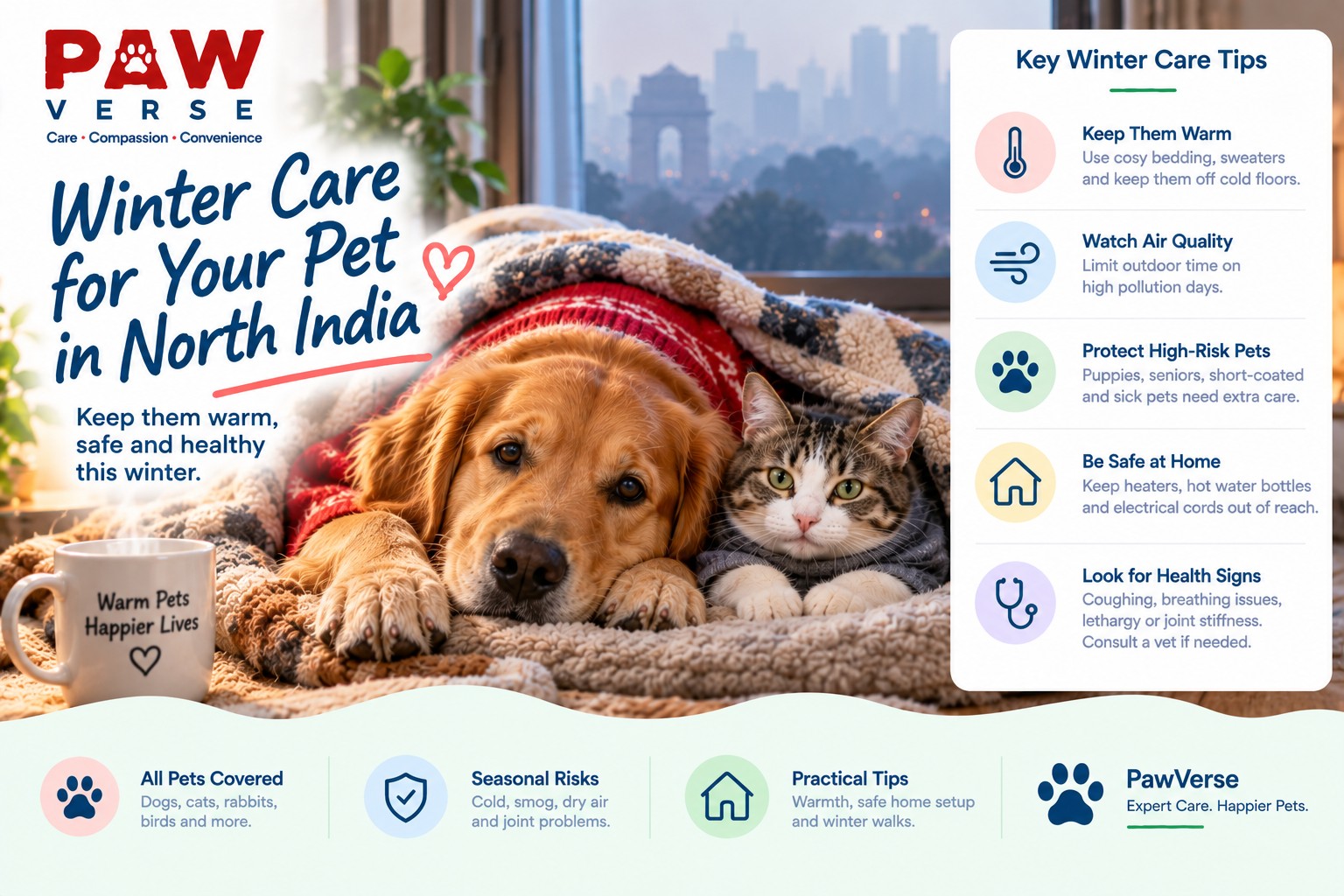
Monsoon is the most discussed topic in Indian pet care, but winter in North India is a season in itself, and it has its own set of problems. Nites drop into single figures in cold spells, fog makes for poor visibility on morning walks, the air is poisonous for weeks and the heaters, braziers and hot water bottles bring with them a set of household hazards that are hardly there in other months. Most of it is manageable and goes much better if you get ready before the first cold wave hits, rather than when it’s already here.
Who really feels the cold, how to keep your pet warm without creating new dangers, what smog season means for walks and breathing, what to do for pets most at risk, from puppies and seniors to rabbits, birds and the street animals outside your gate. For the other seasonal extreme, check out our monsoon dog care guide.
While India’s pet care is largely focused on the monsoons, North India has its own winter season with its own issues. Nites drop into single figures in cold spells, fog makes for poor visibility on morning walks, the air is poisonous for weeks and the heaters, braziers and hot water bottles bring with them a set of household hazards that are hardly there in other months. Most of it is manageable and goes much better if you get ready before the first cold wave hits, rather than when it’s already here.
Why Winter Is Its Own Season for Pets
North Indian winter stacks four things. The obvious one is temperature, but dry air strips skin and coat, cold stiffens aging joints and from around Diwali onward, air quality across Delhi-NCR and the neighboring states regularly slides into the “poor” and “severe” range. In past winters, the AQI in Delhi has gone above 400 and even 450 due to factors such as stubble burning in Punjab and Haryana, vehicle emissions and fireworks during festivals. “During these weeks, we see a marked increase in coughing, discharge from the eyes and nose and breathing problems in pets,” says vets in the region.
Diwali this year falls on Sunday, November 8, so the shift from "pleasant autumn" to "smog and cold" is only a few weeks away. Our Diwali pet safety guide covers the fireworks side of that transition.
Does Your Pet Actually Feel the Cold?
Yes, and more than most owners assume. Thick fur does not make a dog immune to cold, and a simple rule used by veterinary teaching hospitals works well: if you are cold, your pet probably is too.
More likely to struggle | Usually copes better |
Puppies and kittens | Healthy adult Indian Pariah (Indie) dogs |
Senior pets and pets with arthritis | Himalayan breeds such as the Bhotia |
Short-coated, thin, or small breeds, for example Dobermans, Greyhounds, Beagles, Dachshunds, and Chihuahuas | Thick double-coated breeds, though these are the ones that struggle most in Indian summers |
Pets with heart, kidney, or thyroid disease, or diabetes | |
Recently clipped or shaved pets | |
Cats and small pets kept on cold floors or near drafts |
Indian homes add their own twist. Tile and marble floors stay very cold, a pet sleeping on a thin sheet over a bare floor loses heat quickly, and pets used to air-conditioned rooms all summer can feel an autumn drop sharply.
Warmth at Home: The Practical Basics
Get your pet off the floor. A thick mattress, a raised bed, or several folded blankets works far better than a thin cloth over tile. For senior dogs, an orthopaedic bed helps joints as well as warmth.
Move beds away from windows and drafts, and for cats, give them elevated, sunlit spots, since cats naturally seek out warm, high places.
Use coats and sweaters thoughtfully. They help short-coated, small, thin, and elderly dogs on walks, but they should fit without restricting movement, come off indoors so your pet does not overheat, and be skipped for thick-coated dogs who do not need them. Check regularly that the fabric is not rubbing the skin.
Let pets share your space. Pets that spend winter evenings with the family, rather than shut in a cold balcony or outdoor corner, are warmer and also easier to monitor for early signs of illness.
Heaters, Braziers, and Hot Water Bottles
Staying warm is where a surprising number of winter pet injuries come from.
Electric heaters and blowers. Keep them out of reach or behind a guard, since pets lie too close and can burn, knock a heater over, or chew the cord. Unplug when you leave the room, and never leave a pet shut in a small room with a running heater. Dry heater air also worsens dry skin and coughs, so keep the room ventilated.
Angeethi, coal, and charcoal braziers. Burning fuel in a closed room produces carbon monoxide and fumes that harm people and pets alike, and this is a recurring winter hazard in North India. Ensure there is fresh air coming in, never use one in a sealed room where a pet sleeps, and keep birds well away, since they are especially sensitive to fumes and smoke.
Hot water bottles and heating pads. Wrap them in a towel so they never touch skin directly, and never leave a weak or sleepy pet on a heat source they cannot move away from, since burns can happen even at modest temperatures.
Food, Water, and Weight
Calorie needs depend on activity, not just temperature. An outdoor or highly active dog burns more energy staying warm and may need more food, while an indoor dog who walks less can gain weight over winter. Watch your pet's body condition rather than automatically increasing portions, and ask a vet if you are unsure. Our best food for dogs in India guide covers how to read labels and choose a diet.
In cold weather, pets tend to drink less, which increases the risk of dehydration and, in cats, urinary problems. Offer slightly warm (not hot) water Keep bowls clean Consider pet water fountain Add wet food to increase fluid intake for cats This is more important than it sounds: one of the reasons for urinary blockage covered in our cat urinary blockage emergency guide is low water intake, and a male cat straining in the litter box with little or no urine is an emergency at any time of the year.
Walks, Fog, and Smog
Pick your walk window carefully. Early mornings and evenings are both cold and when smog tends to be worst, so shift walks toward the warmer, clearer part of the day, usually late morning to early afternoon, and shorten them on very poor air days.
Check the AQI before heading out, and on severe days limit outings to quick toilet breaks. Indoors, an air purifier, closed windows during the worst hours, and avoiding incense and smoking in the house all help.
Wipe paws and fur after every walk. This removes dust and pollutants your pet would otherwise lick off, and it also cleans cold or rough paw pads. Check pads for cracks or redness.
Make foggy walks visible. Keep dogs on a leash, and use a reflective or LED collar, since low visibility and traffic make winter mornings genuinely risky.
Know who is most vulnerable. Pollution can worsen asthma, bronchitis, and heart conditions, especially in older pets and flat-faced breeds, and there are documented cases of dogs in Delhi needing nebulisation for bronchitis during bad smog spells. If your pet develops a persistent cough, fast breathing, or watery eyes and nose, our guides on why dogs cough, why dogs breathe fast, and why cats breathe fast explain what to watch for and when to call a vet.
Joints, Skin, and Coat
Arthritis flares in the cold. Stiffness, reluctance to get up, or hesitating at stairs are common winter complaints, and they are treatable rather than something to put up with. Our dog joint pain and arthritis guide covers current options. In cats, joint pain rarely looks like limping, it looks like jumping less and doing less, as our guide on common diseases in cats explains, so a quieter older cat in winter deserves a closer look rather than an assumption that it is just the weather.
Dry skin and flaky coat. Cold, dry air strips natural oils. Brush regularly, bathe less often than usual, use lukewarm water and a gentle pet shampoo, and dry your pet thoroughly, ideally in daylight rather than before a cold night. A vet can advise on omega-3 supplements and doses. Persistent itching, bald patches, or redness is more than dry skin, so see our guides on dog skin allergies and why cats scratch so much.
Special Care for Cats
Check under cars and bonnets. Cats, including neighbourhood strays, crawl into warm engine bays on cold nights, so knock on the bonnet and wait a moment before starting the engine.
Keep cats off cold balconies in the evenings, and provide warm, enclosed hiding spots away from cold floors.
Watch for sneezing and eye discharge. Cold weather and stress can trigger flare-ups of cat flu, and our guide on conjunctivitis in cats covers the signs and what treatment involves.
Puppies, Kittens, and Seniors
These groups lose heat fastest and cope worst with illness, so they need the most attention. Puppies and kittens cannot regulate body temperature well, and winter is when many street and rescue litters are found cold and weak. If you find a cold, limp newborn, our fading kitten syndrome guide explains the order that matters, warm first, then a sugar source on the gums, then straight to a vet. Winter is also a season when parvovirus cases rise in unvaccinated puppies, covered in our parvovirus guide and puppy vaccination schedule for India. For seniors, a winter checkup is worth booking, since cold can worsen conditions that are already developing quietly.
Small Pets, Birds, and Reptiles
Rabbits cope with cold better than heat, but damp and drafts are the problem, so keep them dry, sheltered, and out of wind. Bring them indoors during cold waves. A rabbit that stops eating is a same-day emergency in any season, as our raising a rabbit guide explains.
Guinea pigs are sensitive to cold and drafts, so keep them in a mild indoor room with plenty of hay. Our guinea pig care guide covers the full picture.
Hamsters can slip into a deep, cold, torpor-like state when it is too chilly that looks very much like death, and gradual warming can revive them, as covered in our guide to guinea pigs, hamsters, and turtles.
Birds need protection from drafts and sudden temperature swings, so keep the cage away from windows and doors, partly cover it at night while leaving ventilation, and keep it far from heaters, braziers, and smoke. Our pet bird care guide covers more.
Turtles and other reptiles cannot regulate their own temperature, and a cold night can slow them and invite respiratory infections. Confirm their heating and lighting setup with a vet who treats reptiles.
Helping Community Animals Safely
If you feed strays, a few simple steps make a real difference. Provide a dry, raised shelter, such as a sturdy box with straw or old jute sacks inside and an entrance facing away from the wind, since dry bedding matters more than blankets, which stay cold once damp. Leave fresh water, never tie up or restrain an animal, and check under parked vehicles before starting yours. If an animal is clearly unwell, local animal welfare groups and vets can advise on safe next steps.
Hypothermia: Signs and What to Do
Normal body temperature for dogs and cats is roughly 37.5 to 39.2°C, and a reading below about 37°C is considered hypothermia. Signs include shivering, cold ears and paws, drowsiness and weakness, and in severe cases a slow heartbeat, collapse, or loss of consciousness. One important warning: if shivering stops in a pet that is still cold and drowsy, that is a danger sign, not an improvement, since the body has run out of resources to keep trying.
Sign | What It May Mean |
Shivering, cold ears and paws, seeking warmth | Cold stress, warm your pet up and monitor |
Lethargy, weakness, clumsiness | Moderate cold stress or hypothermia, warm gradually and call a vet |
Shivering that stops while still cold and drowsy | Severe hypothermia, emergency |
Pale gums, slow breathing, collapse | Emergency, go to a vet immediately |
Newborn puppy or kitten that is cold and limp | Emergency, warm gradually and get to a vet immediately |
What to do while you get to a vet:
Move your pet somewhere warm and dry, and wrap them in dry blankets.
Warm gradually. The goal is "warm," not "hot," so use water bottles wrapped in a towel against the chest and belly, never directly on skin.
Avoid hair dryers, heating lamps, and direct heating pads, which can burn or push blood flow away from vital organs too quickly.
Do not struggle to take a temperature if it delays care, and head to a vet for any pet that is drowsy, weak, or has stopped shivering.
A Simple Pre-Winter Checklist
Do this before the cold arrives | Why |
Raised, thick bedding away from drafts | Cold floors steal heat fast |
Check vaccination, deworming, and tick prevention | Winter brings parvo and respiratory risks |
Book a checkup for seniors and arthritic pets | Cold worsens joint and chronic conditions |
Set up heater guards and brazier ventilation | Prevents burns and carbon monoxide exposure |
Stock a week of food and medication | Useful on fog or cold wave days |
Update collar tag and microchip details | Pets get lost more in fog and fireworks |
Check your AQI source and plan indoor activity | Smog days limit outdoor exercise |
Review your first aid kit | See our pet first aid kit guide |
When to See a Vet
Contact a vet for any pet that is shivering and drowsy, will not eat or drink, develops a persistent cough or fast breathing, has new stiffness or reluctance to move, or has dry, itchy, or flaky skin that does not improve. For a pet that has collapsed, stopped shivering, or has pale gums, or a cat straining to urinate, go straight to emergency care, and see our dog emergency symptoms and cat emergency symptoms guides for the full list.
Through PawVerse, you can book an online vet consultation to plan a winter routine, review stiffness or coat changes, and get guidance on whether something needs an in-person visit. For anything urgent, our emergency vet consultation is available around the clock.
The Bottom Line
Winter pet care in North India comes down to five things: a warm, raised place to sleep, safe heating, smart walk timing around the cold and the smog, extra attention for puppies, kittens, seniors, and small pets, and an early vet check for stiffness, coughs, and dry skin before they become bigger problems. None of it is complicated, but all of it works best when it starts before the first cold wave rather than during it.
Talk to a PawVerse vet online now to plan your pet's winter routine, especially if you have a senior pet, a flat-faced breed, or an animal with joint or breathing issues.
With love, Team PawVerse
Have a question about your pet?
Chat with Captain Scout and reach a verified vet, guaranteed within 30 minutes.
Frequently Asked Questions
A: Small, short-coated, thin, very young, and senior dogs often benefit from a well-fitting coat on walks, while thick-coated and many healthy Indie dogs do not need one. If you are cold standing outside, your dog probably is too.
PawVerse Editorial Team
Practical pet health guides from the PawVerse team, written to help Indian pet parents understand what they are seeing and when to talk to a vet.
Your pet's health does not have to wait
Talk to a verified PawVerse vet from home. No travel, no waiting rooms, real answers within 30 minutes.