
Bringing home a new puppy comes with a long list of firsts, first walk, first night, first vet visit. That first vet visit usually opens with a question new owners aren't always ready for: what vaccines does my puppy actually need, and when?
Vaccination schedules can look confusing on paper, a string of ages and shot names, but the underlying logic is simple. Puppies are born with some temporary immunity from their mother, which fades over the first few months, and vaccines step in to cover that gap before it becomes a real risk. This guide breaks down the standard schedule, what each vaccine protects against, and what to expect along the way. For broader guidance on the first months with a new puppy, our Complete Pet Care Guide is a useful companion read.
Why Do Puppies Need Multiple Rounds of Shots?
A single vaccine dose usually isn't enough for puppies, and this comes down to timing rather than the vaccine's strength. Maternal antibodies passed on through nursing can interfere with a vaccine's effectiveness, but nobody can predict exactly when those antibodies fade in an individual puppy. Giving a series of shots every few weeks ensures that at some point in the series, the puppy's immune system is exposed to the vaccine without maternal interference blocking it.
This is why skipping doses or spacing them too far apart can leave real gaps in protection, even if some shots were given on time.
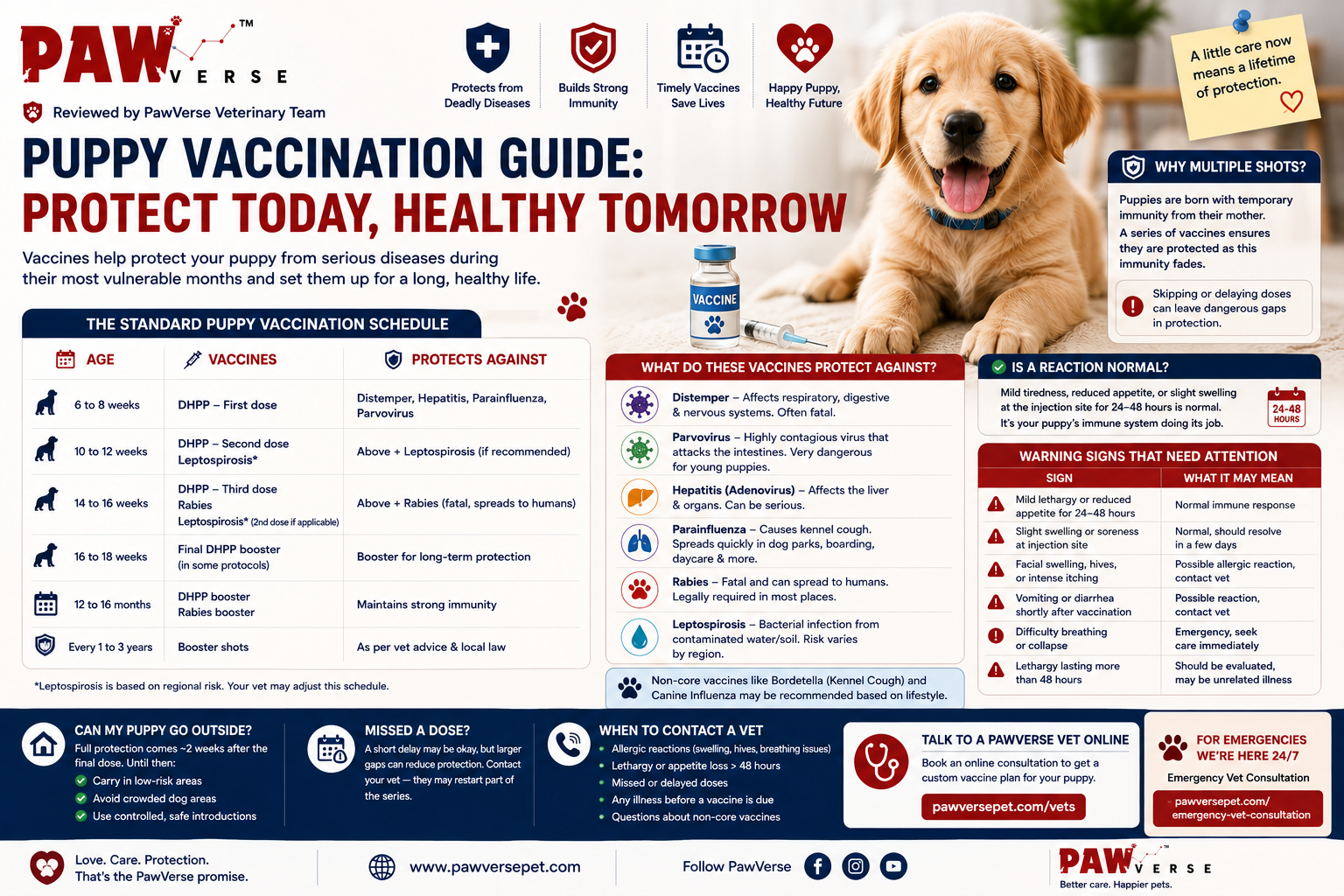
The Standard Puppy Vaccination Schedule
Age | Vaccines |
6 to 8 weeks | DHPP (distemper, hepatitis, parainfluenza, parvovirus), first dose |
10 to 12 weeks | DHPP second dose, Leptospirosis (if recommended in your area) |
14 to 16 weeks | DHPP third dose, Rabies, Leptospirosis second dose if applicable |
16 to 18 weeks | Final DHPP booster in some protocols |
12 to 16 months | DHPP and Rabies booster |
Every 1 to 3 years after | Booster shots based on vet recommendation and local law |
Your vet may adjust this based on your puppy's breed, local disease risk, and lifestyle. Rabies vaccine timing is often set by local law rather than medical preference, so it can vary depending on where you live.
What Do These Vaccines Actually Protect Against?
Distemper is a serious viral illness affecting the respiratory, digestive, and nervous systems, often fatal in unvaccinated puppies.
Parvovirus attacks the digestive tract and is highly contagious, particularly dangerous in puppies under six months, and spreads easily through contaminated environments, not just direct contact with an infected dog.
Hepatitis (adenovirus) affects the liver and other organs, and while less commonly seen today thanks to widespread vaccination, it remains serious in unvaccinated dogs.
Parainfluenza contributes to kennel cough, a highly contagious respiratory illness that spreads quickly in places like boarding facilities, dog parks, and daycare.
Rabies is fatal and can spread to humans, which is why it's legally required in most places rather than optional.
Leptospirosis is a bacterial infection spread through contaminated water or soil, and its inclusion in the core schedule often depends on regional risk, so it's worth asking your vet whether it's recommended where you live.
Some vets also recommend non core vaccines like Bordetella (kennel cough) or Canine Influenza depending on your puppy's lifestyle, particularly if boarding, daycare, or dog parks are part of the plan.
Is It Normal for a Puppy to Act Tired After Vaccines?
Yes. A mild, temporary dip in energy or appetite for 24 to 48 hours after a vaccine is a normal immune response, not a cause for concern. Some puppies also develop slight swelling or tenderness at the injection site, which usually resolves within a few days.
What isn't normal: facial swelling, hives, vomiting, diarrhea, difficulty breathing, or collapse shortly after a vaccine. These can indicate an allergic reaction and need immediate veterinary attention, even though they're uncommon.
Can My Puppy Go Outside Before Finishing the Vaccine Series?
This is one of the most common questions new owners have, and the honest answer involves a tradeoff. Full protection generally isn't reached until about two weeks after the final dose in the primary series, but waiting that long to expose a puppy to the world can also affect socialization during a critical developmental window.
Many vets recommend a middle ground: carrying your puppy in low risk outdoor settings, avoiding areas with heavy unknown dog traffic like public parks or pet stores, and using controlled introductions with vaccinated, healthy dogs and safe environments like a friend's yard. Puppy classes at reputable facilities that require proof of vaccination are often considered a reasonably safe option even before the series is complete. Ask your vet what they recommend for your specific puppy and location.
What Happens If a Dose Is Missed or Delayed?
A short delay of a week or two usually isn't a major setback, but it's worth calling your vet rather than guessing. Depending on how long the gap is, your vet may recommend restarting part of the series to ensure the puppy is fully protected, since large gaps can undermine the timing that makes the multi dose schedule effective in the first place.
Warning Signs That Need Attention After a Vaccine
Sign | What It May Mean |
Mild lethargy or reduced appetite for 24 to 48 hours | Normal immune response |
Slight swelling or soreness at injection site | Normal, should resolve in a few days |
Facial swelling, hives, or intense itching | Possible allergic reaction, contact vet |
Vomiting or diarrhea shortly after vaccination | Possible reaction, contact vet |
Difficulty breathing or collapse | Emergency, seek care immediately |
Lethargy lasting more than 48 hours | Should be evaluated, may be unrelated illness |
When to Contact a Vet
Reach out to a vet if:
Your puppy shows facial swelling, hives, or breathing difficulty after a shot
Lethargy or appetite loss continues beyond 48 hours
A dose has been missed or delayed by more than a couple of weeks
You're unsure which non core vaccines, like Bordetella or Leptospirosis, apply to your puppy's lifestyle
Your puppy shows any illness symptoms before a scheduled vaccine appointment, since sick puppies sometimes need to wait
You don't need to visit a clinic in person for general questions about the schedule. Through PawVerse, you can book an online vet consultation to go over your puppy's specific plan. For facial swelling, breathing difficulty, or collapse after a vaccine, this is an emergency, our emergency vet consultation is available around the clock.
Frequently Asked Questions
Q: At what age should a puppy get its first shot?
A: The first round of core vaccines is typically given between 6 and 8 weeks of age, followed by boosters roughly every three to four weeks until the puppy reaches about 16 weeks old.
Q: How many rounds of shots does a puppy need?
A: Most puppies need three to four rounds of the core vaccine series, spaced a few weeks apart, generally finishing between 14 and 18 weeks of age, followed by a one year booster and then periodic boosters after that.
Q: Is the rabies vaccine required by law?
A: In most regions, yes. Rabies vaccination timing and frequency are usually set by local or state law rather than left entirely to individual vet preference, so requirements can vary depending on where you live.
Q: Why does my puppy need a rabies vaccine separately from the other shots?
A: Rabies is typically given as its own vaccine rather than combined with the DHPP series, partly due to legal record keeping requirements and partly due to the specific timing regulations tied to it in most areas.
Q: Can I skip vaccines if my puppy is mostly indoors?
A: This isn't generally recommended. Core vaccines like distemper and parvovirus protect against diseases that can be brought inside on shoes, clothing, or through brief outdoor exposure, and the consequences of these illnesses in unvaccinated puppies are severe enough that most vets consider the core series necessary regardless of lifestyle.
Q: How much does a puppy vaccination schedule typically cost?
A: Costs vary by location and clinic, but the full first year series, including core vaccines, boosters, and sometimes non core vaccines, is a meaningful expense worth budgeting for early. Ask your vet for a full breakdown of the recommended schedule and associated costs at your puppy's first visit.
The Bottom Line
The puppy vaccination schedule looks like a lot at first glance, but it follows a clear logic: multiple doses timed to close the gap left by fading maternal immunity, followed by boosters to maintain protection over time. Stick to the schedule your vet recommends, don't skip or delay doses without checking in first, and keep an eye out for the difference between a normal mild reaction and something that needs urgent attention.
A little organization in these first few months goes a long way toward a long, healthy life for your puppy.
Talk to a PawVerse vet online now, or explore our Pet Health Blog for more guides on raising a healthy puppy.
With love, Team PawVerse
Have a question about your pet?
Chat with Captain Scout and reach a verified vet, guaranteed within 30 minutes.
PawVerse Editorial Team
Practical pet health guides from the PawVerse team, written to help Indian pet parents understand what they are seeing and when to talk to a vet.
Your pet's health does not have to wait
Talk to a verified PawVerse vet from home. No travel, no waiting rooms, real answers within 30 minutes.