
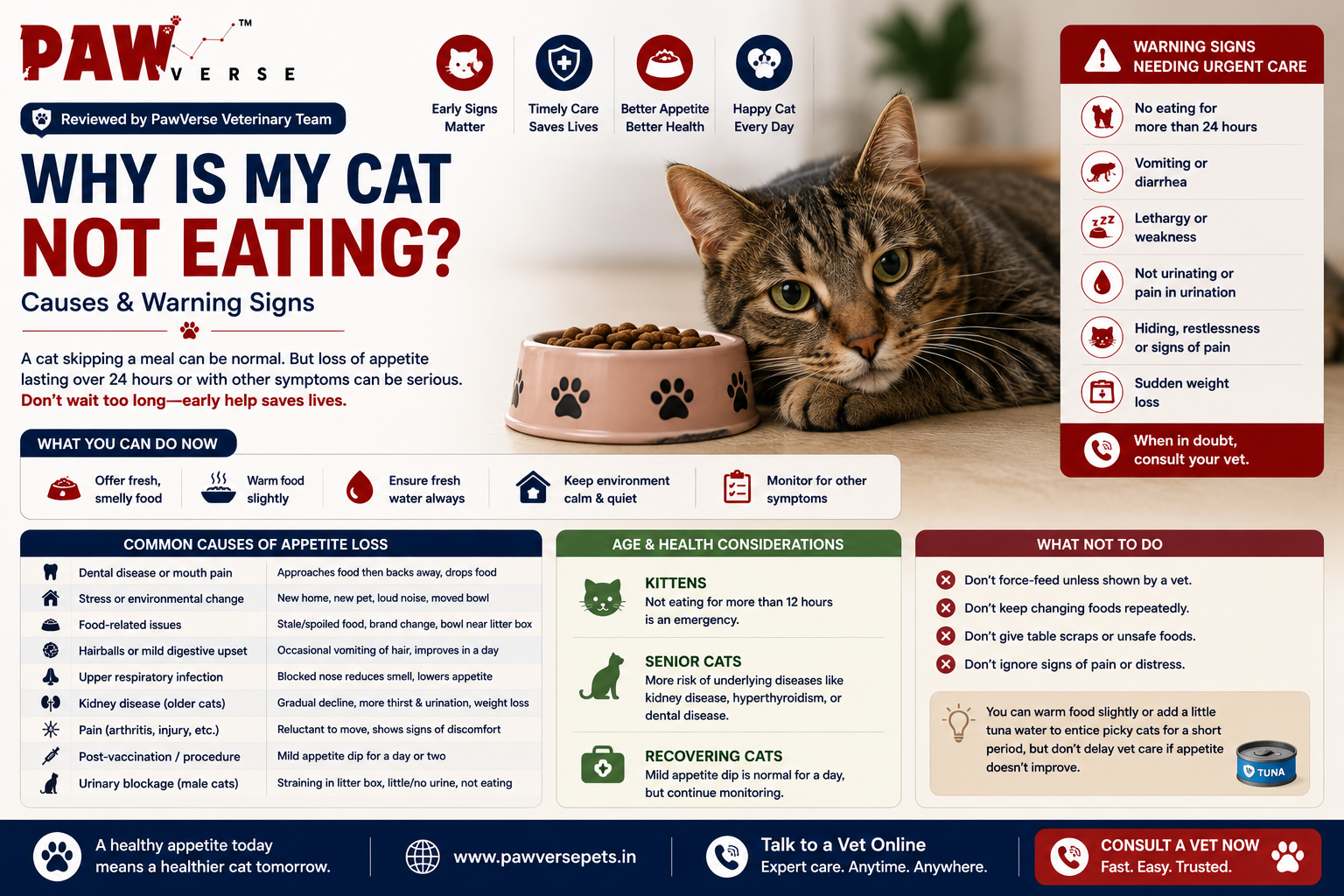
A cat skipping one meal isn't usually cause for alarm, cats are naturally finicky, and a change in weather, a new food batch, or a stressful afternoon can be enough to put them off their bowl temporarily. But cats are also masters at hiding illness, and appetite loss is one of the earliest and most reliable signals that something is wrong, sometimes long before any other symptom shows up. The tricky part is knowing where the line is between "being a cat" and "needs a vet today."
This guide walks through the common reasons cats stop eating, how to tell a minor issue from an emergency, and what to actually do about it. For a broader look at feline health basics, our cat wellness guide is a useful companion read. If your cat has stopped eating alongside vomiting or lethargy, skip ahead to the warning signs table below.
Why a Little Pickiness Is Normal, But Timing Matters
Unlike dogs, cats don't typically eat out of boredom or opportunity, they eat when hungry, and a healthy cat can seem unbothered after missing a single meal. This is part of why owners often wait to see if things improve on their own, and for a genuinely picky eater who's otherwise playful and using the litter box normally, a day of reduced interest usually resolves itself.
The distinction that matters most is duration and what comes with it. A cat that skips one meal but is otherwise acting normal is very different from a cat that hasn't eaten in over 24 hours, and different again from a cat not eating alongside vomiting, hiding, or lethargy. Cats, especially overweight cats, can develop a serious liver condition called hepatic lipidosis if they go without food for more than about 24 to 48 hours, which is why "wait and see" has a shorter window with cats than it does with most other pets.
Common Causes of Appetite Loss in Cats
Cause | What It Looks Like |
Dental disease or mouth pain | Approaching food then backing away, dropping food, favoring one side while chewing |
Stress or environmental change | New home, new pet, loud construction noise, recent travel, or a moved food bowl |
Food-related issues | Stale or spoiled food, a recent brand or flavor change, food bowl too close to litter box |
Hairballs or mild digestive upset | Occasional vomiting of hair, reduced appetite that improves within a day |
Upper respiratory infection | Reduced appetite tied to a blocked nose, since cats rely heavily on smell to want to eat |
Kidney disease (more common in older cats) | Gradual appetite decline, increased thirst and urination, weight loss over weeks |
Pain unrelated to the mouth or gut | Arthritis, an injury, or abdominal pain making a cat reluctant to move to the bowl |
Post-vaccination or post-procedure | Mild, short-term appetite dip for a day or so after a vet visit |
Urinary blockage (male cats especially) | Straining in the litter box, frequent trips producing little or no urine, alongside not eating |
A few of these are genuinely urgent. Urinary blockage in particular is a medical emergency in male cats and can be fatal within a day or two if untreated, straining in the litter box combined with not eating is never a "wait and see" situation.
Age and Health-Specific Considerations
Kittens have very little energy reserve and can decline quickly, a kitten not eating for more than 12 hours needs veterinary attention, not a wait-and-watch approach. Senior cats are more likely to have an underlying condition like kidney disease, hyperthyroidism, or dental disease driving a gradual appetite decline, so a slow drop in interest over days or weeks in an older cat is worth a check-up even without other obvious symptoms. Cats recovering from a recent illness, surgery, or vaccination may have a short appetite dip that resolves within a day, but this shouldn't be assumed without ruling out other causes if it continues.
What Not to Do While You Wait and Watch
It's tempting to try to coax a cat into eating with strong-smelling or unusual foods, but a few common instincts can make things worse. Don't force-feed a cat with a syringe or your hands unless a vet has specifically shown you how, cats can inhale food into their lungs if it's done incorrectly. Avoid switching foods repeatedly in the same day to find something that works, this can make an already upset stomach worse and makes it harder for a vet to figure out what triggered the issue. Table scraps, particularly anything oniony, spiced, or fatty, aren't a safe substitute even as a short-term fix. Warming food slightly or adding a small amount of tuna water can genuinely help entice a cat with a mild, short-term dip in appetite, this is different from riskier home remedies and is generally considered safe.
Warning Signs That Need a Vet
Sign | What It May Mean |
Not eating for more than 24 hours | Risk of hepatic lipidosis, especially in overweight cats |
Straining in the litter box, especially male cats | Possible urinary blockage, a medical emergency |
Repeated vomiting alongside not eating | Risk of dehydration, possible obstruction or toxin exposure |
Lethargy or hiding more than usual | Could indicate pain, infection, or a systemic illness |
Drooling or pawing at the mouth | Possible dental pain, oral injury, or foreign object stuck in the mouth |
Weight loss over days to weeks | Worth investigating even if the cat is still eating somewhat |
Yellowing of gums or eyes | Possible liver involvement, needs prompt evaluation |
Any known ingestion of a toxic substance or foreign object | Needs urgent evaluation regardless of current symptoms |
When to Contact a Vet
Reach out to a vet if your cat hasn't eaten in over 24 hours, if any of the warning signs above are present, if a kitten or senior cat shows even a mild appetite dip that lasts more than half a day, or simply if something feels off. Cats are good at masking illness until it's fairly advanced, so it's reasonable to check in earlier than you might with a dog showing the same behavior.
You don't need to visit a clinic in person for general questions. Through PawVerse, you can book an online vet consultation to describe what you're seeing and get guidance on whether an in-person visit is needed. For straining in the litter box, repeated vomiting, or any suspected emergency, our emergency vet consultation is available around the clock.
Frequently Asked Questions
Q: How long can a cat safely go without eating?
A: Beyond about 24 hours, especially in an overweight cat, there's a real risk of a liver condition called hepatic lipidosis developing. A single skipped meal in an otherwise normal cat usually isn't concerning, but appetite loss stretching past a day warrants a vet call rather than continued waiting.
Q: My cat is eating less but still drinking water, is that better or worse?
A: It's a mildly reassuring sign but not one to rely on. Cats can continue drinking normally even with underlying issues like dental pain, nausea, or kidney disease, so continued water intake shouldn't delay a vet visit if the reduced eating persists beyond a day.
Q: Can stress alone really stop a cat from eating?
A: Yes, cats are sensitive to changes in their environment, and things like a new pet, moved furniture, or loud noises nearby can genuinely suppress appetite for a day or two. If the stressor is identifiable and the cat is otherwise acting normally, a short observation period is reasonable, but persistent loss beyond a day or two still deserves a check-in.
Q: Is it an emergency if my male cat isn't eating and keeps going to the litter box?
A: This combination should be treated as an emergency. It can indicate a urinary blockage, which is life-threatening and can progress within a day or two if untreated, this isn't something to wait out at home.
Q: Should I switch my cat's food if they seem to have lost interest in their current one?
A: A gradual switch can help if the current food is genuinely the issue, but sudden or repeated switching can worsen stomach upset and makes it harder to identify the real cause. It's worth ruling out pain, illness, or stress first, especially if the disinterest is new rather than a longstanding preference.
Q: My kitten skipped a meal, should I be worried?
A: Kittens have very little energy reserve compared to adult cats, so a missed meal is worth watching more closely. If a kitten hasn't eaten within about 12 hours, or seems weak or unusually quiet, it's best to contact a vet rather than waiting to see if the next meal goes better.
The Bottom Line
Appetite loss in cats sits on a spectrum, from ordinary pickiness to a genuine emergency, and the details around it, duration, age, and what other symptoms are present, matter more than the appetite loss itself. Watching closely for the first day is reasonable in a healthy adult cat, but the window for "wait and see" is shorter with cats than with most pets, and a few specific signs, especially straining in the litter box, should skip the waiting entirely.
If anything feels uncertain, that's what a vet conversation is for, better to ask early than to guess through a change in your cat's eating.
Talk to a PawVerse vet online now, or explore our Pet Health Blog for more guides on keeping your cat healthy.
With love, Team PawVerse
Have a question about your pet?
Chat with Captain Scout and reach a verified vet, guaranteed within 30 minutes.
PawVerse Editorial Team
Practical pet health guides from the PawVerse team, written to help Indian pet parents understand what they are seeing and when to talk to a vet.
Your pet's health does not have to wait
Talk to a verified PawVerse vet from home. No travel, no waiting rooms, real answers within 30 minutes.