
You hear it before you see it, that unmistakable sound from the next room. You clean it up. You check on your dog. They seem fine, maybe even hungry again in an hour. Or maybe it happens again." And again. You are now trying to decide if it is something they ate, a bug going around or something that needs to see the vet today.
Vomiting is one of the most common reasons dogs are brought in to see a vet and for good reason, it can mean anything from a mild stomach upset to a genuine emergency. This guide discusses the most common causes, what the vomit itself can tell you and when exactly it’s time to stop waiting and call a vet. For a broader perspective on everyday health, our Complete Pet Care Guide is a great companion read.
Is Occasional Vomiting Normal in Dogs?
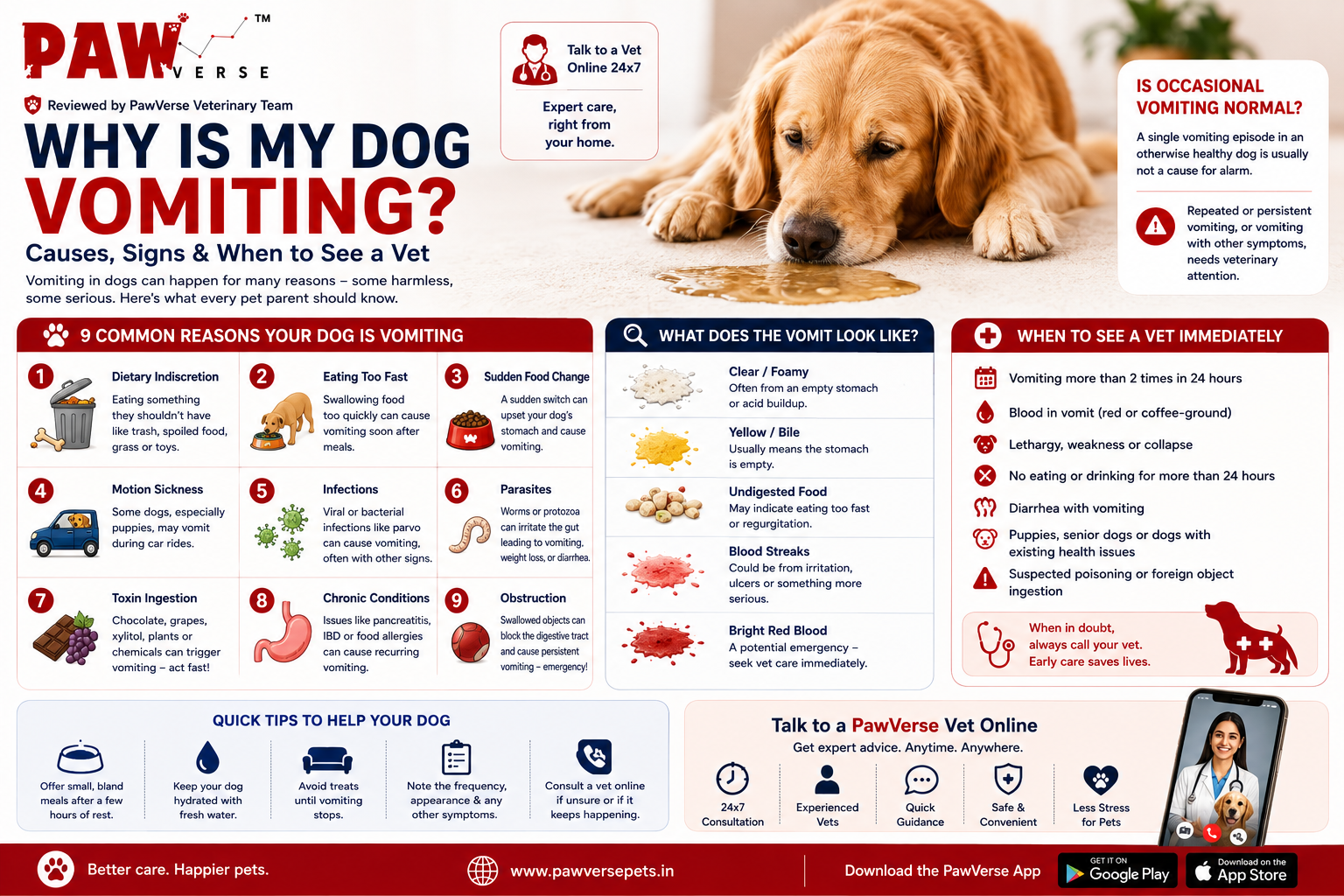
A single vomiting episode in an otherwise normal, active, eating and drinking dog usually isn't a cause for alarm. Dogs vomit more easily than humans do, it's a fairly efficient reflex for them, and a one off episode after eating too fast, grabbing something odd off the ground, or a bit of grass can resolve on its own.
What matters more than the vomiting itself is the pattern. Repeated vomiting, vomiting combined with other symptoms, or vomiting in a puppy or senior dog all raise the level of concern significantly compared to a single, isolated episode in a healthy adult dog.
9 Reasons Your Dog Is Vomiting
1. Dietary Indiscretion
This is by far the most common reason, really a dog eating something they shouldn't have. This could be spoiled food, trash, a dead animal, grass or something totally non food like a piece of a toy. The digestive system sometimes reacts to it fairly soon after it is eaten by expelling it.
2. Eating Too Fast
Dogs that eat too fast, especially in a multi-dog household where there is a bit of competition, can throw up shortly after eating just from swallowing air and food too fast. This tends to happen consistently after meals and not randomly throughout the day and is often easily managed with a slow feeder bowl.
3. Sudden Food Change
Switching foods abruptly, even to a higher quality option, can upset a dog's digestive system enough to trigger vomiting. The gut needs time to adjust to new ingredients, which is why a gradual transition over seven to ten days is recommended for any food switch.
4. Motion Sickness
Some dogs, particularly puppies whose inner ear balance system is still developing, get carsick in a way that closely mirrors human motion sickness. This type of vomiting is specifically tied to travel and usually resolves once the dog is out of the vehicle, and many dogs outgrow it as they mature.
5. Infections
Viral infections like parvovirus, especially in unvaccinated or partially vaccinated puppies, and bacterial infections can cause vomiting as one of the primary symptoms. These are usually accompanied by other signs, lethargy, diarrhea, fever, or loss of appetite, and tend to be more serious than a simple stomach upset.
6. Parasites
Intestinal parasites like roundworms, hookworms, or giardia can cause chronic or recurring vomiting, sometimes alongside visible worms in the vomit or stool, weight loss, or a pot bellied appearance in puppies. Regular deworming as recommended by a vet helps prevent this.
7. Toxin Ingestion
Vomiting is often the body’s way of trying to get rid of a substance. Some foods and substances that are poisonous to dogs can cause this reaction, including chocolate, grapes, xylitol, some plants and household chemicals. If you know or suspect your dog has ingested something toxic, and vomiting alone does not bring enough reassurance that the threat is over, call your veterinarian immediately.
8. Chronic Digestive Conditions
Conditions like inflammatory bowel disease, pancreatitis, or food sensitivities can cause recurring vomiting that comes and goes over weeks or months rather than resolving after a single episode. Pancreatitis in particular often causes vomiting alongside a hunched posture, abdominal pain, and reluctance to eat, and can range from mild to serious.
9. Obstruction
Vomiting is often one of the first signs if a dog has swallowed something that partially or completely blocks the digestive tract — a toy piece, a bone fragment, a sock — and tends to be persistent rather than a single episode. This is a serious cause and typically requires surgery. You shouldn’t wait at home to treat it.
What Does the Vomit Look Like, and Does It Matter?
Vomit can sometimes provide useful clues but never substitutes for a vet’s assessment when something looks worrying.
Clear or foamy vomit can be a sign of an empty stomach, sometimes from acid buildup overnight, and is common in dogs that go long stretches without eating.
Yellow or bile colored vomit is also generally a sign that the stomach is empty. Bile builds up when there is nothing in the stomach to digest.
If you throw up undigested food shortly after eating it can indicate eating too fast or, if this is a persistent thing and looks more like regurgitation than vomiting, an esophageal problem.
Vomiting blood, which may be bright red or resemble coffee grounds, is always a reason to call your vet immediately. This can be a sign of anything from a minor irritation to a more serious bleeding problem in the digestive tract.
Vomit with a strong fecal odor may indicate an obstruction lower in the digestive tract and should be evaluated promptly.
Warning Signs That Make This Urgent
Sign | What It May Mean |
Vomiting more than 2 to 3 times in 24 hours | Needs veterinary evaluation |
Blood in vomit, bright red or coffee ground appearance | Contact vet promptly |
Vomiting combined with lethargy or not drinking | Risk of dehydration, needs attention |
Distended or painful abdomen | Possible obstruction or bloat, emergency |
Repeated unproductive retching with no vomit produced | Possible bloat, emergency |
Known ingestion of a toxic substance | Contact vet immediately |
Vomiting lasting more than 24 hours | Needs veterinary evaluation |
Puppy or senior dog vomiting even once with other symptoms | Treat as urgent |
What You Can Try at Home First
If your dog has vomited once or twice, is otherwise alert, and shows no other symptoms, there are a few reasonable steps before deciding on a vet visit:
Withhold food for a few hours, but not water, to give the stomach a brief rest, then offer a small amount of a bland diet like plain boiled chicken and rice.
Reintroduce food gradually in small amounts rather than a full portion right away, watching for any further vomiting.
Keep water available in small amounts rather than letting a queasy dog gulp a large volume at once, which can trigger more vomiting.
Watch closely for the next 12 to 24 hours for any additional symptoms, repeat vomiting, diarrhea, or a drop in energy.
Slow down fast eaters with a slow feeder bowl if the vomiting seems tied to mealtime specifically.
Avoid giving any human medication, including anti nausea or anti diarrheal medications, without checking with a vet first, since dosing and safety differ significantly between humans and dogs.
When to Contact a Vet
Reach out to a vet if:
Vomiting happens more than two or three times within 24 hours
There's blood in the vomit
Your dog is also showing lethargy, diarrhea, or won't drink water
The abdomen looks swollen, tense, or painful to the touch
Your dog is retching repeatedly without producing anything
You know or suspect your dog ingested something toxic
Vomiting continues beyond 24 hours, even if it seems mild
Your dog is a puppy, senior, or has an existing health condition
For a first assessment you don’t need to come to a clinic in person. PawVerse allows you to book an online vet consultation from home to help determine if the vomiting is serious enough for an in person visit. If your pet has a bloated abdomen, keeps retching but can’t vomit, or is vomiting blood, this could be an emergency. We offer emergency vet consultations 24 hours a day, 7 days a week.
Frequently Asked Questions
Q: Why is my dog vomiting but acting normal otherwise?
A: A single episode of vomiting in a dog that is otherwise eating, drinking and behaving normally is usually nothing to worry about and is often related to something they ate or a brief upset stomach. That said, if it’s back within the day or hanging around for more than 24 hours, it’s worth a trip to the vet rather than thinking it will pass.
Q: Why is my dog throwing up yellow liquid in the morning?
A. This is usually bile that has collected when the stomach has been empty for a long time, such as overnight. This is quite common in dogs that eat just once per day or have a longer time between dinner and breakfast and can often be managed by giving a small snack before bed to shorten the empty stomach window. If this happens a lot, a trip to the vet can help rule out other causes.
Q: How can I tell if my dog's vomiting is from bloat?
A: Bloat is typically indicated by a visibly swollen or tense abdomen, repeated retching with little or nothing produced, restlessness and obvious discomfort. Which is different from the usual vomiting, which usually expels something and is not accompanied by a hard, swollen belly. Bloat is a life threatening emergency and needs to be seen by a veterinarian immediately.
Q: Should I withhold food if my dog is vomiting?
A: Is it OK to do a short fast, such as just a few hours, in the event of a mild episode? A: Usually fine, but water should still be available. If your dog keeps being sick or seems unwell, don’t try to manage it at home with a prolonged period of fasting, contact a vet instead.
Q: Can stress cause a dog to vomit?
A: Yes, though it's less common than dietary causes. Significant stress or anxiety, such as a stressful car ride or a major change in environment, can occasionally trigger vomiting in sensitive dogs. If stress seems like the likely cause and your dog is otherwise healthy, it typically resolves once the stressor passes.
Q: Is it an emergency if my puppy vomits once?
A: It's worth taking more seriously than the same episode in an adult dog, given how quickly puppies can become dehydrated and their higher risk from certain infections like parvovirus. If your puppy vomits and shows any other symptom, lethargy, diarrhea, not eating, contact a vet promptly. Even a single episode with no other symptoms is worth monitoring closely over the following hours.
The Bottom Line
Most dog vomiting is minor and self-limiting within a day, often related to something as simple as eating too quickly or picking up the wrong thing off the ground. The picture changes with the frequency, other symptoms that go along with it, and how your dog is acting overall.
If vomiting resumes, is bloody, or is associated with lethargy or a distended abdomen, or just doesn’t seem to be resolving, that’s the time to stop waiting and seek professional opinion. Much easier to recover if you get onto it early rather than waiting to see how bad it gets.
Chat with a PawVerse vet online now, or check out our Pet Health Blog for more tips on keeping your dog healthy.
With love, Team PawVerse
Have a question about your pet?
Chat with Captain Scout and reach a verified vet, guaranteed within 30 minutes.
Frequently Asked Questions
A single episode of vomiting in a dog that is otherwise eating, drinking and behaving normally is usually nothing to worry about and is often related to something they ate or a brief upset stomach. That said, if it’s back within the day or hanging around for more than 24 hours, it’s worth a trip to the vet rather than thinking it will pass.
PawVerse Editorial Team
Practical pet health guides from the PawVerse team, written to help Indian pet parents understand what they are seeing and when to talk to a vet.
Your pet's health does not have to wait
Talk to a verified PawVerse vet from home. No travel, no waiting rooms, real answers within 30 minutes.