
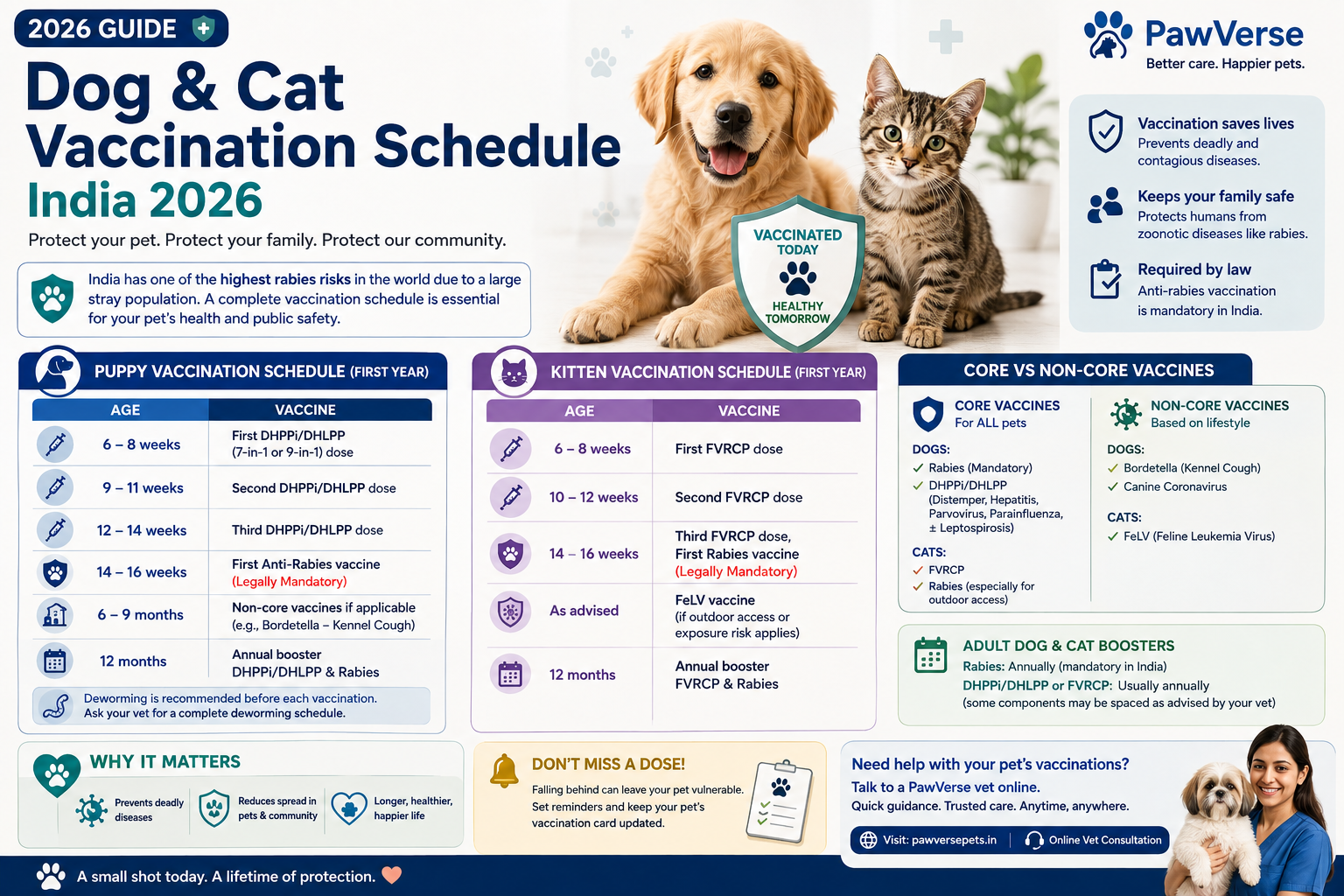
Whether you’ve just brought home a puppy or kitten, or you’re a long-time pet parent trying to keep boosters on track, vaccination is probably the single most confusing part of pet care. Vets throw around terms like 7-in-1, DHPPi, and titer tests, then they give you a little booklet with a grid of dates and expect you to keep it all straight for the next several years.
Here it is more important than in many other countries. India accounts for an over-sized share of the world’s rabies deaths, mostly because of a large population of stray dogs and patchy vaccination rates for pets. That makes having a clear and complete vaccination schedule less of a nice-to-have and more of a real responsibility to your pet and the people around them.
Here’s the complete vaccination schedule for dogs and cats in India for 2026, what each vaccine protects against, realistic costs and what to do if you’ve fallen behind. For a general guide to puppy care in the first year, our Complete Pet Care Guide is a good companion read.
Why Vaccination Matters More in India?
There are two things that make the Indian context different from vaccination guidance that you may read on a foreign pet site. First, the actual risk of rabies exposure is higher here because of the size of the stray dog population and the number of animals with unknown vaccination status. Secondly, the monsoon and the crowded conditions of the city expose people to diseases like leptospirosis, which is spread thru contaminated water and soil, and is of less concern in drier or less populated parts of the world.
That is why Indian vets tend to treat leptospirosis as closer to a core vaccine than an optional one in many regions even if it’s classified as non core in some international guidelines.
Core vs Non Core Vaccines
Vaccines are classified into two groups. All dogs and cats, regardless of their lifestyle, should receive core vaccines because the diseases they protect against are common, highly contagious and often fatal. Non-core vaccines are recommended based on the individual risk factors of the pet, like if the pet goes to boarding facilities, goes to dog parks, or regularly comes into contact with unknown animals.
Core vaccines for dogs in India:
Rabies (legally mandatory)
DHPPi or DHLPP (Distemper, Hepatitis, Parvovirus, Parainfluenza, often bundled with Leptospirosis as DHLPP or DHPPiL)
Non core vaccines for dogs, based on lifestyle:
Bordetella (kennel cough), recommended for dogs in boarding, grooming, or frequent dog park visits
Canine Coronavirus, recommended in some regions based on local prevalence
Core vaccines for cats in India:
FVRCP (Feline Viral Rhinotracheitis, Calicivirus, Panleukopenia)
Rabies, especially for cats with any outdoor access
Non core vaccines for cats, based on lifestyle:
Feline Leukemia Virus (FeLV), recommended for cats with outdoor exposure or contact with unknown cats
In many Indian clinics the core canine vaccinations are combined into a single shot that is called 7-in-1 or 9-in-1 on the vaccination card, rather than listing DHPPi or DHLPP by name. This is what the 7-in-1 or 9-in-1 on your vet's card refers to, not an additional vaccine.
Puppy Vaccination Schedule (First Year)
Age | Vaccine |
6 to 8 weeks | First DHPPi/DHLPP (7-in-1 or 9-in-1) dose |
9 to 11 weeks | Second DHPPi/DHLPP dose |
12 to 14 weeks | Third DHPPi/DHLPP dose |
14 to 16 weeks | First Anti-Rabies vaccine |
6 to 9 months (as advised) | Non core vaccines if applicable, such as Bordetella |
12 months | Annual booster, DHPPi/DHLPP and Rabies |
Deworming is generally recommended before each vaccination round, since a heavy parasite load can reduce how well a puppy responds to a vaccine. Ask your vet to confirm the deworming schedule alongside the vaccine schedule at your first visit.
Kitten Vaccination Schedule (First Year)
Age | Vaccine |
6 to 8 weeks | First FVRCP dose |
10 to 12 weeks | Second FVRCP dose |
14 to 16 weeks | Third FVRCP dose, first Rabies vaccine |
As advised by vet | FeLV, if outdoor access or exposure risk applies |
12 months | Annual booster, FVRCP and Rabies |
Adult Dog and Cat Booster Schedule
While some vaccines are labelled for up to three years of protection, most Indian vets recommend annual rabies boosters after the first year booster. It is worth checking with your vet about the vaccine brand being used and local regulations, but in general, rabies vaccination is an annual vaccine in India, as there is active rabies transmission in many parts of the country and the density of stray animals is high. This is the safer and legally consistent standard.
Core DHPPi/DHLPP or FVRCP boosters are also usually given annually, but some vets may space out some components every two to three years, depending on titer testing. This is a blood test that tests for existing immunity levels instead of assuming a booster is automatically needed.
Is Rabies Vaccination Legally Required in India?
Yes. In India, rabies vaccination of dogs is mandated by law, and several municipal bodies in different cities also require proof of rabies vaccination for registration of pet animals. Aside from the regular vaccination schedule itself, it’s worth checking with your local municipal corporation or your vet on specific registration requirements where you live, since requirements and enforcement vary from city to city and state to state.
How Much Does Pet Vaccination Cost in India?
Vaccine | Approximate Cost per Dose |
DHPPi/DHLPP (7-in-1 or 9-in-1) | Rs 500 to Rs 1,500 |
Anti-Rabies | Rs 300 to Rs 800 |
FVRCP (cats) | Rs 800 to Rs 1,500 |
Full puppy first-year series | Rs 2,500 to Rs 6,000 |
Full kitten first-year series | Rs 2,000 to Rs 5,000 |
Annual adult booster | Rs 1,000 to Rs 3,000 |
Costs vary meaningfully by city, clinic, and vaccine brand. Many clinics in metro areas offer bundled annual packages that work out cheaper than paying per dose, so it's worth asking your vet about package pricing if you're budgeting for the full first year.
Is It Normal for a Pet to Feel Unwell After a Vaccine?
Yes, mild side effects are common and expected. These include decreased appetite, mild lethargy, mild fever, and soreness or swelling at the site of the injection, all of which usually resolve within 24 to 48 hours without treatment.
What's not normal, and needs same day veterinary attention, includes facial swelling, hives, persistent vomiting, difficulty breathing, or a fever that lasts beyond 48 hours. These can signal an allergic reaction, which is uncommon but needs prompt care when it happens.
Warning Signs After Vaccination
Sign | What It May Mean |
Mild lethargy or appetite loss, 24 to 48 hours | Normal, expected reaction |
Slight swelling or soreness at injection site | Normal, should resolve within a few days |
Facial swelling or hives | Possible allergic reaction, contact vet same day |
Difficulty breathing | Emergency, seek care immediately |
Persistent vomiting | Contact vet same day |
Fever lasting more than 48 hours | Needs evaluation |
Large, growing, or painful swelling at injection site | Needs evaluation |
What If I've Missed a Booster?
This happens more often than owners expect, especially with adult pets once the puppy or kitten series is done. A short delay of a few weeks generally isn't a major setback, but don't assume it's fine to guess and catch up whenever convenient. Contact your vet, since depending on how long it's been, they may recommend simply resuming the schedule or restarting part of the series to make sure immunity is properly rebuilt.
When to Contact a Vet
Reach out to a vet if:
You're unsure which non core vaccines apply to your pet's specific lifestyle
A booster has been missed by more than a few weeks
Your pet shows facial swelling, hives, or breathing difficulty after a vaccine
Fever or lethargy continues beyond 48 hours after a vaccine
You're relocating cities and need to confirm local registration or vaccination requirements
Your pet is due for its first vaccine and you want a personalized schedule based on breed, health, and lifestyle
You don't need to visit a clinic in person for scheduling questions or general guidance. Through PawVerse, you can book an online vet consultation to go over your pet's specific vaccination plan. For facial swelling, breathing difficulty, or any reaction that feels severe, this is an emergency, our emergency vet consultation is available around the clock.
Frequently Asked Questions
Q: What is the 7-in-1 or 9-in-1 vaccine mentioned on Indian vaccination cards?
A: These are combination vaccines that bundle core protection against diseases like distemper, hepatitis, parvovirus, and parainfluenza, sometimes with leptospirosis included, into a single injection. It's the same protection referred to as DHPPi or DHLPP in more technical terminology, just labeled differently on many Indian vaccination cards.
Q: Is the rabies vaccine mandatory for indoor pets in India?
A: Yes. Rabies vaccination is legally required for dogs regardless of whether they're mostly indoors, since exposure can happen through brief outdoor contact, a scratch or bite from another animal, or even contact brought in on shoes or clothing in rare cases. Given India's rabies risk, skipping it isn't advisable even for pets that rarely go outside.
Q: How often does my adult dog need a rabies booster in India?
A: Many Indian vets recommend annual rabies boosters, even for vaccines labeled as offering three-year protection, given the country's higher rabies exposure risk. Confirm with your vet, since this can depend on the specific vaccine brand and any local municipal requirements.
Q: Do indoor cats need vaccines in India?
A: Yes, core FVRCP vaccination is still recommended for indoor cats, since some of these viruses can be brought inside on clothing or through brief contact with an outdoor cat through a window or door. Rabies vaccination is especially important for any cat with even occasional outdoor access.
Q: Can I get my pet vaccinated at home in India?
A: Many vets and clinics across Indian cities now offer at home vaccination visits, and some online vet consultation services can help coordinate this. Availability depends on your city and the specific clinic or platform, so it's worth checking directly with a vet near you.
Q: What happens if I skip a vaccine dose during the puppy series?
A: Skipping a dose can leave a gap in protection during a critical period when maternal immunity is fading and full vaccine protection hasn't yet built up. If a dose is missed, contact your vet promptly rather than waiting until the next scheduled visit, since they may need to adjust the remaining schedule.
The Bottom Line
In India, pet vaccination has a little more weight than many other places, mostly because rabies and other core diseases are still very common. Once you break it down by age, the schedule isn’t complicated: a puppy or kitten series thru the first four months, an annual booster at one year, and boosters thereafter on a regular basis, with rabies treated as non-negotiable all the way thru.
If you’re ever in doubt, it’s best to verify your pet’s schedule rather than guess. This is particularly the case with rabies due to the legal and public health implications.
Want to talk to a PawVerse vet online now or get more India-specific guides on keeping your pet healthy? Visit our Pet Health Blog.
With Love, Team PawVerse
Have a question about your pet?
Chat with Captain Scout and reach a verified vet, guaranteed within 30 minutes.
PawVerse Editorial Team
Practical pet health guides from the PawVerse team, written to help Indian pet parents understand what they are seeing and when to talk to a vet.
Your pet's health does not have to wait
Talk to a verified PawVerse vet from home. No travel, no waiting rooms, real answers within 30 minutes.